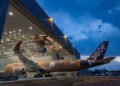
Air Peace’s temporary disruption of its Lagos–London Gatwick service over a minor aircraft fault has once again pushed aviation safety standards and operational resilience into the spotlight, at a time when Nigeria’s airlines are under increasing pressure to balance expansion with reliability on international routes.
The incident, which occurred shortly after passengers boarded the scheduled London-bound flight, led the airline to withdraw the aircraft from service following a routine technical inspection. While the disruption caused delays for passengers, the development underscores the growing scrutiny around maintenance culture and risk management in Nigeria’s aviation sector, especially as local carriers seek to deepen their presence on long-haul international routes.
In a statement issued on Saturday via its X handle, Air Peace said the aircraft was immediately grounded after engineers detected what it described as a “minor aircraft fault” during post-boarding checks.
“Following the completion of passenger boarding, a routine post-boarding technical check identified a minor aircraft fault that required immediate attention,” the airline stated.
The airline said all passengers were safely disembarked while its technical team moved swiftly to resolve the issue, stressing that safety considerations outweighed operational timelines.
“At Air Peace, the safety and wellbeing of our passengers and crew will always take precedence over operational schedules,” the statement read.
The disruption comes as Air Peace continues to consolidate its position on the lucrative Lagos–London route launched in 2024, a service widely viewed as a strategic breakthrough for Nigeria’s largest carrier in the international market. The route has intensified competition on the Nigeria–UK corridor, historically dominated by foreign airlines, while also placing the airline under greater operational and reputational scrutiny.
Experts note that while flight disruptions often attract passenger frustration and financial implications for carriers, proactive technical interventions are generally viewed positively within the aviation industry because they reduce exposure to more severe operational risks.
“While we understand the inconvenience this situation may have caused, taking swift preventive action was the responsible and necessary decision,” Air Peace added.
To cushion the impact on travellers, the airline said affected passengers received hotel accommodation and additional support services pending the rescheduled departure.
Air Peace further disclosed that a replacement aircraft would be deployed from London to operate the delayed service.
“To minimise further disruption, a replacement aircraft from London will be dispatched and passengers are scheduled to depart this morning,” the airline said.
“We deeply appreciate the patience, understanding, and cooperation shown by our passengers during this period. Their trust remains incredibly important to us,” the statement added.
The latest incident also highlights the significant cost implications airlines face in maintaining long-haul operations amid rising maintenance expenses, aircraft shortages, foreign exchange volatility, and global supply chain disruptions affecting spare parts availability.
Despite these challenges, analysts argue that transparent communication and adherence to safety procedures remain critical to sustaining passenger confidence, particularly for African carriers seeking stronger credibility in international aviation markets.