
Oluwadarasimi Omiyale
Passengers travelling on Delta Air Lines’ Atlanta–Lagos service experienced disruption over the weekend after a Lagos-bound aircraft turned back mid-flight and returned to the United States several hours after departure, triggering delays, cancellations, and renewed attention on operational resilience within long-haul international aviation.
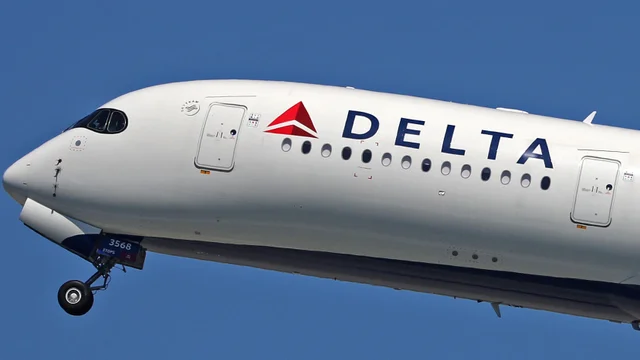
The affected flight, DL54, departed Hartsfield-Jackson Atlanta International Airport on Saturday evening en route to Lagos but was later forced to discontinue the transatlantic journey due to what the airline described only as an “operational issue.”
Flight tracking data indicated that the Airbus A330-200 had already spent several hours over the Atlantic Ocean and was approaching the midpoint of the crossing before the crew initiated a return to Atlanta.
The aircraft reportedly departed Atlanta around 5:42 p.m. local time and initially proceeded normally before reversing course mid-air.
Although Delta Air Lines confirmed that the aircraft landed safely back at its Atlanta base, the carrier did not disclose the precise nature of the operational concern that prompted the decision.
The aircraft was subsequently grounded for technical inspection following its return.
The disruption extended beyond the outbound US flight and also affected passengers scheduled to travel from Lagos to Atlanta, as the return leg from Nigeria was later cancelled, leaving many travellers stranded and awaiting alternative travel arrangements.
Several passengers reportedly expressed frustration over delays in communication regarding rebooking timelines and replacement flight availability.
The incident has generated widespread reactions among Nigerian travellers, many of whom rely on the Atlanta–Lagos corridor for business travel, education, tourism, and family connectivity between Nigeria and the United States.
Aviation stakeholders, however, stress that mid-flight operational returns are part of established international safety procedures and should not necessarily be interpreted as evidence of severe danger.
According to Captain Alex Nwuba, aviation analyst and president of the Aircraft Pilots and Owners Association, technical observations requiring operational adjustments are relatively common in modern aviation systems.
He explained that airlines are mandated to suspend, delay, or discontinue flights whenever aircraft fail to fully satisfy operational or safety parameters, regardless of whether the issue appears minor.
Nwuba noted that modern commercial aircraft are designed with multiple layers of redundancy and safety protection systems, enabling crews and airlines to make precautionary decisions long before technical concerns escalate into emergencies.
He further explained that such operational events occur regularly across global aviation networks, including among leading international carriers, although many incidents receive limited public visibility unless they directly affect high-profile international routes.








Dear Trevor: Africa is calling (1)