The similarity between the highlights of the International Labour Organisation (ILO’s) May Day 2026 message and the focus of President Bola Ahmed Tinubu’s Workers’ Day address is not coincidental. The ILO’s theme — “Decent Work Agenda” — is a direct response to rising global insecurity, inflation, and job precarity sequel to the US-Iran conflict that started February 28, 2026. President Tinubu, in his address declared both insecurity and poverty as national emergencies.
Tinubu said: “There cannot be decent work where workers fear for their lives, where wages cannot feed a family, or where insecurity disrupts farms, factories, markets and other economic activities.” But the ILO says decent work is a human right which guarantees not only safe working conditions (no fear of violence or job loss) and fair wages (wages that can actually support a family), but also social protection (including pensions, health coverage, unemployment benefits) and rights at work (freedom to unionize and bargain collectively).
While there is the convergence of concerns about the workers’ wages and decent work on the part of the ILO and President Tinubu, the critical condition of the Nigerian worker puts a lie to the President’s ‘lamentation.’ As such, while President Tinubu indulges in his jeremiad, the country’s Organised Labour warns that “Nigeria is drifting towards a dangerous tipping point,” stressing that “a collapsing social contract, a failing economy, and a worsening security crisis could force workers off their jobs nationwide.”
Although in his usual style, President Tinubu has used the Workers’ Day event to rehash his manifesto, the Nigerian workers’ pitiable plight has become a lingering issue. Right from May 29, 2023, the President’s policy pronouncements amounted to an instant impoverishment of the workers. Fuel subsidy removal that gave rise to an unprecedented runaway inflationary trend, plus full floatation of the Naira that crashed the local currency — all combined to drive practically all workers below the poverty line, just in a jiffy.
As the economy virtually got pushed into the doldrums by the direct effects of these policies, the workers who bore the brunt, engaged the government in a Titanic battle to ‘extract’ a living wage. Alas, Organised Labour (majorly the Nigeria Labour Congress, NLC) struck a deal, exemplified by a new minimum wage for the workers. Thus, the National Minimum Wage (Amendment) Act 2024, signed by President Tinubu on July 18, 2024 stipulated seventy thousand naira as (national baseline) minimum wage.
However, truth be told, it was the new minimum wage, and its implications for other levels of wages and salaries that took Nigerian workers to the nadir of hope and poverty. In point of fact, by the day the new minimum wage was signed into law, the ‘old’ minimum wage (of thirty thousand naira) commanded more value. At the ruling exchange rate of the naira vis-à-vis the dollar in July 2024, the thirty thousand naira in the first half of 2023 was much more valuable than the new minimum wage of seventy thousand naira.
Also, while the rate of inflation by May 2023 was about 22 percent, by end-2024, the year the new minimum wage was instituted, the rate of inflation hit 34.84 percent. This hyperinflationary trend made nonsense of the nominal wage increase; and since the new minimum wage was for all tiers of government — the federal and sub-national governments were expected to implement it immediately after enactment of the law.
Two years down the road, even as the May Day 2026 was being celebrated, many state governments were yet to commence the implementation of the seventy thousand naira minimum wage. However, a few of the state governments discretionarily not only implemented the new minimum wage but also exceeded it. In fact, there have been ‘wage awards’ and other ‘allowances’ in the palliative packages of a few sub-nationals for their workers.
On the whole, it is correct to say that the so-called new minimum wage left the Nigerian worker worse off than hitherto. This is because while the government of the day gave the impression of being ‘pro-workers’, the workers themselves hugely lost purchasing power, and economic relevance. Indeed, one analyst captured it succinctly: “Any government policy that makes you worse off, is a punishment.” The new minimum wage really impoverished the Nigerian worker.
And so, if after three years of his inauguration, and two years after the institution of the new minimum wage, Mr. President is using the 2026 Workers Day to declare poverty as a ‘national emergency’, what message is he really sending out? Who created poverty? Who made the workers (and, indeed, Nigerians) poorer than ever before? The World Bank, the IMF and other reputable global institutions have warned to no end that the so-called reforms of the Nigerian government have been breeding poverty. Both the IMF and the World Bank have estimated that millions of Nigerians were being forced into poverty by the government reform policies in the past three years.
This same scenario has also been playing out in the security scene, an area that Mr. The president used the 2026 May Day event to project as a national emergency. Yet, in fairness to the President, his declaration of insecurity as a national emergency at this time, is self-indicting. It either means that he has not been doing the ‘right things’ to deal with insecurity in the past three years, or that he wasn’t doing enough.
Truly, if in the face of insecurity that has become an existential threat in the country, the president is still flaunting some ‘woolly arrangements’ to tackle the menace, the matter gets worrisome. For instance, during the May Day address, President Tinubu pointed to the launch of the Community Protection Guards Initiative, which he said has recruited 45, 000 young Nigerians to secure communities while simultaneously creating jobs.
What a job-creating ingenuity?
In reality, this kind of initiative looks like a fire brigade effort for the largest African country that had won its independence from Britain almost 66 years ago. This body of a ragtag ‘youth brigade’ is like giving fresh meat to the lion — in the face of what insecurity has become in Nigeria in recent times. The more the president parades this kind of ‘youth brigade’ as his answer to insecurity in the country, the more insecure people become. What’s really the way forward?
- business a.m. commits to publishing a diversity of views, opinions and comments. It, therefore, welcomes your reaction to this and any of our articles via email: comment@businessamlive.com

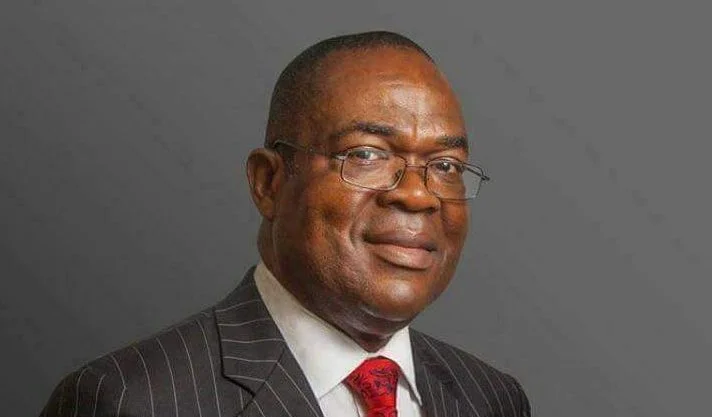
Marcel Okeke, a practising economist and consultant in Business Strategy & Sustainability based in Lagos, is a former Chief Economist at Zenith Bank Plc. He can be reached at: obioraokeke2000@yahoo.com; +2348033075697
(text only)