
Africa spent years carrying the weight of a bleak narrative. It was the period when the continent was routinely described as the hopeless continent, defined by conflict, fragility and unending crisis. That framing never captured the full story, but it shaped global attitudes and influenced policy choices in ways that were hard to ignore.
A different moment followed. Growth improved, new industries emerged and a young population began to reshape the economic landscape. Commentators declared that Africa was rising. It was a welcome shift, but the foundations were not yet deep enough to withstand global shocks.
Today, the world is moving through a profound transition. The old order is loosening, and a new one is struggling to take shape. Dr Kayode Fayemi, drawing on Antonio Gramsci, describes this as a moment when the old is dying and the new cannot yet be born, and in the space between the two, troubling symptoms appear. It captures the uncertainty of the present, but it also captures the opportunity. Africa stands at the centre of this transition. How the continent positions itself will shape its future for decades.
A world in motion
The global landscape is shifting in ways that would have been unthinkable a decade ago. Power is no longer concentrated in one place. New centres of influence are emerging. Old alliances are being tested. Multilateral institutions are struggling to keep pace with the scale of global challenges.
Military spending has reached record levels. Conflicts and climate related disasters are displacing millions of people every year. Global debt has climbed to levels that place enormous pressure on developing economies. These forces reinforce one another, producing a world that is more contested and less predictable.
Africa feels these pressures. The pandemic erased years of development gains. Rising food and fuel prices pushed millions into poverty. Debt vulnerabilities have increased across the continent and strained fiscal policies. Yet this same moment has opened a wider space for African agency than at any time since independence. What matters now is how Africa chooses to respond.
Why Afro optimism stalled
The shift from Afro pessimism to Afro optimism was important, but it was incomplete. The optimism rested on growth that was not always progressively distributive and transformative. It relied on investment that did not always build durable systems and institutions. It celebrated potential without fully confronting the structural constraints that held the continent back.
When global conditions tightened, the optimism faded. Not because the fundamentals had disappeared, but because the foundations were not strong enough. Optimism alone cannot carry a continent. Agency backed up with coherent and context relevant strategies can.
Africa’s strategic advantages
Africa enters this new global moment with a combination of assets that no other region possesses together. These are not abstract endowments. They are strategic levers that can shape the continent’s position in the emerging world order.
A young and expanding population
Africa is the only region where the population is still rising at scale. The United Nations projects that the continent will reach roughly two and a half billion people by 2050. One in every four people on the planet will be African. The median age is 19. In Europe it is 43. In China and the United States, it is 38. This demographic profile is a source of long-term productive capacity at a time when major economies are ageing. By 2030, the world will face a shortage of more than 80 million workers. Africa will be the only region with a surplus.
Some may argue that artificial intelligence will reduce the need for labour. It will certainly change the nature of work, but it will not remove the need for workers. The world will still require teachers, nurses, technicians, builders, logistics professionals and care workers. These sectors cannot be automated away at scale. A young population remains an advantage if Africa equips its people with the skills to participate in the new economy.
A concentration of critical minerals
The minerals that will power the global energy transition are found in abundance on the continent. The International Energy Agency estimates that demand for cobalt, lithium, nickel and rare earths will rise sharply by 2040. Africa holds the overwhelming share of several of these minerals.
The continent accounts for roughly 90% of global cobalt reserves, most of which are in the Democratic Republic of Congo. It holds 75% of the world’s coltan, which is essential for semiconductors and digital devices. It has two thirds of global manganese, half of global gold and more than a third of global uranium. These minerals sit at the heart of electric vehicles, batteries, renewable energy systems and advanced manufacturing. The global economy cannot transition without Africa. That reality gives the continent leverage that it has not yet fully exercised.
A strategic geographic position
Africa sits astride some of the most important maritime and digital corridors in the world. The Suez route carries about 12% of global trade. The Gulf of Guinea is a major energy shipping zone. The Red Sea and the Horn of Africa are now central to global security calculations. More than one third of the world’s undersea internet cables touch African shores.
This geography places the continent at the centre of global commercial and security interests. In a world where supply chains are being reconfigured and great power competition is intensifying Africa’s location becomes a strategic asset.
A growing market
Africa’s combined GDP is now more than 3 trillion dollars. The African Continental Free Trade Area (AfCFTA), once fully operational, will create a single market of over 1.3 billion people. The World Bank estimates that it could lift 30 million people out of extreme poverty and increase intra African trade by more than 50%. This is a story about scale. A unified African market strengthens the continent’s bargaining power, attracts long term investment and reduces the vulnerability that comes from fragmented national markets.
A reservoir of renewable energy potential
Africa holds nearly 40% of the world’s solar potential. The continent has strong wind corridors and significant geothermal reserves. Yet it currently receives less than 3% of global energy investment. As the world races to decarbonise, Africa’s renewable energy potential becomes a strategic advantage that can underpin industrialisation, regional integration and export competitiveness.
What Africa is doing and what it must do more of
There are encouraging signs across the continent. The AfCFTA is the most ambitious integration project undertaken in decades. Regional blocs are experimenting with joint security responses. The Africa CDC demonstrated what coordinated continental action can achieve. Its pandemic response, data systems and joint procurement mechanisms showed that Africa can build institutions with technical depth and global credibility when the mandate is clear and the governance is coherent. Governments are renegotiating contracts in ways that reflect a clearer understanding of national interest. New institutions are emerging to support investment, peace and economic cooperation.
But the progress is uneven. Debt pressures are rising. Regional peace mechanisms have struggled to respond quickly to crises in places like Sudan and northern Ethiopia. External actors still shape too many decisions. The gap between ambition and execution remains wide.
The Pan‑African Payment and Settlement System (PAPSS) is another example. It reduces reliance on external clearing systems and allows African businesses to trade in local currencies. It is still scaling, but it signals a shift toward financial sovereignty and the infrastructure needed for a functional single market.
For Afro optimism to mature into something durable, Africa must move from reacting to global events to shaping them. Africa can do this by acting with greater coherence and by using the assets it already has in more strategic ways. Two areas stand out.
First, the continent can set the terms of engagement on critical minerals. Africa holds the minerals that will power the global energy transition. Instead of negotiating individually, countries can adopt common standards for licensing, pricing, beneficiation and environmental compliance. A coordinated approach strengthens bargaining power, attracts higher quality investment and ensures that value is created on the continent rather than exported in raw form.
The emerging African Green Minerals Strategy points in this direction. It seeks to harmonise standards, promote beneficiation and align national policies with a continental framework. It is early, but it reflects a growing recognition that Africa’s mineral wealth must be governed collectively to shape global supply chains.
This is the direction several African leaders have already signalled. During the recent Africa Finance Corporation meetings, President William Ruto stated that Kenya would “no longer accept the export of raw materials”, insisting that value addition must happen on African soil. President Yoweri Museveni echoed the same position, saying Uganda would “not continue exporting raw minerals” and that the era of shipping out unprocessed resources must end. Their stance reflects a wider continental shift toward retaining value and shaping the structure of global supply chains.
Second, Africa can build continental institutions that prepare and present African projects at scale. Global capital is looking for bankable projects, not fragmented national proposals. Institutions that can pool risks, standardise project preparation and present regional infrastructure, energy and digital projects as unified investment opportunities will give the continent a stronger voice in global financial negotiations.
This also requires deeper investment in technical skills. The continent needs more engineers, geologists, project finance specialists, transmission and grid experts, digital infrastructure planners, environmental scientists, logistics professionals and industrial technicians. These are the skills that turn ideas into bankable projects. Without this technical depth, Africa will continue to rely on external expertise and lose control of project design, valuation and long-term value capture. Building this capacity at scale is essential if Africa is to shape the next generation of infrastructure, energy, transport, mining and digital investments on its own terms.
A path toward sovereignty and agency
The next phase of Africa’s rise will depend on five shifts. Each one speaks to the continent’s ability to act with purpose, discipline and collective strength.
A commitment to strategic autonomy
Africa cannot afford to be pulled into the rivalries of global powers. The continent needs a steady position anchored in its own interests. Strategic autonomy is not isolation. It is the discipline to negotiate from strength, choose partners based on long term value, and avoid becoming a platform for external competition. It is a mindset as much as a policy stance.
Stronger institutions
Institutions determine whether Africa captures value or loses it. The continent needs bodies that can design projects, value assets, negotiate contracts, manage risks and enforce standards. This is slow, technical work, but it is the foundation of sovereignty. Without strong institutions, even the best ideas collapse under weak execution.
Collective bargaining
Acting alone as individual countries limits Africa’s leverage. Acting together changes the conversation. Whether on minerals, debt, trade, climate finance or digital governance, collective bargaining gives the continent weight it cannot achieve individually. It prevents divide-and-rule tactics and ensures that agreements reflect continental priorities. This is one of Africa’s most underused tools.
A new approach to sovereign assets
Africa’s minerals, land, energy corridors, digital infrastructure and demographic dividend must be treated as strategic assets. That means clear valuation, transparent licensing, strong environmental and social standards, and a commitment to value addition. It also means building the technical and financial capacity to manage these assets over decades, not election cycles. Sovereign assets should shape development, not be traded away for short term revenue.
Leadership that is clear, confident and forward looking
Leadership sets the tone. The continent needs leaders who understand the moment, can build coalitions, negotiate firmly and stay focused on long term outcomes. Not loud leadership but steady leadership. The kind that gives direction to institutions, confidence to citizens and clarity to investors. The boldness of the independence era still matters, but it must now be matched with fluency in global finance, technology, climate and security.
Conclusion
The global order is shifting in ways that are hard to ignore. Power is moving, alliances are adjusting and the assumptions that shaped the last generation are no longer reliable. In that uncertainty lies an opening for Africa, not to pick sides but to define its own interests with clarity.
Afro pessimism missed the continent’s depth. Afro optimism captured its promise. What Africa needs now is something steadier: the discipline to organise its assets, build institutions that can defend value and negotiate from a position of confidence. Agency becomes real only when systems, skills and leadership make it possible.
Africa’s rise will not be announced in headlines and communiques. It will show in the quality of its institutions, the strength of its bargaining positions and the consistency with which it turns endowments into long term advantage. The world is moving into a new phase. Africa should step into it with purpose, not as an observer but as a contributor to the shape of what comes next. The continent has the assets. What matters now is the discipline to turn them into power.
- business a.m. commits to publishing a diversity of views, opinions and comments. It, therefore, welcomes your reaction to this and any of our articles via email: comment@businessamlive.com

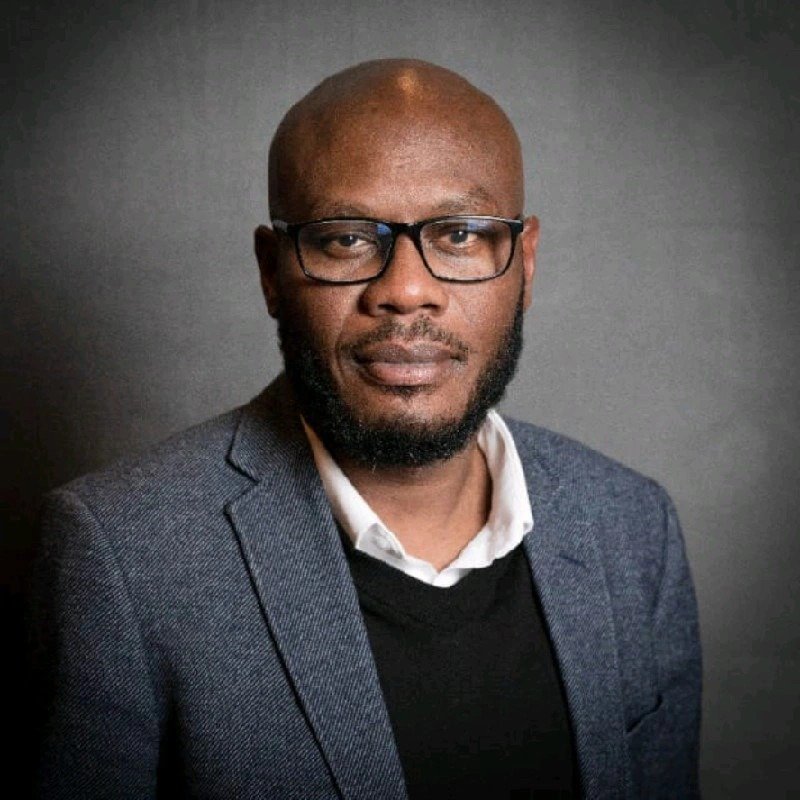
Dr. Wale Osofisan, PhD, is a seasoned governance strategist and policy analyst with over 23 years of experience advancing African-led, evidence-based solutions to political transitions, humanitarian crises and development challenges.






Dear Trevor: Africa is calling (1)