
LONDON—For decades, global development efforts reflected the assumption that international cooperation, however imperfect, was ultimately guided by a shared commitment to helping poorer countries prosper. That era is over. We have entered a multipolar age, defined by strategic rivalry, contested norms, and a level of volatility that makes long‑term planning extraordinarily challenging.
Against this backdrop, economies cannot wait around hoping for systemic reform or benevolent assistance. They must build their own capabilities and negotiate their place in this new world.
While today’s naked power politics represent a shift from the recent past, global governance has never been a charitable enterprise. States have always acted in their own interests, even when they frame their actions as a show of goodwill. Now that the fig leaf is gone, operating in this new landscape means taking a clear-eyed approach to international engagement, recognizing the risks and opportunities.
India’s development trajectory is revealing in this regard. The country has long been skeptical of the idea that global cooperation is motivated by benevolence. While it has drawn on external resources—absorbing foreign ideas and technologies and building global partnerships—it has done so on its own terms, with a focus on building domestic capabilities. And it is not alone: China, Japan, South Korea, and Vietnam have sought to strike a similar balance.
These economies have succeeded not because their interests align neatly with those of their foreign partners, but because they have learned how to find common ground, navigate differences, and devise workable solutions. This is economic diplomacy at its most effective: a blend of bargaining, institution‑building, and strategic learning. This middle-powers playbook is evolving as the global context evolves.
While Asian economies sought to make the most of global engagement, they have not allowed external actors to dictate their development script. Japan’s industrial policy, South Korea’s export‑oriented transformation, China’s hybrid model of state‑led capitalism, India’s accelerating reforms, and Vietnam’s gradualist approach all emerged from domestic debates and political bargains. Local institutions capable of learning under pressure have been the key drivers of progress.
India has been bringing this pragmatism to bear in its response to changing global economic and geopolitical conditions. It has worked with Southeast Asian countries to boost supply‑chain resilience, negotiated energy partnerships with Middle Eastern countries and Russia, and expanded technology cooperation with the United States. At the same time, it has positioned itself as a bridge between advanced economies and the Global South—an interlocutor capable of reconciling diverging interests.
India’s experience offers lessons not only for developing economies, but also for other middle powers, such as Canada and the United Kingdom. These countries are now grappling with the same dilemma: how to continue to engage globally without compromising their autonomy. Intensifying domestic pressures, from inequality to technological disruption, compound the challenge. The only way to meet it is by strengthening their own ability to negotiate, regulate, innovate, and learn.
This requires a fundamental shift in mindset, with economic diplomacy understood not only as a tool for securing access to global supply chains and foreign technologies, but also as a means of forging mutually beneficial arrangements based on joint problem-solving. Technical assistance should no longer be viewed as a one‑way transfer of knowledge, with little regard for political realities. Instead, advisory models must be co‑designed, embedding learning rather than perpetuating dependency.
Countries must also update their approach to engaging with firms. Partnerships through which public and private actors share risks, pool capabilities, and unlock new markets are the goal. But many governments struggle to achieve it, lacking the institutional depth to negotiate on equal terms.
Asia’s experience sends a clear message. Waiting around for benign cooperation will get countries nowhere. But strategic learning, capacity building, hard-nosed negotiation, creative compromises, and pragmatic competition—all anchored in a recognition of shared interests—can support progress even under difficult circumstances.
The task for policymakers today is not to choose between autonomy and cooperation, but to build the capacity for both. The countries that succeed will be those that invest in their own institutions, learn from others without imitating them, and engage internationally with confidence. Asia’s development story shows that this is not only possible; it is the surest path to resilience in an uncertain world.
Copyright: Project Syndicate, 2026.
Ashok Lavasa, Roli Asthana
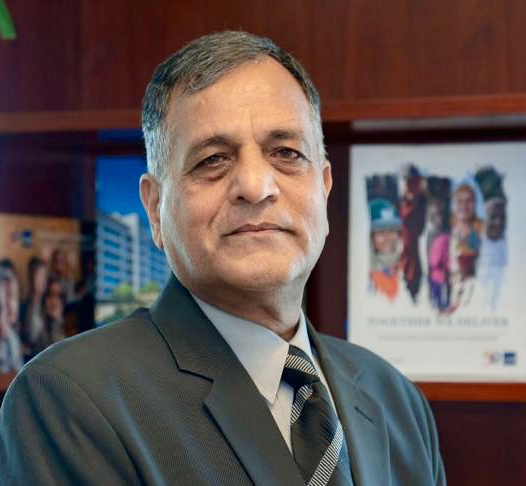
Ashok Lavasa, a former election commissioner and former finance secretary of India, is a former vice president of the Asian Development Bank. Roli Asthana is a senior adviser at ODI Global Advisory, a senior research associate at SAIIA, an associate research fellow at Chatham House, and an associate at LSE IDEAS.








Dear Trevor: Africa is calling (1)