Africa has taken a significant step toward improving its climate resilience with the launch of the African Meteorological Satellite Application Facility (AMSAF), a new space-enabled weather nowcasting network designed to enhance short-term forecasting and early warning systems across the continent.
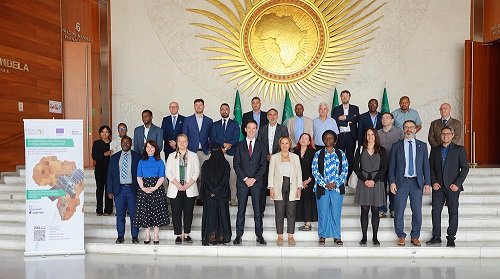
The initiative, launched recently in Addis Ababa, Ethiopia, is backed by the European Union and the African Union, and will leverage next-generation satellite data to help national meteorological and hydrological services produce more accurate “nowcasts” covering the 0–6 hour forecast window.
Severe weather events across Africa, including storms, tornadoes and flooding, have in recent years caused widespread destruction, infrastructure damage, displacement and loss of life. Millions of people are affected annually, underscoring the need for faster and more precise weather intelligence to support disaster preparedness and response.
Through AMSAF, meteorological agencies across Africa will be able to strengthen their short-term forecasting capabilities, with outputs tailored to regional hazards and national priorities. The system is also expected to reinforce global and continental frameworks, including the United Nations Early Warnings for All initiative and the African Union’s AMHEWAS multi-hazard early warning strategy.
Speaking on the development, Phil Evans, director-general of EUMETSAT, described the initiative as a major milestone in Africa’s journey toward meteorological self-reliance.
“The AMSAF represents an important step in supporting African countries to take full ownership of their weather forecasting capabilities,” he said.
“By advancing the development of locally tailored satellite products, we are helping strengthen resilience to extreme weather and support sustainable development across the continent.”
According to project details, AMSAF will establish a coordinated network of regional nowcasting centres serving Western, Eastern, Central and Southern Africa. The African Centre of Meteorological Applications for Development (ACMAD), based in Niger, will also play a supporting role within the network.
The centres will rely on data from Meteosat Third Generation (MTG) satellites to generate high-resolution nowcasts that support real-time decision-making by national authorities. Each centre will be equipped with either local or cloud-based processing systems and supported by structured capacity-building programmes aimed at strengthening technical expertise across participating countries.
The initiative is being implemented under the European Union–funded Strengthening Early Warning in Africa (SEWA) project, part of the broader Global Gateway Africa–EU Space Partnership Programme. It is jointly executed by the African Union Commission, the European Organisation for the Exploitation of Meteorological Satellites (EUMETSAT), and the European Centre for Medium-Range Weather Forecasts (ECMWF).
As part of the rollout, EUMETSAT is also expanding access to MTG satellite data across Africa through increased bandwidth on its EUMETCast-Africa dissemination system, a move expected to significantly improve data availability for national forecasting services.
Officials say the combined infrastructure, data expansion and regional coordination mark a major step toward strengthening Africa’s ability to anticipate extreme weather events and reduce their human and economic impact.