In a primary health center in rural Nasarawa State, a community health officer holds a smartphone over a child’s chest X-ray. With a weak internet connection, she uploads the image. In under 60 seconds, a result pings back: “High probability of pediatric pneumonia. Severity: Moderate. Recommend specific antibiotics and follow-up scan in 72 hours.” This diagnosis wasn’t made by a distant radiologist, there are only about 80 registered radiographers in the entire state, but by an Artificial Intelligence model trained on thousands of lung images. This scene, repeated in pilot programmes across Nigeria, hints at a future where AI acts as a “force multiplier” for the nation’s critically overstretched healthcare workforce.
Nigeria’s healthcare challenges are stark: a doctor-to-patient ratio of 1 to 5,000 (WHO recommends 1 to 600), a heavy burden of infectious diseases like malaria, TB, and cholera, and a rising tide of non-communicable diseases like diabetes and hypertension. Infrastructure and specialist expertise are concentrated in urban centres, leaving millions in rural areas reliant on thinly staffed clinics. Into this gap steps AI, not as a replacement for human doctors, but as a powerful diagnostic and logistical ally.
The most advanced applications are in medical imaging. Startups like Fyodor Biotech and Helium Health are integrating AI tools that analyse images for signs of tuberculosis, breast cancer, and cervical cancer. These tools can prioritise cases, flagging the most critical scans for a human expert’s immediate attention, thereby reducing catastrophic delays. For a disease like TB, where early detection is crucial to prevent spread, this can be transformative.
Beyond imaging, AI is powering “symptom checkers” and diagnostic support tools. While global apps often fail in tropical contexts, local initiatives are building systems that incorporate symptoms for malaria, Lassa fever, and typhoid. Ubenwa, a Canadian-Nigerian startup, has developed an AI that analyses an infant’s cry to detect signs of birth asphyxia, a major cause of newborn death, using only a smartphone microphone.
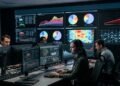
On a macro level, AI is revolutionising public health planning. Predictive epidemiology uses machine learning to analyse disparate data streams, historical outbreak data, real-time climate conditions (like rainfall patterns that increase mosquito breeding), social media mentions of symptoms, and anonymised mobility data from phones. Researchers at the Nigeria Centre for Disease Control (NCDC) and Africa CDC are piloting models that can predict disease outbreaks, such as cholera or meningitis, weeks before they peak, allowing for targeted vaccine drives and resource deployment.
The challenges, however, are immense and sobering. First is the “garbage in, garbage out” principle. AI models are only as good as the data they are trained on. If trained predominantly on Caucasian lung X-rays, an AI will perform poorly on Nigerian patients. Building large, diverse, and ethically sourced medical datasets from Nigerian hospitals is a foundational and expensive task. Data privacy and patient consent are paramount concerns.
Second is integration and trust. Will healthcare workers trust an AI’s diagnosis? How are roles redefined? Successful pilots, like one in partnership with IRD Nigeria for TB screening, involve extensive training of health workers to become “AI-assisted practitioners,” understanding the tool’s strengths and limitations.
Third is infrastructure. Many primary health centres lack stable electricity, let alone high-speed internet. Solutions are therefore evolving towards “edge computing,” where the AI model can run on a smartphone or a local server with minimal connectivity.
The ethical dimension is critical. AI must not exacerbate existing inequalities by becoming a tool only for private urban hospitals. Policymakers at the Federal Ministry of Health and NITDA are beginning to draft guidelines for the equitable adoption of AI in health, focusing on public good.
“The goal is augmented intelligence, not artificial intelligence,” explains Dr. Ibrahim Bello, a public health informatician. “We want the community nurse in Bonny to have the diagnostic support of a Lagos teaching hospital consultant at her fingertips. AI can be that bridge, turning every clinic into a frontline of expert care.”
In a nation where the right to health is a daily struggle for millions, AI offers a glimmer of hope, a promise of expertise democratised, diseases predicted, and lives saved through intelligent, compassionate technology built for Nigerian realities.
business a.m. commits to publishing a diversity of views, opinions and comments. It, therefore, welcomes your reaction to this and any of our articles via email: comment@businessamlive.com