N’DJAMENA—As everyone knows, the war in the Middle East has caused a sharp spike in oil, gas, and food prices, creating severe economic hardship worldwide, and especially in developing countries. But less well understood is the war’s effect on government borrowing costs. Across the Global South, what began as a price shock has morphed into a debt shock.
The seeds of the current crisis were sown during the period of low interest rates in the 2010s, when low- and lower-middle-income countries borrowed heavily in dollars. Many invested these funds productively and reaped the rewards of stronger economic growth. But after the COVID-19 pandemic, global interest rates rose and the US dollar strengthened, making borrowing significantly more expensive.
By 2023, developing countries’ combined external debt had reached $11.4 trillion, representing 99% of their entire export earnings. Total interest payments were 26% higher than they had been just two years earlier, and an unprecedented 54 countries—nearly half of them in Africa—were committing at least 10% of their government budgets to interest payments. Last year, UN Trade and Development (UNCTAD) calculated that 3.3 billion people were living in countries that spent more on debt payments than on basic services such as health or education, and the situation has only grown worse since then.
After COVID-19, many countries did shift toward local currency borrowing to mitigate exchange-rate risks. But now they face higher interest rates as a result. At the end of March, the International Monetary Fund identified nine countries as being in debt distress, with an additional 23 at high risk and 28 at “moderate” risk. That is no small matter. Debt distress means that you are unable to pay your creditors, because you are either already in default or being kept out of default only with IMF support.
The energy shock triggered by the Iran war has further increased borrowing costs, particularly for energy-importing countries, and this trend may persist if current geopolitical tensions continue. Making matters worse, there have been broader structural shifts in the global debt landscape, owing to the changing composition of creditors and upcoming repayment peaks for certain types of debt, notably bilateral lending. These trends have left countries with large near-term refinancing needs especially vulnerable.
What can be done? First, the IMF should go into full crisis-response mode. Reviving instruments such as the Food Shock Window and expanding access to emergency financing would help countries cope with the immediate pressures.
Second, multilateral development banks should scale up disbursements, as they did during the pandemic. They are currently sitting on significant retained earnings, and recent reforms to their capital-adequacy frameworks have given them more lending capacity.
Third, bilateral creditors should continue to accelerate debt restructuring processes. Recent improvements under the G20 Common Framework have enhanced coordination, but implementation remains too slow relative to the scale and urgency of current needs.
Fourth, these approaches to debt treatment should continue to evolve. Further efforts are needed to ensure faster and more coordinated outcomes across all creditor groups. Although private creditors are already part of restructuring processes, coordination challenges and delays continue to prevent timely resolutions.
More broadly, there has been much international debate about how to improve arrangements for sovereign debt. One popular idea is “debt swaps,” in which a country secures refinancing conditional on investment of some of the proceeds in nature-based solutions, climate-change mitigation/adaptation, health, education, or other development-related projects. Another is the “pause clause,” which allows a country to suspend debt payments following an extreme weather event or other disaster. In a promising development, some private creditors are now signaling their willingness to include such clauses for more general contingencies if governments offer greater transparency about their financial situation.
Moreover, the World Bank and the IMF are in the process of reforming their Debt Sustainability Analyses to account for the risks of climate impacts and nature loss, and for the benefits of mitigating them (and some countries are also conducting such analyses for themselves). Under UNCTAD, a new Borrowers’ Platform has been launched to help debtor countries share best practices and speak with a stronger collective voice. And the recent Africa Forward Summit, co-hosted by Kenya and France, featured lively conversations about organizing new debt initiatives. Everyone acknowledged that the new international situation calls for new responses.
Unfortunately, for all the promise of debt swaps, pause clauses, and other innovations, such measures are unlikely to be sufficient or be scaled up fast enough to address the current shock. It is rare nowadays for a country to default outright; instead, most are forced to cut investment in their own development. Yet we know that early engagement with restructuring mechanisms can help restore fiscal space more effectively than delaying action or relying on costly short-term financing.
During the COVID-19 crisis, coordinated international action allowed countries to suspend debt payments to protect their populations. A similarly ambitious response is needed now. Once again, a global crisis is disproportionately burdening countries that did not cause it. The international community has a duty to respond.
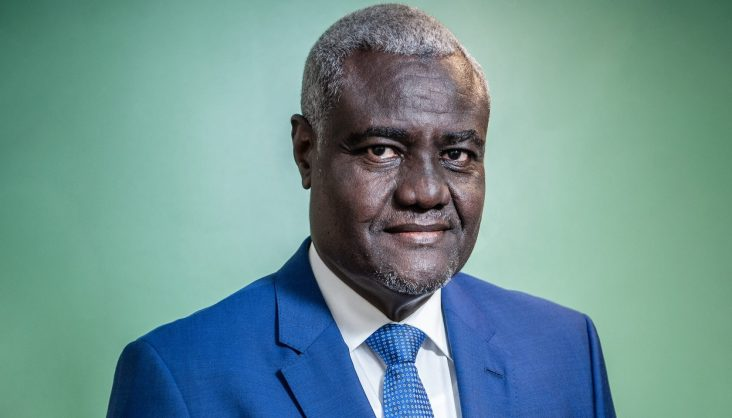
Moussa Faki Mahamat, a former prime minister of Chad and former chair of the African Union Commission, is Special Envoy of the Pact for Prosperity, People and the Planet.
Copyright: Project Syndicate, 2026.