- From domestic shortages to global supplier
- Game changer in 1.4m bpd capacity target
- Refinery changing global supply flows
- Positive balance of payments, job creation seen
- Will stimulate auxiliary industries
For decades, the global petroleum economy has revolved around a familiar geography of power. Crude has flowed out of the Middle East, Russia and parts of Africa. Refined products have been dominated by large-scale processing hubs in Europe, North America and Asia. Trading routes have been stable, predictable and deeply entrenched in a system built over generations.
However, a development that would have been difficult to imagine at the start of this century is now taking concrete shape in global energy markets, with Nigeria emerging as a serious contender in refined petroleum trade.
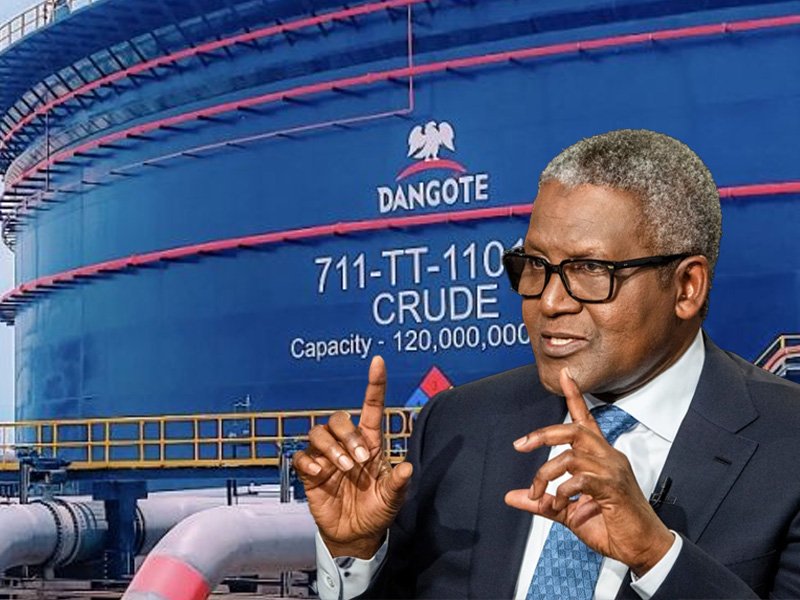
At the helm of this transformation is the Dangote Petroleum Refinery located in Lagos, Nigeria’s most populous and industrialised city. The refinery is rapidly evolving from a domestic industrial project into a strategically significant global energy asset with influence extending far beyond Africa’s fourth largest economy.
A refinery scaling beyond national ambition
The latest phase of that transformation is anchored in a bold expansion plan.
Dangote Petroleum Refinery has commenced construction of a second crude processing unit with a capacity of 700,000 barrels per day. When completed, the expansion will lift total refining capacity at the Lekki facility to 1.4 million barrels per day; more than double current output levels.
According to David Bird, chief executive officer of Dangote Petroleum Refinery, the new unit is expected to begin operations by the end of 2028. If delivered on schedule, the project will position the Lagos-based complex among the largest refining installations anywhere in the world.
The announcement represents a significant escalation of earlier projections, and more importantly, a clear signal of confidence in the long-term viability of a project that has faced years of scepticism, delays and structural challenges.
What was initially conceived as a solution to Nigeria’s chronic dependence on imported petroleum products is now evolving into a globally competitive refining platform integrated into international trade flows. The implications extend well beyond Nigeria’s borders.
From import dependency to export relevance
For much of its post-independence economic history, Nigeria has embodied a structural contradiction. It is undoubtedly Africa’s largest crude oil producer, yet one of its largest importers of refined fuel.
Over the past year, the Dangote Refinery has moved from commissioning phase to near-full operational utilisation, rapidly scaling output across gasoline, diesel and aviation fuel segments. This has already begun to reshape domestic fuel dynamics and regional trade patterns.
One of the most symbolic milestones came earlier this year when Nigeria recorded a net export position in petrol, an outcome that would have been difficult to envisage a decade ago.
At the same time, Dangote Refinery has emerged as a significant exporter of aviation fuel to international markets, particularly Europe.
Industry estimates report that at peak periods, the refinery exported around 100,000 barrels per day of jet fuel, with about half directed toward European destinations.
This development is especially significant given Europe’s historical dependence on refined fuel imports from the Middle East and Asia, and its limited domestic refining growth in recent years.
In effect, Nigeria is no longer merely a crude oil exporter. It is becoming a participant in downstream global fuel markets.
Tightening jet fuel market creates opportunity
The timing of Dangote Refinery’s rise coincides with an increasingly constrained global aviation fuel market.
Recent geopolitical disruptions, including tensions in the Middle East and instability affecting key shipping corridors, have placed significant pressure on global fuel supply chains.
Now, an additional shock has emerged. Russia’s decision to temporarily suspend aviation fuel exports until November 30 has removed another major supplier from an already strained market. The move, aimed at stabilising domestic fuel availability amid refinery disruptions, has created a substantial gap in global jet fuel supply.
Energy analysts say the development is likely to intensify competition among alternative suppliers at a time when demand from airlines continues to recover and expand.
For Dangote Refinery, the timing is highly consequential. Already one of the fastest-growing aviation fuel exporters in the world, the refinery now finds itself in a position to further expand its footprint in Europe and other high-value markets.
Europe’s search for alternative suppliers accelerates
Europe has become the most visible beneficiary, and casualty, of global fuel disruptions.
Traditionally reliant on Gulf producers for up to 75 percent of its aviation fuel imports, the region has been forced to diversify supply sources following successive shocks to global energy markets.
The combination of Middle East instability, sanctions on Russian energy exports, and now temporary restrictions on Russian aviation fuel shipments has significantly altered supply dynamics.
In this environment, Dangote Refinery has emerged as an unexpected but increasingly important supplier.
Industry data indicates that Nigerian aviation fuel exports to Europe reached record levels in recent months, with volumes climbing to 66,000 barrels per day at peak periods.
In some months, Dangote accounted for as much as 20 percent of Europe’s imported jet fuel supply, a remarkable figure for a refinery that only began production around 2024.
According to market tracking data from S&P Global Commodities at Sea, Dangote Refinery emerged as the world’s largest exporter of aviation fuel during periods of heightened disruption earlier this year.
This rapid rise underscores both the severity of global supply shortages and the ability of new entrants to capture market share when structural gaps emerge.
The refinery’s operational strategy has also evolved in response to global market conditions.
Chief executive David Bird has previously disclosed that the facility has been operating in what he described as “max jet mode”; a production configuration aimed at maximising output of aviation fuel to capture elevated global demand.
This strategic pivot reflects the reality that aviation fuel has become one of the most profitable segments in the refining value chain, particularly during periods of global disruption.
With Russia temporarily withdrawing from export markets and Middle East supply chains still under pressure, Dangote’s ability to scale jet fuel production positions it advantageously in a tightening market.
Energy economists note that such windows of opportunity are often decisive in shaping long-term market positioning.
Beyond immediate market dynamics, the rise of Dangote Refinery reflects a deeper structural shift in Africa’s position within global energy systems.
Historically, the continent has functioned primarily as a supplier of raw crude oil, exporting unprocessed hydrocarbons while importing refined products at higher cost. This structure has long constrained industrial development and created persistent foreign exchange pressures for many economies.
Dangote’s model challenges that paradigm. By refining crude domestically and exporting finished products, Nigeria is beginning to capture more value within the hydrocarbon chain, rather than exporting it abroad.
The implications are significant and include but not limited to:
- Reduced dependence on imported refined fuel
- Improved resilience against global supply shocks
- Increased export diversification
- Expansion of industrial capacity and logistics networks
At a macroeconomic level, expanded refining capacity could strengthen Nigeria’s balance of payments, support job creation, and stimulate auxiliary industries such as shipping, storage and distribution.
Beyond refining operations, Dangote is also positioning itself as a global trading participant.
The company has indicated plans to expand its trading operations in parallel with refinery growth, effectively moving into a more integrated energy model that combines production, logistics and commodity trading.
This evolution mirrors established global energy majors that operate across multiple segments of the value chain to optimise pricing, manage risk and access global markets more efficiently.
Such a model allows firms not only to produce refined fuels but also to control how and where those products are distributed globally.
For Dangote, this represents a significant strategic shift from regional refiner to potential global energy intermediary.
Notably, the expansion of Dangote’s refining ambitions is not confined to Nigeria.
Discussions involving Kenyan authorities regarding a potential Dangote-backed refinery project in East Africa indicate that the group may be pursuing a continental strategy. If realised alongside the Lekki expansion, combined capacity could approach two million barrels per day, placing the group among the largest refining operators globally.
While Dangote’s rise is significant, it is also occurring against the backdrop of constraints in global refining capacity. Investment in new refining infrastructure has slowed in many advanced economies due to environmental regulation, high capital costs and policy uncertainty around long-term fossil fuel demand.
As refining capacity in advanced economies continues to decline due to ageing infrastructure and limited new investment, global fuel supply is becoming increasingly concentrated in a smaller number of large-scale, highly efficient refineries.
This development is opening space for emerging markets with strong crude access, rising demand and improving logistics networks to play a larger role in global refined fuel production, with the Dangote refinery now positioned within this evolving supply structure.