
Africa is moving from a narrative of aid to a narrative of investment. Not in slogans, but in the way leaders are framing the continent’s future – at the Africa-France Summit in Nairobi, at the Africa CEO Forum in Kigali, and in the tone of every serious economic conversation happening across the continent right now. Global capital is beginning to respond: according to UNCTAD, foreign direct investment into Africa reached $97 billion in 2024, one of the strongest rebounds in recent years. Early indicators from the African Development Bank suggest that inflows in 2025 held broadly steady, likely in the $95–$105 billion range, supported by stronger macroeconomic performance across the continent. With Africa’s GDP projected to grow 4.3 percent in 2026, a credible projection places FDI inflows in the $105–$115 billion range, barring major global shocks.
Meg Whitman, the former U.S. Ambassador to Kenya, captured the moment with precision: “The question is no longer the risk of investing in Africa. The real question is the risk of not investing in Africa.” That framing reflects a broader reality.
Akinwumi Adesina, who spent a decade mobilising over $300 billion for the continent, puts it plainly: “Africa is not a frontier waiting to be discovered. It is a market whose demographic weight and economic potential are becoming too large to ignore.”
African leaders are saying the same thing. President Paul Kagame has argued that “Africa is not asking for charity. Africa is asking for investment and partnership.” President William Ruto has been equally direct: “The world cannot grow if Africa is left behind.”
These are not rhetorical flourishes. They are signals of a continent reorganising its economic foundations. But the headline numbers mask deeper vulnerabilities. Fragile and conflict‑affected places still depend heavily on humanitarian channels. That support saves lives and must continue, but it cannot build the foundations of long‑term stability. Humanitarian appeals fell short by $41 billion last year. Displacement now lasts 20 years on average. And by 2030, half of the world’s extreme poor will live in fragile settings. Relief alone cannot shift these trajectories. What these communities need is the ability to participate in markets, but on fair terms, with predictable rules, and with institutions that allow enterprise to grow.
This is where philanthropy can play a catalytic role, not by replacing the state or the private sector, but by strengthening the institutional architecture that makes investment possible.
Missing middle: MSMEs and systems they depend on
Africa’s economic engine is not a handful of large corporations. It is tens of millions of MSMEs, which account for over 80 percent of jobs and up to 60 percent of GDP in many African economies. These are the traders, processors, manufacturers, logistics operators, digital service providers, and small‑scale producers who create most of the continent’s jobs. If Africa is to generate the millions of dignified jobs its young population needs, these firms must be able to grow, formalise, and scale. But MSMEs do not grow because we celebrate entrepreneurship. They grow because the systems around them work. They need predictable regulations, transparent licensing, functioning commercial courts, investment‑ready governments, and financial markets that know how to lend to small firms. They need digital IDs, interoperable payment systems, and tax regimes that do not punish formality. They need value‑chain governance that reduces friction rather than multiplies it. This is the institutional architecture Africa has struggled to build at scale, and it is precisely where philanthropy has the greatest leverage.
The governance gaps are real. The regulatory unpredictability is real. Anyone who has tried to close a deal in three African markets in the same quarter knows this. But that is exactly why philanthropy must engage with systems, not retreat from them.
Where philanthropy can lead with real impact
Philanthropy has already begun backing entrepreneurs and early‑stage ventures. That work matters. But the next frontier is not only about supporting individual firms. It is about shaping the systems that allow thousands of firms to thrive.
Philanthropies can support regulatory reform that shortens licensing times, reduces compliance burdens, and modernises outdated frameworks. They can strengthen investment‑enabling institutions – credit registries, insolvency systems, municipal investment units, commercial dispute‑resolution mechanisms – that investors quietly require before committing capital. They can back MSME‑support platforms that integrate finance, training, market access, and digital tools. They can fund the technical work governments struggle to prioritise: drafting regulations, building data systems, designing investment pipelines, coordinating across ministries. And they can de‑risk institutional experiments that can later be scaled by governments and investors.
This is not glamorous work. It does not produce ribbon‑cuttings or viral videos. It is, frankly, the least fundable work in development finance. And the most important. It is the work that turns resilience into investable opportunity. It is the work that shapes markets, not just projects.
A continental platform for this moment: GAIS
One of the emerging platforms positioned to anchor this shift at a structural and institutional level is the Global Africa Investment Summit (GAIS). This is a new, African‑owned institution designed to mobilise investment, curate bankable pipelines, and strengthen the systems that enable capital to flow across the continent. GAIS is not another conference. It is being built as a permanent continental engine, working year‑round to support governments, investors, and regional bodies to align priorities, reduce transaction costs, and accelerate reforms.
Philanthropies can partner with GAIS in ways that amplify their impact. They can fund investment‑enabling reforms that shorten the distance between a government’s investment ambitions and an investor’s willingness to commit. They can support national and regional pipelines to identify, prepare, and package projects to the standard of bankability that serious investors require. They can strengthen government capacity to originate, structure, and negotiate investment deals on equal terms with private capital. They can back research and data systems that close the information gaps which make African markets appear riskier than they actually are. And they can help frontier markets build credibility by funding the early, unglamorous work – policy signalling, institutional capacity, first transactions – that must happen before serious capital will look twice.
GAIS offers philanthropies a structured, continental platform through which their investments in systems change can scale beyond individual projects, beyond isolated pilots, and into the architecture that shapes Africa’s long‑term economic trajectory.
None of this is an argument against humanitarian aid. Aid keeps people alive. But enterprise gives them a future. And strong institutions make that future durable. Africa’s shift from aid to investment is already underway. The salient issue now is building the systems and institutions that allow this shift to take root.
Philanthropy can accelerate that transition decisively by backing the builders, the reformers, and the institutional architects – such as GAIS – who understand how to structure Africa’s sovereign assets and unlock markets long considered too complex or too risky.
The continent is not waiting. The only open question is whether philanthropy will show up with the sophistication this moment demands.
- business a.m. commits to publishing a diversity of views, opinions and comments. It, therefore, welcomes your reaction to this and any of our articles via email: comment@businessamlive.com

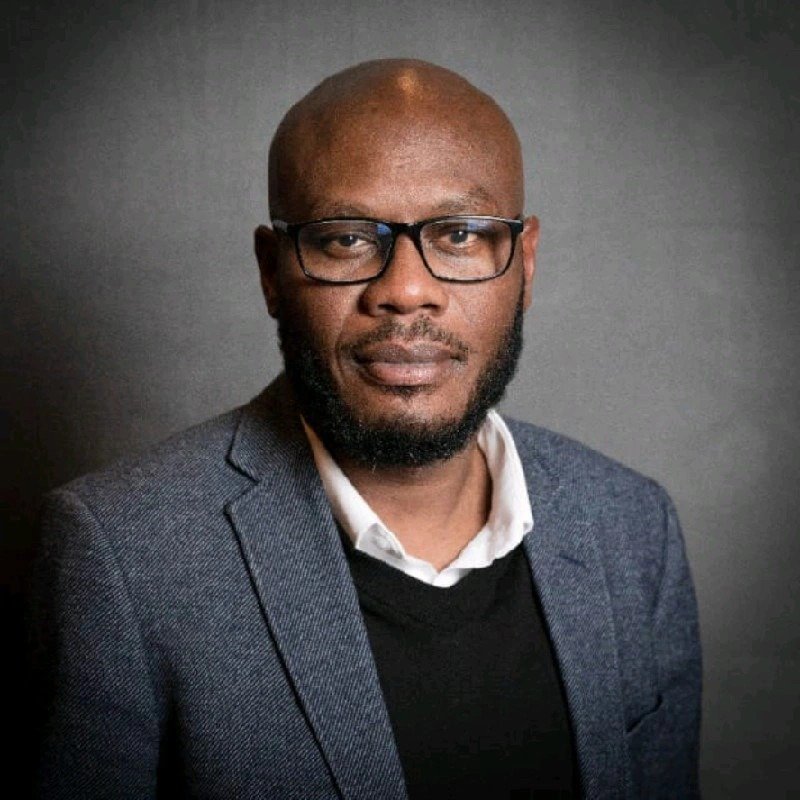
Dr. Wale Osofisan, PhD, is a seasoned governance strategist and policy analyst with over 23 years of experience advancing African-led, evidence-based solutions to political transitions, humanitarian crises and development challenges.






Oni at 66: Investor protection begins with a knowledgeable financial press