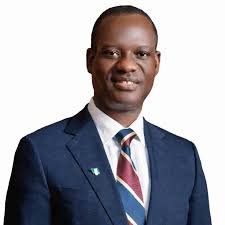
The federal government has been urged to establish a specialised Commercial Dispute Resolution Tribunal to accelerate the resolution of business disputes, with Taiwo Oyedele, the minister of finance and coordinating minister of the economy, warning that Nigeria’s slow judicial process is eroding investor confidence and undermining the country’s ambition to attract long-term capital.
Speaking at the Second Biennial Conference of the Capital Market Academics of Nigeria in Abuja on Tuesday, Oyedele said commercial disputes currently take an average of 15 years to pass through the High Court, Court of Appeal and Supreme Court, creating legal uncertainty that discourages domestic and foreign investment.
He argued that speedy enforcement of commercial contracts has become as important as macroeconomic reforms in determining whether investors commit long-term capital to Nigeria.
“The capital market runs on contracts. Virtually every financial instrument, from bonds and syndicated loans to private placements and structured notes, depends on enforceable agreements. When disputes linger for years, capital simply looks elsewhere,” Oyedele said.
The minister proposed creating a dedicated Commercial Dispute Resolution Tribunal staffed by judges and arbitrators with expertise in commercial, financial and capital market matters. According to him, the tribunal should deploy digital case management systems and mandatory timelines to ensure disputes involving businesses, suppliers, financiers and joint venture partners are resolved within predictable timeframes.
The proposal comes as the federal government intensifies efforts to improve Nigeria’s investment climate beyond fiscal and monetary reforms, with policymakers increasingly acknowledging that institutional quality remains a critical determinant of capital inflows.
Analysts have long identified weak contract enforcement and lengthy court processes as major constraints to foreign direct investment, with investors frequently citing legal uncertainty among the risks associated with investing in Nigeria.
Oyedele argued that while governments often focus on tax incentives and fiscal concessions, investors place greater value on predictable institutions and the rule of law.
According to him, policy consistency, judicial independence, regulatory certainty and efficient public institutions rank higher than tax holidays in investment decisions.
“Capital hates uncertainty more than taxation,” he said, noting that investors are generally willing to accept moderate tax burdens provided the operating environment remains stable and contractual obligations are enforceable.
The minister outlined what he described as the “seven laws of capital attraction,” maintaining that capital seeks predictable rather than merely high returns and flows more readily to jurisdictions with credible institutions than to countries relying solely on generous investment incentives.
He also called for a rethink of public attitudes towards government borrowing, arguing that debt should be evaluated based on the productivity of the assets it finances rather than headline debt figures.
According to him, governments and companies that borrow to fund projects capable of generating returns above their financing costs are making economically rational decisions.
“The relevant question is never simply how much debt there is. It is always debt for what, at what cost, against what return and repayable on what terms,” he said.
Oyedele equally challenged Nigerian entrepreneurs to embrace equity financing instead of seeking to retain full ownership of relatively small businesses, arguing that partial ownership of a larger, well-capitalised company often creates greater wealth than complete ownership of a business constrained by limited capital.
Also speaking at the conference, Emomotimi Agama, the director-general of the Securities and Exchange Commission (SEC),stressed the importance of evidence-based policymaking in strengthening Nigeria’s capital market.
Agama said closer collaboration between regulators and academics would improve regulatory quality, particularly as the Commission implements reforms under the Investments and Securities Act 2025 and the country’s new 10-year Capital Market Master Plan.
“I have long believed that good regulation begins with good thinking,” he said. “The policies we make at the Securities and Exchange Commission are only ever as strong as the evidence and the ideas that inform them.”
Earlier, Uche Uwaleke, president of CMAN, called for stronger partnerships between universities, regulators and financial institutions to bridge the gap between academic research and industry practice.
He urged the Federal Ministry of Education and the National Universities Commission to recognise industry experience in academic appointments and promotions, while recommending structured research fellowships and sabbatical programmes between universities and financial regulators.
The conference, themed “The Nigerian Capital Market as a Catalyst for Equitable and Inclusive Growth,” brought together policymakers, academics and capital market stakeholders to examine reforms aimed at improving market efficiency, attracting investment and supporting sustainable economic growth.