The economics of airline growth are changing. Rather than tying up billions of dollars in aircraft purchases, carriers are increasingly turning to Aircraft, Crew, Maintenance and Insurance (ACMI) leasing arrangements to expand networks, reopen suspended routes and respond more quickly to shifting passenger demand.
The trend is becoming particularly pronounced across Africa, where financing constraints, limited fleet availability and prolonged aircraft delivery schedules are encouraging airlines to adopt more flexible capacity models.
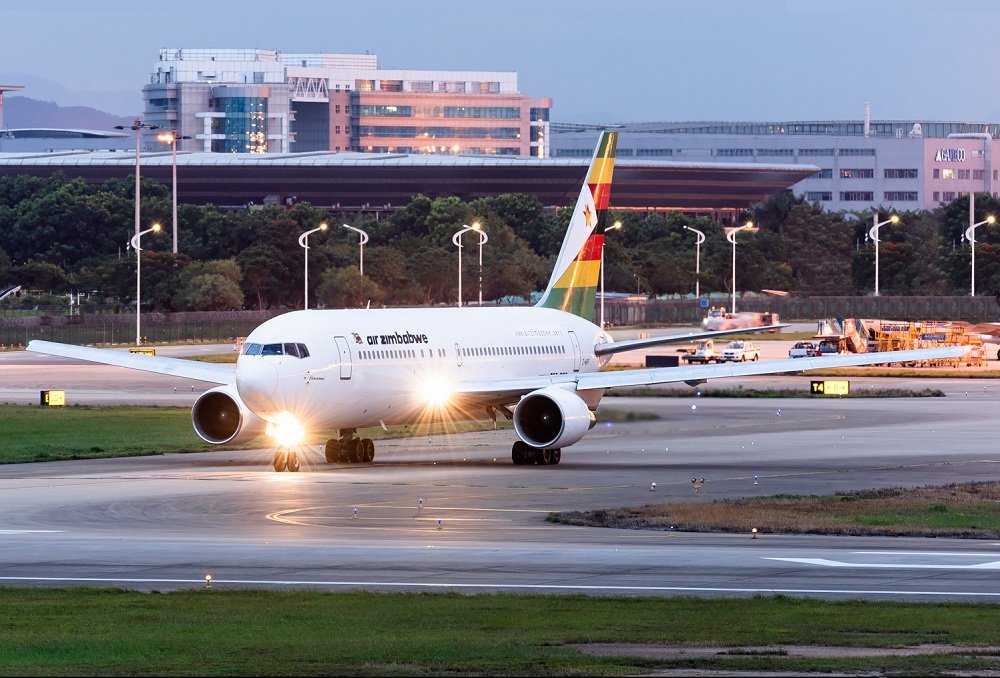
The latest example comes from Zimbabwe, where Air Zimbabwe is preparing to resume direct scheduled flights between Harare and London after a 14-year absence; not by purchasing a new widebody aircraft, but by securing one through a long-term ACMI arrangement facilitated by global aviation specialist Chapman Freeborn.
Under the arrangement, Spanish carrier Plus Ultra will operate an Airbus A330 on behalf of Air Zimbabwe under a long-term ACMI agreement, with services between Harare and London Gatwick expected to commence by the end of July 2026.
The operation will initially offer three weekly frequencies, with flights carrying Air Zimbabwe’s flight code while Plus Ultra provides the aircraft, flight crew, maintenance and insurance.
Chapman Freeborn, a global aircraft charter and leasing specialist and part of Avia Solutions Group, structured the ACMI arrangement and provided contract management support throughout the transaction.
Rather than representing a conventional aircraft lease, the agreement enables Air Zimbabwe to restore a strategically important long-haul route without immediately committing to the capital expenditure and operational complexity associated with acquiring and operating its own widebody fleet.
Why ACMI is becoming big business
The commercial logic behind ACMI agreements is straightforward.
Instead of investing hundreds of millions of dollars in purchasing aircraft, recruiting crews, establishing maintenance programmes and obtaining regulatory approvals, airlines can lease a fully operational aircraft package from another carrier.
The lessor supplies the aircraft, pilots, cabin crew, maintenance and insurance, while the airline focuses on ticket sales, route management and commercial operations.
The model significantly reduces entry costs, shortens launch timelines and enables carriers to respond more quickly to changes in passenger demand.
Beyond fleet management, the Harare-London service represents the restoration of an important economic corridor.
The direct route is expected to strengthen business travel, tourism and family connections between Zimbabwe and the United Kingdom while improving travel options for the country’s sizeable diaspora.
The service is also expected to expand direct cargo capacity, particularly for time-sensitive exports such as fresh horticultural produce and other perishables destined for British markets.
Improved air connectivity has become increasingly important for African economies seeking to diversify exports beyond raw commodities.
Reliable long-haul cargo capacity enables producers to access premium overseas markets while reducing transit times for high-value agricultural products.
Capacity solutions replace fleet ownership
According to Chapman Freeborn, demand for flexible aircraft capacity continues to grow across Africa as airlines rebuild networks following years of operational disruption.
“This is an important milestone for Air Zimbabwe and a significant step in restoring direct connectivity between Zimbabwe and the United Kingdom. We are proud to have played an important role in supporting this project, working closely with Air Zimbabwe and Plus Ultra to help deliver the right structure for the route,” said Linas Dovydenas, president, India, Middle East and Africa (IMEA) at Chapman Freeborn.
Dovydenas noted that airlines increasingly require flexible capacity solutions that allow them to respond quickly to market demand while managing fleet requirements more efficiently.
“Across Africa, we continue to see growing demand for flexible capacity solutions as airlines look to rebuild networks, respond to passenger demand and manage fleet requirements more efficiently.
“ACMI can play an important role in supporting that growth, particularly on strategic routes where speed, flexibility and operational reliability are essential,” he added.
Although passengers experience a seamless airline service, long-haul ACMI arrangements involve extensive coordination between multiple aviation stakeholders.
Aircraft compatibility, regulatory approvals, operating certificates, insurance requirements, maintenance planning and commercial agreements must all align before scheduled services can commence.
Daniel Huggins, director of ACMI and Leasing at Chapman Freeborn, said coordinating those elements formed a central part of the company’s role.
“Long-haul ACMI programmes require close coordination between airlines, operators, aviation authorities and commercial partners, from aircraft suitability and planning to regulatory requirements and operational readiness.
“In this case, our team supported the project from a capacity and contract management perspective, helping to bring together the right structure for a strategically important route,” Huggins said.
He added that the project showcases how collaborative leasing solutions can help airlines restore commercially significant routes while reducing implementation risks.
The Air Zimbabwe project reflects developments taking place throughout African aviation.
Many airlines are seeking expansion opportunities as passenger demand continues to recover, yet remain cautious about committing large amounts of capital to fleet acquisitions amid high interest rates, currency volatility and aircraft supply shortages.
ACMI agreements offer an intermediate solution.
Carriers can launch new destinations, test long-haul markets or temporarily increase capacity during peak travel seasons without making permanent fleet commitments.
The model has also become attractive as aircraft manufacturers continue to face production backlogs that have delayed deliveries to airlines worldwide.
Rather than waiting years for new aircraft, operators can access immediate capacity through leasing arrangements.
Leasing becomes a growth industry
For aircraft leasing companies, the changing market is creating significant commercial opportunities.
Chapman Freeborn’s ACMI division supports airlines globally with short-, medium- and long-term aircraft requirements covering passenger, regional and cargo operations.
The company provides aircraft leasing, charter and ACMI services designed to help airlines manage fluctuating demand, restore suspended routes and address operational challenges without expanding permanent fleets.
Its parent company, Avia Solutions Group, has built a diversified aviation services portfolio spanning ACMI operations, aircraft maintenance, repair and overhaul (MRO), pilot and crew training, ground handling and other aviation support services.
The trend highlights how aviation is evolving beyond aircraft ownership towards integrated service models where capacity, technical expertise and operational support are increasingly delivered through specialised providers.
For African airlines seeking growth in an increasingly competitive market, access to flexible aircraft capacity may prove just as important as access to aircraft themselves.
As carriers rebuild international networks and reconnect long-haul markets, leasing companies are becoming not merely suppliers of aircraft but strategic partners in the continent’s aviation expansion.