
Nigeria’s electricity sector stands at a historic turning point. For decades, electricity planning, regulation, and investment were concentrated largely within a centralised national framework. Today, following the Electricity Act 2023, states now possess unprecedented authority to establish and regulate their own electricity markets.
This shift presents a remarkable opportunity. It also presents a significant risk.
States now have the ability to accelerate industrial growth, attract investment, and improve living standards through better electricity systems. Yet they also face the possibility of repeating many of the same mistakes that have constrained the national power sector for decades.
Understanding why on-grid power projects fail is therefore no longer an academic exercise. It is a practical necessity for every state government seeking to build a successful electricity market.
The Nigerian paradox
Nigeria possesses many of the ingredients required for a successful power sector. The country has abundant natural gas reserves, substantial renewable energy resources, a large and growing population, and one of Africa’s biggest economies.
Yet, despite billions of dollars invested across generation, transmission, and distribution infrastructure, electricity supply remains inadequate for households and businesses alike. The challenge is not simply a shortage of projects. The challenge is that too many projects fail to translate into reliable electricity services.
Across the country, power plants operate below capacity, transmission networks struggle with congestion, distribution infrastructure remains inadequate, and revenue collection challenges continue to undermine sector sustainability.
The result is a persistent gap between installed capacity and electricity actually delivered to consumers.
Characteristics of failed power projects
Most failed power projects share common characteristics. Some are technically sound but commercially weak. Others are financially attractive but poorly integrated into the wider network. Many are developed without sufficient attention to demand, revenue assurance, fuel supply, regulatory stability, or long-term maintenance requirements.
In many cases, success is erroneously measured by assets constructed rather than electricity delivered. A power plant can be completed. A transmission line can be commissioned. A substation can be inaugurated. Yet the overall project may still fail if the electricity produced cannot be delivered reliably, paid for consistently, and sustained financially over time.
Infrastructure alone does not create successful electricity markets. Systems do.
The cost of failure
The consequences extend far beyond the electricity sector.
When power projects underperform:
- Businesses face higher operating costs.
- Manufacturers lose competitiveness.
- Public institutions struggle to function effectively.
- Investors become reluctant to commit capital.
- Economic growth slows.
The true cost of unreliable electricity is not measured in megawatts. It is measured in lost productivity, reduced investment, and missed economic opportunities.
A new opportunity for states
The emergence of state electricity markets offers an opportunity to rethink old assumptions:
States are closer to consumers and they understand local economic priorities.
They can identify industrial clusters, commercial corridors, agricultural processing zones, and urban growth centres that require reliable electricity. Most importantly, they can design electricity markets around actual demand rather than centrally determined assumptions.
But proximity alone does not guarantee success. States must understand why previous projects failed if they hope to achieve different outcomes.
Lessons for state governments
The national electricity market provides decades of experience from which states can learn. Several lessons stand out.
First, electricity projects must be built around identifiable demand and revenue streams, not simply around infrastructure ambitions.
Second, generation, transmission, and distribution must be planned as a single system rather than as isolated investments.
Third, commercial sustainability matters as much as engineering excellence.
Fourth, investors finance certainty, making regulatory consistency and transparent governance essential.
Finally, success should be measured not by megawatts installed but by electricity reliably delivered to homes, businesses, hospitals, schools, and industries.
States that internalise these lessons will be positioned to attract investment and build sustainable electricity markets.
Those that ignore them risk recreating the same challenges that continue to affect the national grid.
Looking ahead
The future of Nigeria’s electricity sector may increasingly be shaped not by a single national market but by multiple state-led markets competing to attract capital, industries, and economic growth.
The winners will not necessarily be the states with the largest budgets.
They will be the states that understand why power projects fail—and build their markets differently.
Because in every successful electricity system, one principle remains constant:
Reliable electricity is not created by infrastructure alone. It is created by aligning engineering, finance, regulation, and demand into a functioning market.
Next Week: Part 2 — The Distribution Bottleneck and the Hidden Cost of Weak Networks.
- business a.m. commits to publishing a diversity of views, opinions and comments. It, therefore, welcomes your reaction to this and any of our articles via email: comment@businessamlive.com
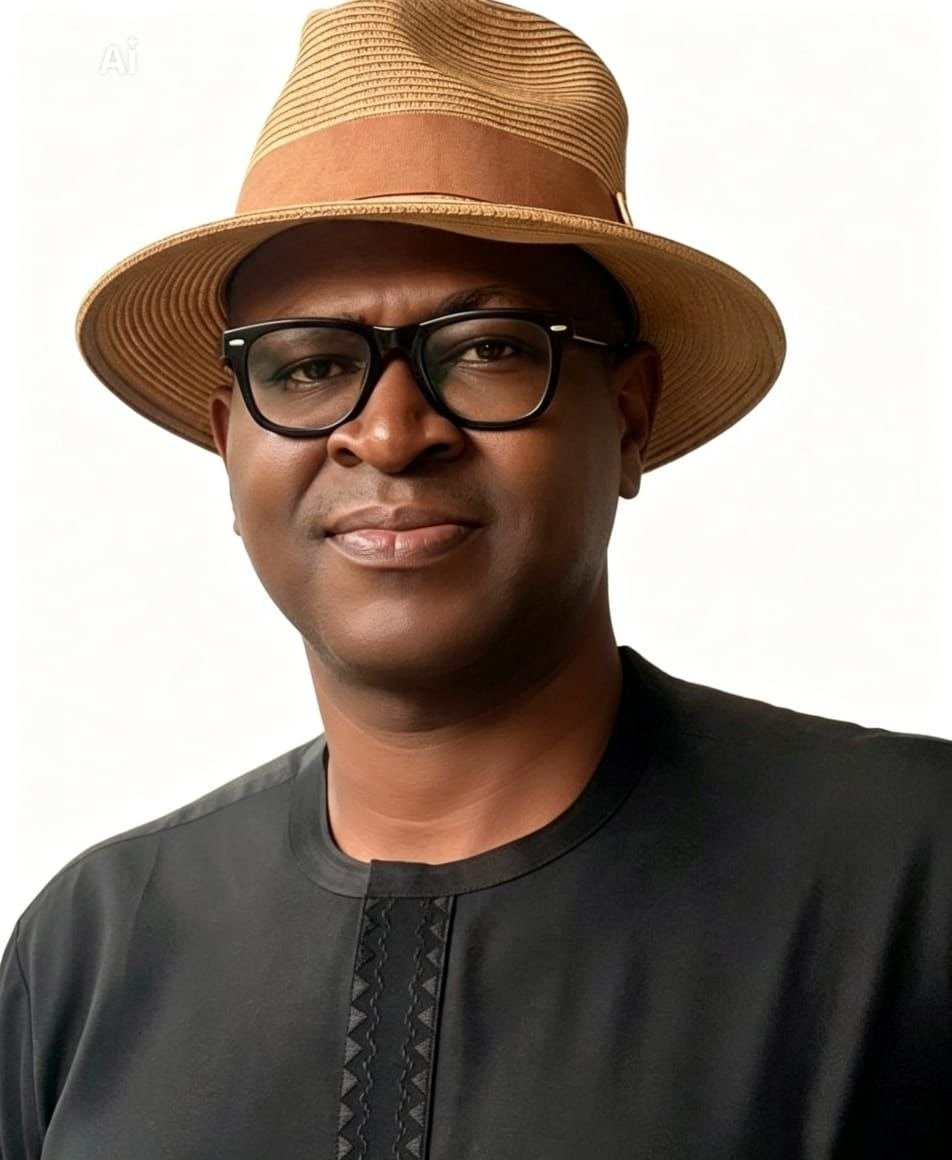
Masah Emmanuel Ikus is a Power and Energy Infrastructure Strategist and the Principal Consulting Partner at EMI Resources Limited. A University of Lagos-trained Electrical Engineer with an EMBA from Lagos Business School, he possesses over 27 years of experience managing complex infrastructure projects across the ICT, Oil & Gas, and Power sectors, specialising in the design of decentralised power systems and solar integration. He currently advises investors, project sponsors, and public institutions on leveraging Nigeria’s energy deficit into bankable commercial opportunities. He can be contacted via masahikus@gmail.com







Dear Trevor: Africa is calling (1)