
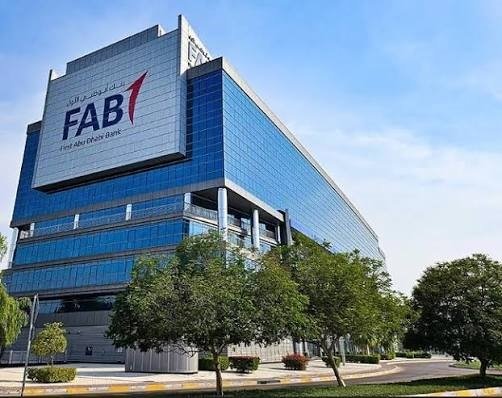
United Arab Emirates (UAE) banking giant First Abu Dhabi Bank (FAB) is poised to make a major push into Africa’s banking industry through South Africa, reinforcing the country’s position as the continent’s largest banking market and preferred destination for global financial institutions despite persistent economic headwinds.
FAB, with assets exceeding $406 billion, ranks among the world’s largest lenders and is seeking to establish a stronger foothold on the African continent through one of its most sophisticated financial markets.
The move follows the resolution of a decade-long legal dispute with South Africa’s First National Bank (FNB) over whether the FAB name was too similar to FirstRand’s retail banking brand. South Africa’s courts ultimately ruled in favour of the UAE lender, removing a significant legal obstacle that had delayed its African expansion plans.
Africa’s banking industry holds total assets estimated at approximately $2.5 trillion, although the sector remains highly concentrated, with South African and Egyptian institutions dominating the market.
Standard Bank Group remains Africa’s largest bank, with assets exceeding $200 billion, while Egypt’s National Bank holds roughly $180 billion in assets. South Africa’s FirstRand and Absa Group each control assets exceeding $100 billion, with Morocco’s Attijariwafa Bank completing the continent’s top five lenders at approximately $80 billion in assets.
Headquartered in Abu Dhabi, FAB was created in 2017 through the merger of the National Bank of Abu Dhabi and First Gulf Bank. The institution has since expanded across five continents, providing corporate and investment banking, consumer finance, wealth management, Islamic banking, payments and real estate finance.
Ownership of the bank reflects Abu Dhabi’s strategic investment interests. Mubadala Investment Company holds a controlling 37.9 per cent stake, while members of Abu Dhabi’s ruling family own a further 15.8 per cent. The remaining 46.3 per cent is publicly traded on the Abu Dhabi Securities Exchange.
Following the favourable court ruling, FAB has received approval from Mubadala to proceed with plans to apply for a South African banking licence, potentially paving the way for one of the Middle East’s largest financial institutions to establish full banking operations in Africa’s most developed financial market.
Gulf’s growing appetite for Africa
Financial experts say FAB’s expansion reflects the Gulf region’s accelerating commercial and investment engagement with Africa, where trade, infrastructure and financial ties continue to deepen.
Total merchandise trade between Africa and the Gulf region is estimated at more than $121 billion annually, with the economic relationship expanding rapidly over the past decade.
Countries within the Gulf Cooperation Council (GCC), particularly the United Arab Emirates and Saudi Arabia, have committed more than $100 billion in foreign direct investment across Africa during the last 10 years.
The UAE has emerged as one of Africa’s fastest-growing investment partners, channeling billions of dollars into ports, logistics, renewable energy, mining, aviation and financial services.
Between 2019 and 2024, UAE investments across Africa exceeded $110 billion, making it Africa’s fourth-largest source of foreign capital and the single largest investing country over that period. Approximately $70 billion of those investments were directed towards renewable energy, port infrastructure and logistics projects.
Industry observers believe establishing a banking presence in South Africa would complement these investments by providing stronger financial connectivity for businesses operating across both regions.
Strategic gateway into Africa
With assets of more than $406 billion, FAB is the UAE’s largest bank and one of the biggest financial institutions across the Middle East and North Africa.
Securing a South African banking licence would significantly strengthen the bank’s capacity to finance trade between Africa and the Gulf, support multinational corporations and facilitate cross-border investment as commercial links between both regions continue to expand.
Development finance experts say South Africa offers FAB direct access to Africa’s largest banking market by assets and one of the continent’s deepest and most sophisticated financial systems.
Industry analysts note that South Africa is home to banking heavyweights including Standard Bank, FirstRand, Absa and Nedbank, whose operations span dozens of African markets.
The country’s deep capital markets, mature regulatory framework and status as a regional financial hub continue to attract major international financial institutions seeking continental expansion.
If regulatory approval is granted, FAB’s entry would introduce another major international player into Africa’s largest banking market while reinforcing South Africa’s position as the continent’s preferred destination for global financial institutions despite ongoing economic challenges.
Nigeria missing from the equation
Some financial experts have questioned why Nigeria has yet to attract a comparable level of international banking interest despite possessing banking sector assets exceeding $160 billion.
According to analysts, Nigeria’s recent currency devaluation, macroeconomic uncertainty and relatively weak domestic productive capacity have reduced its competitiveness as a preferred destination for large international financial institutions seeking regional expansion, allowing South Africa to maintain its lead as Africa’s principal financial gateway.








Dear Trevor: Africa is calling (1)