By Olumide Balogun, director, East & West Africa, Google
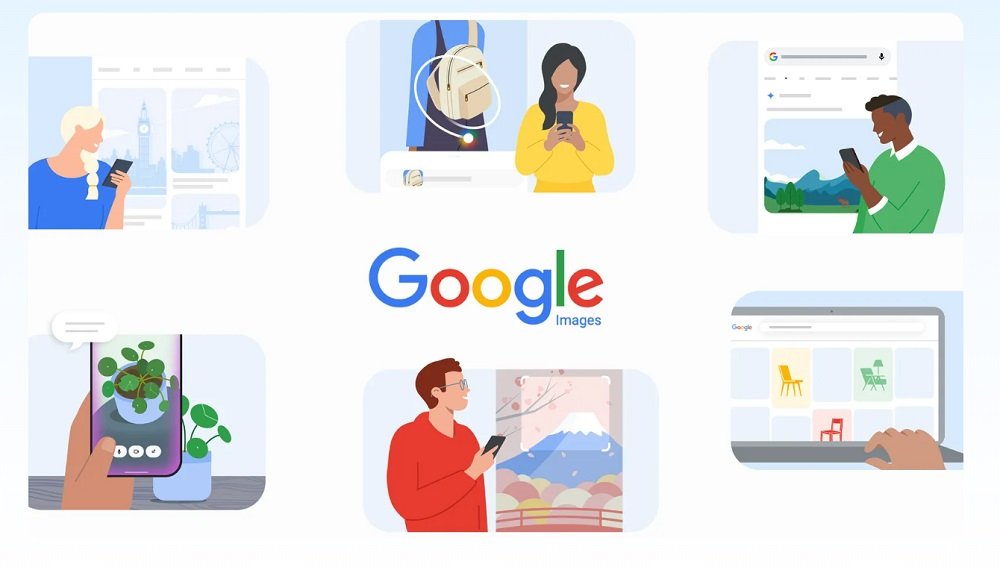
Twenty-five years ago this July, a single dress changed the way the world searches. When Jennifer Lopez wore her green Versace gown to the 2000 Grammy Awards, millions of people went online looking for it, only to find that a page of blue text links could not show them what they wanted to see. Google Images launched in July 2001 in response. The lesson was simple: human curiosity is visual, and technology has to meet people where their curiosity lives.
That insight has travelled far in twenty-five years. First we could search for pictures with words. Then a picture itself could become the query. Then the phone camera became a way of asking questions about the world, and today a shopper can circle an item on their screen, or point a camera at it on the street, and get an answer in seconds. People no longer translate what they see into approximate keywords and hope for the best. They show the search engine what they mean, and increasingly they say it in their own languages, with AI-powered search now available in thirteen African languages, including Yorùbá, Hausa and Kiswahili, serving more than 100 million people across Sub-Saharan Africa.
For African business leaders, this is not an abstract technology story. Around one in four visual searches globally is commercial: someone trying to identify, compare or buy something they have just seen. Our continent’s consumers are moving faster than most. In Nigeria alone, YouTube watch time has grown more than 55 percent year on year, and eight in ten Nigerians say they are optimistic about AI, with the same share already using AI tools to explore business opportunities, nearly double the global average. Picture a guest at a wedding in Lagos or Nairobi spotting sneakers that blend streetwear with traditional fabric. She lifts her phone, circles the image, and is looking at the designer and a link to buy before the next speech begins. If your product is not in that result, someone else’s is.
So the question I hear most often from marketing leaders across the continent is not whether this shift is real. It is: what exactly do I do about it on Monday morning? Here is the playbook I would run over ninety days, in three phases. None of it requires a multinational budget, and none of it requires your team to master a long list of tools before starting. It requires a change in how you think about being found.
Phase one, be findable: days 1 to 30
Start with a test anyone can run before lunch. Take out a phone, open any visual search tool, and point the camera at your five best-selling products. What comes back? If the answer is a competitor, a reseller you do not control, or nothing at all, you have found your most urgent gap, and it is entirely fixable.
The work of this first month is unglamorous but decisive. Get your full catalogue properly photographed and digitised, and load it into a structured product feed, the standard format that allows search engines to recognise your items and connect them to the people photographing similar things in the real world. Give the job to one named owner rather than a committee, and keep the success measure binary: by day 30, every product you sell should be recognisable to a camera. This single piece of housekeeping determines whether you exist in the fastest-growing discovery channel on the continent.
Phase two, be present across the journey: days 31 to 60
The second phase is about how you spend. For two decades, digital marketing meant guessing the exact words a customer might type and bidding on them. That model is breaking down, because customers increasingly do not type at all. They watch, photograph, circle and ask follow-up questions aloud.
You do not need to memorise product names to act on this. What matters is understanding that modern campaigns have three jobs, and AI now coordinates them. The first job is building demand early, placing image-led and video-led creative in the feeds where younger audiences form preferences long before they search. The second is capturing demand at the moment of intent, when someone actively looks for what you sell. The third is connecting the two, which is where AI systems now do the heavy lifting, reading signals in real time and moving budget toward the people most likely to buy rather than the people who happened to type a particular phrase. In Google’s ecosystem, tools like Demand Gen and Performance Max do this work, but the principle matters more than any product: run the three jobs as one system, not as separate line items.
Two discipline rules make the phase work. Measure the value of conversions, not clicks, so the system has a true target to aim at. And stop judging each channel in isolation, because the layers are designed to feed each other. By day 60, you should see your cost per customer falling.
Phase three, multiply your creative: days 61 to 90
The third phase tackles the constraint that quietly stalls most African campaigns: creative production. Producing enough good visual material, in enough variations, for enough audiences, has always been the privilege of big budgets.
That is changing. At Cannes Lions, the advertising industry’s largest global festival, held every June in the south of France, the defining theme this year was AI’s evolution from analytical tool to hands-on creative partner. One demonstration made the point vividly: Google DeepMind and the Google Creative Lab recreated Pelé’s legendary unrecorded 1959 goal, a moment no camera ever captured, using archival photographs and generative modelling.
For your team, the same underlying capability is far more practical. Generative tools can now turn a handful of core campaign assets into hundreds of variations tailored to different audiences. AI video models, which we have tested with filmmakers in Lagos, put near-cinematic quality within reach of a startup budget. And AI can answer plain-language questions about creator partnerships, such as which creators in Accra or Kampala reach audiences that care about sustainable fashion, and return a shortlist in minutes rather than weeks. The brief to your agency should change accordingly: less manual resizing and versioning, more strategy and storytelling, which is where their value has always been.
The takeaway
If you retain one thing from this piece, retain the sequence. Be findable, so the camera can see you. Be present across the journey, so intent finds you wherever it forms. Multiply your creative, so you can meet that intent at scale. Each phase compounds the one before it, and the whole playbook fits on a single page.
That accessibility is the real story for Africa. This continent’s economies run on small and medium enterprises, and for the first time the tools of sophisticated marketing are not gated by scale. A designer in Accra, a founder in Nairobi and an artisan in Ibadan can now run substantially the same playbook as a multinational. The businesses that will define the next twenty-five years here will not necessarily be the largest. They will be the ones that acted early.
Twenty-five years ago, a green dress taught the world’s biggest search engine that text was not enough. The sequel to that lesson is unfolding across Africa right now. Your customers are already searching with their cameras and their voices, in their own languages, guided by AI. The only question is whether, ninety days from now, they will find you.