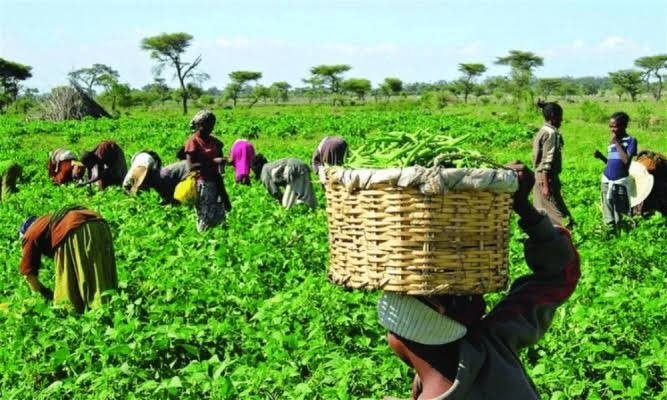
Agriculture has long been regarded as the backbone of Nigeria’s economy, accounting for more than 70 percent of employment and serving as a major contributor to gross domestic product (GDP). According to the Food and Agriculture Organization (FAO), agriculture remains the country’s largest employer, accounting for the livelihoods of more than 70 percent of Nigerians while serving as a major contributor to GDP.
However, despite this economic significance, millions of Nigerians continue to experience food insecurity arising from inadequate food production, weak distribution networks, post-harvest losses, insecurity, inflation and declining purchasing power.
Climate change has further complicated the challenge. Erratic rainfall patterns, prolonged droughts, flooding, desertification and declining soil fertility have significantly reduced agricultural productivity across several ecological zones.
Research by agricultural experts has consistently shown that conventional farming systems, characterised by monoculture production, heavy dependence on synthetic fertilisers, herbicides and pesticides, have accelerated soil degradation, biodiversity loss and ecosystem decline.
These practices, while delivering short-term productivity gains, have also increased agriculture’s vulnerability to climate shocks by weakening the ecological systems that sustain food production.
It is against this backdrop that agroecology is increasingly being promoted by environmental organisations, development experts and some farming communities as an alternative production model capable of balancing productivity with ecological sustainability.
Unlike conventional industrial agriculture, agroecology integrates ecological principles into farming systems.
Rather than depending heavily on external chemical inputs, the approach encourages crop diversity, mixed farming, agroforestry, composting, natural pest management, soil regeneration and water conservation.
It also places considerable emphasis on indigenous knowledge, local seed preservation and farmer participation in agricultural decision-making.
International studies showcase that agroecological systems improve soil health, increase biodiversity, strengthen resilience to climate variability and enhance long-term sustainability.
That push for agroecology was at the forefront recently as the Health of Mother Earth Foundation (HOMEF) intensified its campaign against the adoption of genetically modified crops in Nigeria during a one-day agroecology training programme held at the Be The Help Foundation Farm in Dama-Kusa Village, Kwali Area Council of the Federal Capital Territory (FCT).
The programme brought together farmers, agricultural practitioners and environmental advocates to demonstrate practical agroecological farming methods that organisers say can increase productivity without dependence on genetically engineered seeds or synthetic agricultural chemicals.
Supporters argue that these benefits are particularly relevant for Nigeria, where overdependence on rainfall leaves millions of farmers vulnerable to changing climatic conditions.
The HOMEF training sought to translate these principles from theory into practice.
Participants were taken through farming techniques designed to improve productivity while restoring degraded soils, reducing chemical dependence and strengthening ecosystem resilience.
Seven years of demonstration farming
For the Be The Help Foundation, which hosted the training, agroecology is no longer merely an advocacy concept but an operational farming model.
Chief Executive Officer Samuel Kwasari, who prefers the title “Chief Farmer,” explained that the organisation has spent seven years developing regenerative agricultural systems centred on agroforestry.
The model integrates crop cultivation with strategically selected tree species to improve soil fertility, restore degraded landscapes, conserve water and generate additional income through timber, firewood and carbon credit opportunities.
“Our practice is regenerative agriculture through agroecology, using agroforestry as our major model. We want to produce food sustainably without harming the environment or human health. What you eat is what you are, so food should be safe and free from synthetic chemicals,” ,” Kwasari said.
According to him, agroecology combines scientific knowledge with traditional farming systems adapted to local environmental conditions.
Rather than attempting to dominate nature, the approach seeks to work alongside ecological processes.
The farm incorporates nutrient recycling, soil restoration techniques, water conservation strategies and carbon sequestration through tree planting.
These practices, Kwasari argued, improve long-term productivity while strengthening environmental resilience.
One of the most significant arguments advanced during the training centred on the distinction between food sufficiency and food sovereignty.
While food sufficiency simply refers to having enough food available for consumption, food sovereignty extends to the right of farmers and communities to determine what they produce, how they produce it and which seeds they cultivate.
For advocates of agroecology, preserving farmers’ control over indigenous seeds is essential to maintaining this sovereignty.
“Food sufficiency means you have food to eat. Food sovereignty means you have food and choice. It means you control what you grow, how you grow it and what you eat,” Kwasari explained.
He warned that increasing dependence on commercially patented genetically modified seeds could gradually weaken farmers’ autonomy by placing greater control of agricultural production in external hands.
“Once you lose seed sovereignty, you lose food sovereignty because someone else begins to determine what you plant and how you farm,” he noted.
Kwasari also identified longstanding policy failures as a major cause of Nigeria’s recurring food shortages.
He argued that decades of inadequate planning have prevented local food producers from meeting the demands of a rapidly growing population.
Rather than prioritising export-oriented production, he called on the government to first strengthen domestic food systems.
“We have had food production deficits for years. The government needs policies that enable local and indigenous food growers to produce for domestic consumption first. Let people grow their food, eat it first and export only the surplus,” he said.
The recommendation aligns with growing concerns among agricultural economists that Nigeria’s food imports continue to rise despite possessing vast arable land and favourable ecological diversity.
Improved rural infrastructure, better irrigation systems, stronger extension services, affordable credit and greater investment in research remain among the most frequently cited priorities for improving agricultural productivity.
Ecological pest management
One practical demonstration that attracted considerable interest during the training involved pest management without chemical pesticides.
Instead of relying on synthetic insecticides, the farm adopts integrated ecological management techniques that maintain biodiversity while naturally regulating pest populations.
Beneficial insects and other organisms are intentionally incorporated into the farming ecosystem, reducing dependence on chemical intervention.
The farm also produces its own organic bio-fertilisers using locally available materials to improve soil fertility.
“We intentionally design the farm so that insects and other organisms have their place within the ecosystem.
“We don’t focus on killing pests; we manage them. We also produce our own local bio-fertilisers on the farm, and those are what we use to nourish our crops,” Kwasari explained.
Supporters argue that such systems not only reduce production costs over time but also minimise environmental pollution and improve food safety.
The scientific counterargument
While HOMEF’s position reflects concerns shared by many environmental organisations worldwide, the debate over genetically modified crops remains one of the most contested issues in modern agriculture.
Supporters of GM technology, including many scientists, plant breeders and regulatory authorities, argue that approved genetically modified crops can significantly improve agricultural productivity.
They maintain that biotechnology has the potential to increase yields, improve resistance to insect pests and plant diseases, reduce pesticide use in some production systems and strengthen crop tolerance to drought and other climate-related stresses.
Many scientific and regulatory organisations also state that commercially approved GM crops undergo extensive safety assessments before cultivation or consumption.
For advocates of biotechnology, rapidly growing populations, shrinking arable land and worsening climate change require farmers to utilise every available technological innovation.
They argue that biotechnology should complement, not replace, other sustainable agricultural practices.
Finding a balanced path
Increasingly, agricultural experts suggest that Nigeria’s food security strategy should avoid framing the issue as a binary choice between biotechnology and agroecology.
Instead, many analysts advocate evidence-based policymaking that integrates scientific innovation with environmental sustainability, farmer participation and strong regulatory oversight.
Nigeria’s diverse agroecological zones mean that farming systems effective in one region may not necessarily be appropriate elsewhere.
Smallholder farmers, who account for the overwhelming majority of domestic food production, also operate under varying climatic, economic and cultural conditions.
As a result, future agricultural policies may require greater flexibility than rigid ideological positions allow.
The renewed campaign by HOMEF reflects a global conversation about the future of food systems.
As climate change intensifies and biodiversity continues to decline, governments around the world face mounting pressure to increase food production while protecting natural ecosystems.
For Nigeria, where agriculture remains central to employment, poverty reduction and economic diversification, the choices made today could have profound implications for future generations.
Whether through expanded agroecological farming, biotechnology, regenerative agriculture or carefully regulated combinations of multiple production systems, the overriding objective remains ensuring that Nigerians have access to sufficient, affordable, nutritious and environmentally sustainable food.