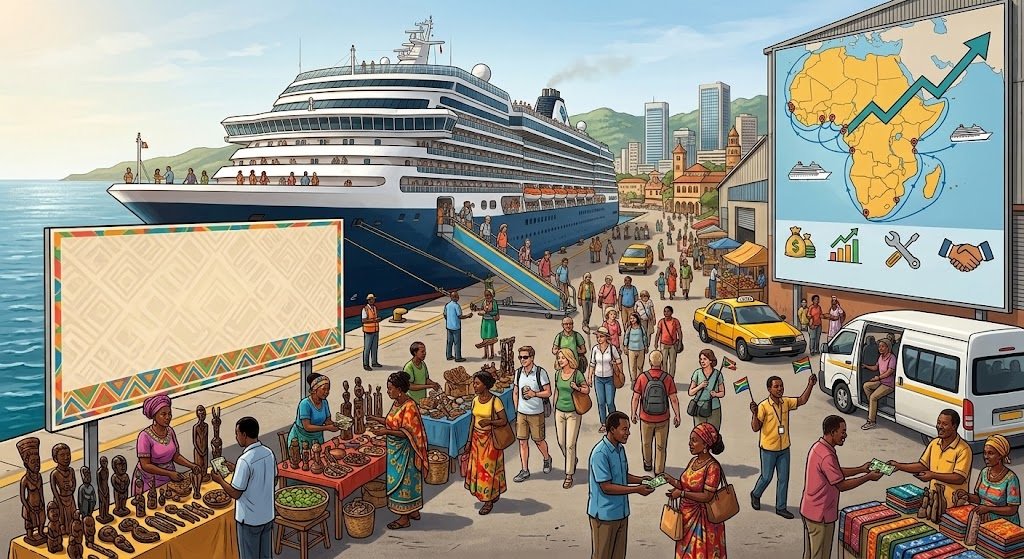
Cruise tourism is becoming another source of business for African coastal economies with visits by international cruise passengers creating opportunities for ports, hotels, restaurants, transport operators and other businesses linked to tourism.
The global cruise industry recorded 37.2 million passengers in 2025, its highest level on record. According to the Cruise Lines International Association (CLIA). The association’s 2026 industry report also found that almost 90 percent of cruise passengers intend to sail again pointing to demand for cruise holidays.
The growth is also reflected in the money generated around cruise travel. The Cruise Lines International Association said passenger spending rose to 23 percent in 2024, while purchases made by cruise lines increased to 17 percent. The wider cruise industry contributed $198.8 billion to global economic output and supported 1.8 million jobs during the year.
A World Bank study on cruise tourism found that the economic effect of cruise activity extends beyond the ships and ports themselves. Cruise operators spend on goods and services while passengers spend money during visits to destinations which creates business for companies connected to the tourism chain.
That spending can cover port services, local transport, accommodation, restaurants, tour services, retail and supplies purchased by cruise operators. The size of the benefits depends on how much of that spending stays within the destination economy and African coastal countries which already have cruise markets that show what the sector can bring to local businesses.
Kenya’s Port of Mombasa, for instance has received international cruise ships. The Kenya Tourism Board reported a 140 percent increase in cruise tourism in 2025, while the Port of Mombasa received the Crystal Symphony at the beginning of 2026 with more than 600 tourists and about 400 crew members on board.
Mozambique is also building its position as a cruise destination.The U.S. Department of Commerce said Maputo has emerged as a port of call as Mozambique expands its port offering and welcomes more international cruise ships the country’s cruise season runs from November to May with many passengers coming from the United States.
The business does not stop at the port a cruise passenger arriving in a coastal city may use local transport, visit attractions, eat at restaurants, buy goods or take organised tours before returning to the ship and cruise lines also require supplies and services which creates another market for businesses around the port.
Nigeria has a long coastline and Lagos already has maritime tourism activities that can support leisure on the waterways the city has also hosted cruise-related activities in the past showing that the idea is not entirely new to the country.
Industry analysts contend that for Nigeria to take a larger share of the cruise market, ports would need to connect more effectively with tourism destinations and businesses that can serve international visitors which would bring port services, airlines, hotels, restaurants, transport companies, tour operators and local businesses into the same tourism value chain.
The wider African tourism market provides another reason to look at the opportunity The World Travel & Tourism Council said Africa received 99.2 million international visitors in 2025, while international visitor spending across the continent is forecast to grow by 6.8 percent in 2026 to $80 billion. Cruise tourism would therefore form one part of a wider tourism market rather than operate as a stand-alone business. The value to African economies would depend on whether visitors move beyond the port and spend money across local businesses and destinations.
The opportunity made for the coastal cities is to build a stronger connection between the port and the tourism economy, so that a ship’s arrival generates business not only for maritime operators but also for hotels, restaurants, transport companies, tour operators, retailers and communities.
Analysts further agree that the size of the opportunity will depend on how much of the spending generated by cruise visitors can be retained within local economies from port services and transport to hotels, restaurants, tours and other visitor businesses.