This piece is prompted by a press statement issued by President Bola Ahmed Tinubu’s spokesperson, Bayo Onanuga, on behalf of the Federal Ministry of Finance, in which he was hyping Nigeria’s second quarter 2026 gross domestic product (GDP) growth rate, just released by the National Bureau of Statistics (NBS). Titled ‘Nigeria’s Economy Accelerates, on Track Toward a USD 1 Trillion GDP’, the release gave figures showing the latest quarterly GDP growth (of 4.43%) as the highest in recent times.
“Nigeria’s economy continues to demonstrate resilience and accelerating growth with the second quarter of 2026 real Gross Domestic Product (GDP) expanding by 4.43 per cent year-on-year, up from 4.23 per cent in second quarter 2025 and 3.89 per cent in first quarter 2026,” the release said, adding that growth was also becoming more broad-based. It highlighted the contributions of various sectors, and subsectors to the GDP, to buttress that the Nigerian economy was on course to hitting one trillion US dollar GDP by 2030.
About the same time as the latest GDP data release, the Central Bank of Nigeria (CBN) was also showcasing remittances by Diaspora Nigerians. According to the apex bank, Nigeria recorded $947 million in remittance inflow through International Money Transfer Operators, IMTOs, in July 2026. This figure, the Bank said, represents the “highest monthly inflow ever recorded through formal channels.”
The CBN said the remittance inflow highlights progress towards the $1billion monthly target set by its Governor, Olayemi Cardoso. A few days earlier, the group chief executive of Nigeria Exchange Group (NGX), Temi Popoola, in a team that included the minister of finance, Taiwo Oyedele, and Cardoso, had visited President Bola Ahmed Tinubu at Aso Rock Villa, Abuja, to present him with the ‘wonders’ of the outcomes of his reforms. Popoola pointedly told the president that the ‘exceptional’ performance of the NGX in the past couple of years was due to the economic reforms of the government of the day.
Popoola told President Tinubu that “the picture you see today is that when you took office in 2023, the total value of stocks listed in Nigeria was just shy of N30 trillion; but, today, that figure is N160 trillion.” He continued: “the second is the all-share index, which is the measure of growth and performance that we see. When you took over, Mr. President, the figure was 52,000, today, that figure is 244,000.”
In yet another forum (LCCI Invest Nigeria Conference & Expo 2026) in Lagos, President Tinubu flaunted rising capital importation into the country as proof of the efficacy of his reforms. Represented by the minister of industry, trade and investment, Jumoke Oduwole, Tinubu said capital importation rose from approximately $4 billion in 2023 to $23 billion in 2025, with a further $10 billion recorded in the first quarter of 2026.
No doubt, these displays of economic statistics by the president and his aides and acolytes do not amount to much more than self-adulation; an incestuous effort at showcasing of data and figures that now draw public ire and opprobrium. This is because while these statistics may be right, they tend to present the socioeconomic state of Nigeria as a ‘white sepulcher’—the outside is looking bright and beautiful but the inside is a horrible habitation for the citizenry.
Whether it is the quantum jump in the market capitalisation of listed equities on the NGX or the marginal improvement of the GDP (from 4.23% to 4.43% year-on-year) — none translates into better living conditions for Nigerians. Rather, the extreme hardship and palpable impoverishment of the people seem to be getting more dire by the day.
Practically, no sector of the Nigerian economy is immune to the highly debilitating and stifling effect of the outcomes of the reforms of the President Tinubu administration in the past three-plus years. Is it the transportation and logistics sector, the health sector, the oil and gas sector, the agriculture sector or the refining sector? What of the entire business environment? How enabling is it?
This is why one cannot agree less with the former governor of Ogun State, Gbenga Daniel, when he asked at a recent function, in the face of the GDP appreciation, whether young Nigerians could find decent jobs, manufacturers could produce competitively and small businesses could survive the rising costs of power, transportation and finance? Senator Daniel who spoke as a special guest of honour at the 7th Freedom Online Yearly Lecture held at the Sheraton Hotel, Ikeja, Lagos said “Nigeria cannot build a strong economy without security, just as lasting security cannot be achieved without a strong economy.”
Speaking on the theme “Economy and Security: The Future of Nigeria,” the former governor said the two issues were inseparable and must be addressed together, if the country was to achieve sustainable development. Today, insecurity of life and property in the country remains the root of the hunger and food crisis that prevail in Nigeria. The same reason is the backdrop of the worrisome phenomenon called JAPA: under which young Nigerians are leaving in droves to practically all parts of the globe—in search of greener pastures.
As the youths are emigrating in their numbers, so are corporate organisations. In the past three years, Nigeria has lost count of very reputable businesses, including multinational companies (MNCs) that have either completely shut down their engagements in the country or scaled down their operations. Others chose to leave and use Nigeria only as a market outpost, as they operate from its neighbouring countries.
The latest in the worrisome corporate exodus is the popular ride-hailing company—Uber. Its decision to exit Nigeria has now added another prominent multinational to the growing list of businesses that have either left the country, sold their local operations or significantly changed their business models since 2023. The ride-hailing company said its decision to leave Nigeria and another African country (Uganda) followed a “thorough review” of its operations. Procter & Gamble, Sanofi, Diageo, GSK, Kimberly-Clark, Shoprite, among others, have all exited, divested or materially restructured their Nigerian operations in recent years.
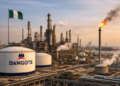
The crisis unleashed by recent reforms in Nigeria is best illustrated by the intrigues and chicanery in the oil and gas sector. While the Federal Government of Nigeria (FGN) purports to enthrone competition (through the free interplay of demand and supply), it turns around to implement policies that tend to stifle (local) operators in the downstream sector—particularly, the refining subsector. This is why today, only the behemoth—Dangote Refinery—that survived against all odds—is thriving. Although the government issued licenses to so many entities to set up refineries, only a handful could attempt doing so.
The direct upshot of this is that, over three years after fuel subsidy was removed, Nigeria is still importing refined products (especially Premium Motor Spirit, PMS). Nigerians are yet living with the hardship, poverty, suffering and destitution engendered by the entire reform package. And the FGN is still struggling to repair four state-owned refineries that have been run aground for upwards of two decades.
President Tinubu must therefore ‘pause and ponder’; look beyond the statistical outcomes of the reforms, and take urgent steps to put the country on the path of real sustainable development. This goes far beyond merely packaging his manifesto for January 2027 presidential elections. For certainly, Nigeria is in the throes of economic crises.
- business a.m. commits to publishing a diversity of views, opinions and comments. It, therefore, welcomes your reaction to this and any of our articles via email: comment@businessamlive.com

Marcel Okeke, a practising economist and consultant in Business Strategy & Sustainability based in Lagos, is a former Chief Economist at Zenith Bank Plc. He can be reached at: obioraokeke2000@yahoo.com; +2348033075697
(text only)