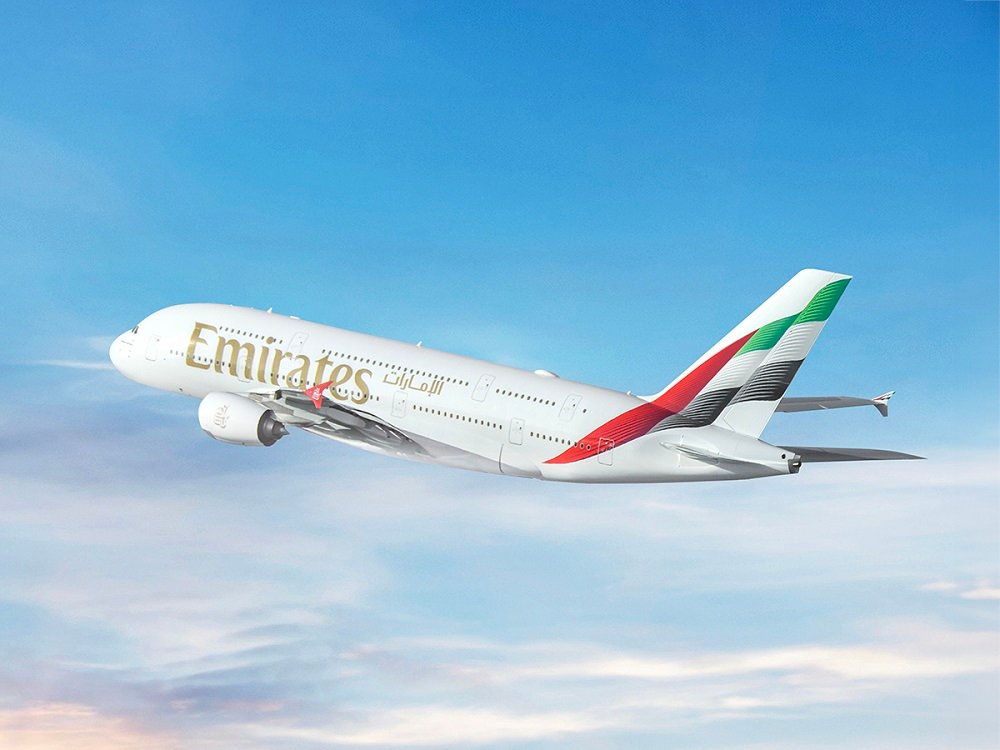
Emirates is expanding its footprint in West Africa as stronger passenger demand prompts the airline to add capacity to Accra and deploy newer aircraft across key African markets ahead of the winter travel season.
The Dubai-based carrier said Accra will receive a second daily service, alongside additional capacity on routes including Tokyo Narita, Ho Chi Minh City and Hanoi, as it enters the winter season with bookings ahead of last year in several markets.
The expansion comes after a stronger-than-expected summer for the airline, which carried more than 8.6 million passengers between July and August and is now operating at about 93 percent of its pre-disruption capacity.
Africa has emerged as one of the markets supporting Emirates’ recovery in international travel. South Africa, Egypt and Ghana are among the markets where winter bookings are currently tracking ahead of last year, while Côte d’Ivoire also recorded particularly strong summer performance.
The stronger demand is translating into more seats, frequencies and newer aircraft on the continent.
The latest expansion strengthens Emirates’ position in Ghana, where the airline has already increased its operations in response to sustained demand.
In June, Emirates announced four additional weekly Dubai-Accra services, taking the route to 11 weekly flights from July. The additional services were introduced to support growing demand for travel between Ghana, Dubai and onward destinations across the airline’s global network.
The latest winter schedule takes that expansion further, with Accra set to receive a second daily service.
The capacity push is being supported by Emirates’ fleet renewal programme.
The airline has received 18 aircraft since January, including 11 Airbus A350s and seven Boeing 777 freighters, with another six A350s scheduled to arrive before the end of December.
The A350 currently serves 30 destinations from Dubai, with that figure expected to rise to 36 by year-end.
In Africa, the aircraft is scheduled for deployment to Nairobi and Mauritius, while Emirates has also introduced the A350 on its South African network.
In July, the airline began its third daily Dubai-Cape Town service, while reinstating a fourth daily Johannesburg service. The changes took South Africa-Dubai connectivity to 56 weekly flights across Emirates’ three South African gateways.
Emirates is also expanding the availability of its higher-end cabin products as it seeks to capture growing demand for premium travel.
The airline said demand for Premium Economy increased across its network, with the Americas recording the strongest growth.
So far, 104 aircraft have completed Emirates’ retrofit programme, including 53 Boeing 777s and 51 A380s. The number of aircraft offering Premium Economy and the airline’s latest cabin products has reached 137 and is expected to rise to 155 by December.
Premium Economy is now available on services to 90 destinations, with six additional destinations due to receive the product before year-end.
The airline is also equipping aircraft with Starlink connectivity, with close to 50 aircraft currently fitted with the high-speed inflight internet system.
The expansion is feeding into Emirates’ wider Dubai hub strategy.
More than 500,000 passengers arrived in Dubai on Emirates flights in late August, up seven percent from the same period last year, according to the airline.
The traffic included returning residents, people relocating to Dubai for work and visitors travelling for holidays.
Demand for winter travel is also rising in markets including South Africa, Brazil, India, Portugal, Egypt, Ghana, Colombia, Saudi Arabia and Pakistan, although Emirates said customers are increasingly making booking decisions closer to departure.
The airline is responding with greater capacity and more flexible products, including free date changes and expanded travel-cover options.
Emirates said it will launch services to Helsinki on October 1, operated with the A350, as part of a broader winter network expansion.
The airline also expects its A350 to serve Larnaca, Malta, Nairobi and Hamburg from late October, followed by Mauritius in November.
Its partnership with flydubai is further extending the reach of the Dubai hub. Together, the two carriers provide access to more than 214 unique destinations across over 100 countries, with more than 4,600 connection opportunities through Dubai.
Since the partnership began in 2017, Emirates and flydubai have carried more than 28 million passengers across their integrated network.