The Commonwealth has kept Tanzania and Uganda under formal scrutiny over governance concerns, maintaining pressure for reforms that could have implications beyond politics as both East African economies seek to attract investment, expand private-sector activity and strengthen their positions in regional and global markets.
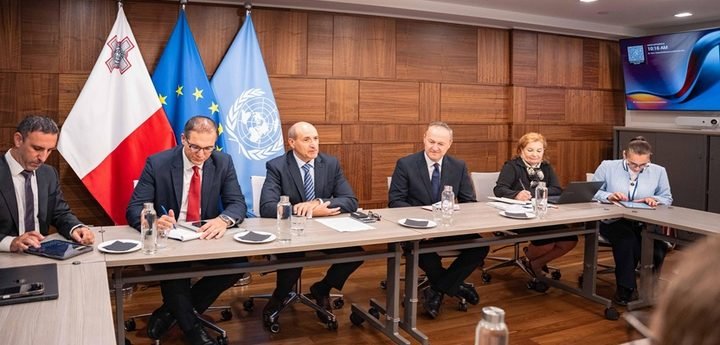
The decision followed an extraordinary meeting of the Commonwealth Ministerial Action Group (CMAG) in New York on September 20, where ministers reviewed developments in the two countries and concluded that neither had yet moved far enough for the issues before the group to be considered resolved.
For Tanzania, CMAG acknowledged progress, including the government’s cooperation with Commonwealth secretary-general Shirley Botchwey’s special envoy, recent engagement with political parties and steps towards reconciliation in Zanzibar.
But the group said further work was required on an inclusive and credible inter-party process, the protection of civic, political and media freedoms, fair and transparent due process in outstanding cases, and trusted mechanisms for accountability, redress and compensation for affected people.
Tanzania will consequently remain on CMAG’s Formal Agenda, with the group encouraging the government to agree to an early visit by Botchwey to engage President Samia Suluhu Hassan and other stakeholders.
Uganda was also retained on the Formal Agenda.
CMAG welcomed the resumption of operations by Nation Media Group outlets, describing the development as encouraging. But it called for continued work to strengthen civilian constitutional governance and the separation of powers, safeguard civic and media space, uphold due process and address the humanitarian circumstances of people in detention.
It also called for stronger human rights and administrative justice institutions and asked the Secretary-General to remain actively engaged, including through a visit to Uganda.
Why the governance issue matters to business
The CMAG decision is political in origin, but its implications extend into the economic sphere because both countries are pursuing private-sector-led growth and substantial investment programmes.
Tanzania’s economy grew by 5.9 percent in 2025, according to the International Monetary Fund, which projects growth of 6.3 percent in 2026. The fund says the country’s medium-term prospects remain favourable, while stressing that reforms to improve the business environment, access to finance, regulation and governance are important to unlocking private-sector growth.
The World Bank projects Tanzania’s economy to grow by 6.1 percent in 2026, supported by infrastructure, extractives, an improving business environment and macroeconomic stability. It also says foreign direct investment has been growing.
That creates an important backdrop to the Commonwealth’s intervention.
Tanzania is not being assessed as an economy without growth potential. Rather, it is an economy where the challenge is increasingly how to convert relatively strong growth and rising investment into sustainable private-sector development.
The IMF has identified simplified business regulations, tax transparency and predictability, access to finance, stronger governance and reduced barriers to trade and regional integration as priorities for private-sector-led growth.
In that context, institutional credibility becomes an economic issue as well as a political one.
Tanzania’s economic opportunity meets an institutional test
Tanzania has spent recent years building an investment proposition around infrastructure, natural resources, tourism, agriculture, manufacturing and regional trade.
Its economic fundamentals have provided part of that proposition.
The World Bank says Tanzania has maintained macroeconomic stability, attracted increasing foreign direct investment and benefited from strong exports, tourism and investment. The IMF has also pointed to strong economic activity, low and stable inflation and adequate foreign-exchange reserves.
But the institutions governing that investment environment matter.
Businesses need predictable rules, functioning administrative and judicial systems, transparent regulatory processes and confidence that disputes and contracts will be handled through credible institutions.
That is why some of the language in the CMAG statement intersects directly with the broader economic reform agenda, even though CMAG itself is focused on the Commonwealth’s political values.
Its call for fair and transparent due process, accountability and stronger civic and political freedoms is not an economic programme. But the same institutional characteristics can affect how investors assess operating environments and how effectively governments implement economic reforms.
CMAG is not making an investment assessment of Tanzania or Uganda. The economic relevance arises from the institutional conditions it is examining.
Uganda faces a similar convergence
Uganda’s economic picture is also one of strong growth alongside institutional reform needs.
The IMF reported in July that Uganda’s economy grew by 6.3 percent in the first three quarters of the 2025/26 financial year, supported by strong domestic demand and rising private-sector credit.
The fund also said the start of oil production could provide an additional boost to growth and external balances, while stressing that strengthening governance and anti-corruption institutions, improving the business environment and reducing trade barriers would be important for converting growth into more jobs and broadly shared prosperity.
The World Bank’s Uganda programme is focused on private-sector-led socioeconomic transformation, including economic governance, infrastructure, manufacturing, agribusiness and financial markets.
Against that backdrop, CMAG’s concerns about constitutional governance, separation of powers, civic and media space, due process and administrative justice intersect with questions about the institutional environment in which Uganda’s next phase of economic expansion will take place.
Uganda is entering an especially important economic period as oil production becomes a significant new factor in its growth outlook.
What CMAG has — and has not — done
The latest decision should not be confused with a suspension or other punitive action against either country.
CMAG has retained both Tanzania and Uganda on its Formal Agenda while continuing engagement through the Secretary-General’s Good Offices.
The mechanism is designed to provide diplomatic engagement and, where appropriate, Commonwealth technical support. CMAG’s mandate allows it to address serious or persistent violations of Commonwealth political values, including restrictions on political space, serious electoral concerns, threats to constitutional rule, weakening of judicial independence, human-rights violations and significant restrictions on media or civil society.
The approach at the September meeting was therefore one of continued scrutiny combined with engagement.
For Tanzania, CMAG recognised areas of progress rather than treating the situation as static.
For Uganda, it specifically welcomed the reopening of Nation Media Group outlets while maintaining that broader institutional concerns required further work.
That distinction is important: the Commonwealth is assessing developments while keeping both governments within its formal monitoring process.
Tanzania’s next test
Tanzania’s retention on the Formal Agenda follows months of Commonwealth engagement after the country’s 2025 general election and the unrest that followed.
The Commonwealth had appointed former Malawi President Lazarus Chakwera as a Special Envoy to engage stakeholders on political freedoms, electoral reform, national dialogue and accountability. Chakwera subsequently visited Tanzania and called for reconciliation, justice, transparent dialogue and inclusive democratic reforms.
CMAG’s latest statement indicates that this process has produced some engagement but has not yet satisfied the group’s expectations.
The next stage could therefore be significant.
An early visit by Secretary-General Botchwey would put the Commonwealth’s diplomatic engagement directly at the highest level of the Tanzanian government while also allowing discussions with other stakeholders.
For Tanzania, which is pursuing infrastructure investment, private-sector expansion and greater integration into regional and global markets, demonstrating institutional stability and credible governance will remain part of the broader reform story.
Uganda’s oil era adds another layer
Uganda’s case carries its own economic significance because the country is approaching a major transition with oil production.
The IMF expects oil revenues to strengthen growth and improve fiscal and external balances, but it has also stressed the importance of governance and institutional safeguards to ensure that future oil revenues support development and intergenerational equity.
That makes the institutional issues raised by CMAG particularly relevant to Uganda’s next economic phase.
The question is not simply how much oil revenue Uganda will generate.
It is also how effectively public institutions manage those revenues, how transparently public resources are administered and how the benefits of investment and growth are translated into jobs and broader economic opportunities.
Those are economic policy questions, but they are inseparable from the quality of institutions that implement them.
Next test comes in November
CMAG is due to meet again in November 2026 in Antigua and Barbuda, on the margins of the Commonwealth Heads of Government Meeting, where it will also present its biennial report to Commonwealth leaders.
Until then, Tanzania and Uganda remain under formal Commonwealth scrutiny.
The immediate issue for both governments is political: demonstrating sufficient progress on the concerns identified by CMAG.
The longer-term issue is broader. Both countries are seeking to turn economic growth, infrastructure investment, natural resources and private-sector expansion into durable development.
That requires capital, but capital also depends on institutions capable of providing predictable rules, credible administration and effective accountability.
CMAG’s September decision does not make an economic judgment on either country.
It does, however, put a spotlight on the institutional questions that will increasingly matter as Tanzania and Uganda compete for investment and attempt to convert their economic opportunities into sustained private-sector growth.