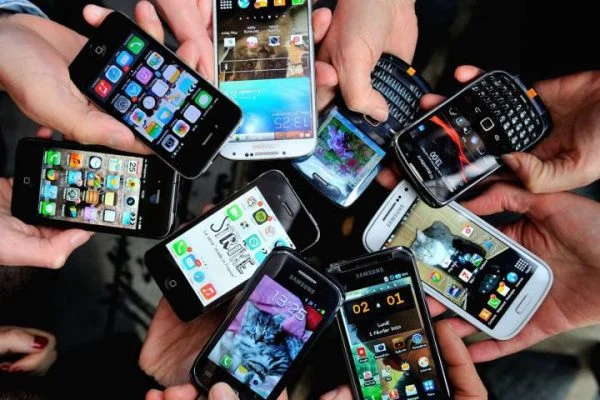
Smartphone ownership in Nigeria has risen to 75 percent, up from 64 percent in 2023, as consumers increasingly shift from feature phones to internet-enabled devices and use mobile applications for financial services, commerce, entertainment and other digital activities.
The finding is contained in the Nigeria Smartphone Study: A Nationwide Analysis of Smartphone Ownership and Digital Application Usage, conducted by KPMG in partnership with Orange Group Nigeria.
The study, based on responses from 13,251 people across 12 major Nigerian cities, found that the shift towards smartphones is being accompanied by wider use of digital applications across financial services, telecommunications, commerce, entertainment, education and transportation.
Feature phone penetration fell to 28 percent in 2025 from 36 percent in 2023, pointing to a continued shift towards smartphones as consumers increasingly rely on mobile devices to access digital services.
The study linked the increase in smartphone adoption to Nigeria’s large and youthful population, improving connectivity and greater smartphone affordability.
“The country’s large, youthful and increasingly entrepreneurial population continues to drive digital adoption, innovation and technology-enabled economic activity,” the report said.
The trend is also evident in Nigeria’s mobile application ecosystem. WhatsApp was installed on 95 percent of smartphones surveyed, followed by Facebook Messenger at 87 percent and TikTok at 70 percent.
The growth in application usage is taking place in a market where Android devices overwhelmingly dominate smartphone ownership. Android accounted for 88 percent of smartphone users, reflecting the availability of devices across a broad range of price points from global and regional manufacturers.
Apple’s iOS maintained a smaller share of the market, with the study linking its lower adoption partly to the higher price of iPhones compared with the wider range of Android devices available to Nigerian consumers.
The increase in smartphone ownership has coincided with higher internet use and data consumption.
Nigerian Communications Commission (NCC) data cited in the study showed that Nigeria had 157 million internet subscribers as of May 2026, while data consumption exceeded 1.5 million terabytes.
As smartphones become more widely adopted, they are increasingly serving as gateways to financial services and other online activities.
“Smartphone ownership in Nigeria continues to grow significantly as consumers increasingly transition from feature phones to internet-enabled devices,” the report said.
However, the growth in smartphone ownership has not eliminated gaps in the quality and depth of digital access.
More than a third of mobile subscribers were still using 2G networks as of May 2026, according to the study, highlighting the disparity between rising ownership of internet-enabled devices and the quality of connectivity available to some users.
The study identified infrastructure limitations, affordability, gaps in digital literacy and cybersecurity concerns among factors that could continue to affect the pace and inclusiveness of Nigeria’s digital development.
The findings indicate that smartphone ownership alone does not guarantee meaningful digital participation, as network quality, affordability and users’ ability to effectively use digital services remain important factors.
The development comes as Nigeria continues to face a wider mobile internet usage gap.
A recent roadmap by the GSMA and the Partnership for Digital Access in Africa (PDAA) estimated that 906 million people living within mobile broadband coverage across Africa were not using mobile internet.
The roadmap, Advancing Digital Connectivity in Africa: Charting Africa’s Path to 1 Billion Connected People by 2030, found that almost 60 percent of Africa’s population falls within the mobile internet usage gap, while about 122 million people, representing eight percent of the continent’s population, remain outside mobile broadband coverage.
Nigeria was among the 11 African markets examined in the analysis.
The GSMA and PDAA said affordability, electricity access, digital skills, online safety and the availability of relevant services remain important factors in determining whether people with network coverage actually use mobile internet.
Across the 11 markets studied, the roadmap estimated that halving the mobile internet usage gap could bring about 245 million additional people online.
The organisations identified the migration from legacy networks as one of the areas requiring attention.The roadmap also calls for greater coordination between connectivity and energy investments, noting that reliable electricity is important not only for network operations but also for device charging and participation in the digital economy.