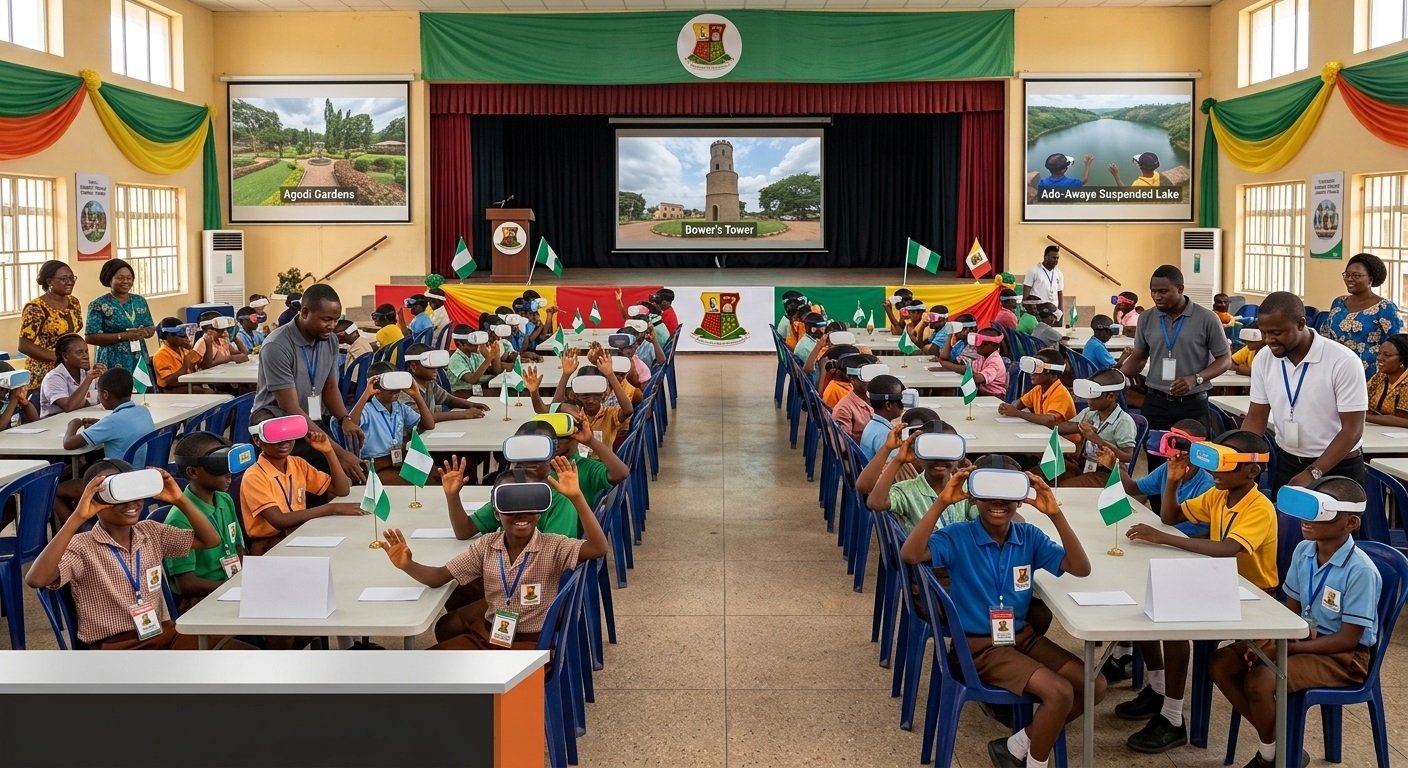
Oyo State is testing a new route into Nigeria’s domestic tourism market by taking destination discovery into schools, using virtual reality (VR) to introduce children to attractions they may otherwise never visit.
The pilot of the Nigeria Domestic Tourism Club has enrolled 76 beneficiaries in Oyo State, with the initiative designed to expose pupils to destinations and tourism assets across Nigeria while creating an early connection between young Nigerians and the domestic travel economy.
The programme is powered by Capricorn Concierge Tourism Services Ltd in collaboration with the Federal Ministry of Art, Culture, Tourism and the Creative Economy, with Oyo serving as the pioneer state.
Ibitoye Araoye, managing director and convener of the Business of Domestic Tourism Promotion and Empowerment Project, disclosed the development during activities marking the 2026 World Tourism Day in Ibadan, where Oyo State Commissioner for Culture and Tourism, Dr Olatunbosun, was recognised for supporting the initiative.
Building tourism demand from the classroom
The programme represents the grassroots component of the Business of Domestic Tourism Promotion and Empowerment Project, which organisers intend to extend to schools across the country.
Araoye said the Oyo State Government had awarded scholarships to the first 76 children who registered for the programme, with the beneficiaries currently undergoing training.
The model is built around a simple commercial proposition: introducing Nigerians to domestic destinations early could help create stronger demand for local tourism over time.
Rather than waiting for families to independently discover destinations, the initiative puts tourism education in front of pupils and uses VR to provide an immersive introduction to attractions across the country.
Organisers also expect the experience to extend beyond the classroom. Participating pupils are encouraged to share what they experience virtually with their parents, creating a potential pathway from digital exposure to family travel and spending at tourism destinations.
The use of VR is intended to address limited awareness of the range of attractions available to Nigerians, considered one of the challenges facing domestic tourism:
Through immersive technology, pupils can experience destinations and attractions digitally before making physical visits, giving tourism operators and destination managers another channel for building awareness and interest.
For an industry seeking to deepen domestic demand, the approach also creates a potential bridge between technology, education and tourism promotion.
Araoye said the programme would work with state governments to engage and empower residents while introducing children to Nigeria’s tourism assets from an early age.
The longer-term objective is to establish the Nigeria Domestic Tourism Club in schools nationwide, creating a network through which pupils can learn about destinations and attractions while becoming familiar with the domestic tourism ecosystem.
The Oyo pilot now provides the initial test for whether the model can be replicated across other states.
Araoye called for support from governments at all levels to enable the initiative to expand beyond Oyo and achieve its national objective.
With the first 76 beneficiaries now undergoing training, the pilot is effectively testing whether Nigeria’s tourism industry can begin building its future customer base before those customers become independent travellers; by turning the classroom into an early gateway to the country’s tourism economy.