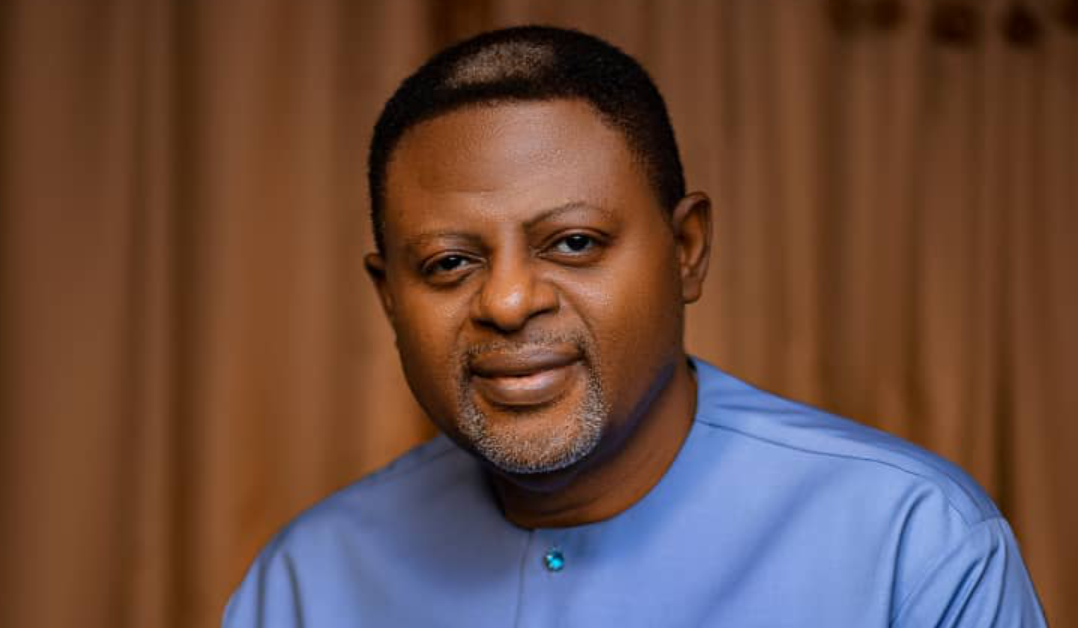
Cross River State Governor, Bassey Otu has presented a budget of N0.98 trillion to the state House of Assembly for consideration and passage, as the state’s spending plan for 2027.
The proposed N987.8 billion budget for the 2027 fiscal year, which is higher by N24.73 billion to the outgoing 2026 appropriation of N963.07 billion, is christened “Budget of Consolidation and Renewed Hope”.
Capital expenditure (CAPEX) accounts for 71.72 percent (or N708.43 billion) of the total estimates, while recurrent expenditure is pegged at N279.38 billion, or 28.28 percent.
According to the governor, the substantial capital allocation reflects the administration’s resolve to prioritise infrastructure, human capital development and productive investments capable of stimulating economic activities across the state.
For a state struggling to relist itself in the oil producing states group which receives 13 percent derivation oil revenue allocation from the Federal Accounts Allocation Committee (FAAC), only productive projects can aggregate GDP growth.
The governor, who will be seeking a second term election next January, reaffirmed his administration’s commitment to sustainable development, fiscal discipline and inclusive economic growth.
Presenting the estimates in Calabar, Otu described the budget as more than an aggregation of figures, characterising it as “a solemn and sacred pact laden with the trust, expectation and aspiration of the people for their improved livelihoods.”
He said successful implementation would depend on prudent resource management, accountability and disciplined public expenditure, stressing his administration’s determination to translate its social contract with the people into tangible improvements in their living conditions.
The proposed budget, valued at N987,808,089,235.92, represents an increase of approximately 2.57 percent over the 2026 budget.
Otu explained that the 2027–2029 Medium-Term Expenditure Framework and Fiscal Strategy Paper (MTEF&FSP) provided the foundation for the estimates, adding that the budget would sustain ongoing programmes while creating new opportunities for investment, employment generation and improved public service delivery.
Addressing concerns over the state’s debt profile of N457.31 billion, according to data from Debt Management Office (DMO), Otu maintained that his administration had not obtained fresh domestic or external loans since assuming office in 2023.
Data from the National Bureau of Statistics (NBS) and the DMO say Cross River is the 7th most-indebted state in Nigeria. But Governor Otu said DMO ranks the state among the states that had not contracted new loans during the period.
He attributed the existing high debt burden to obligations inherited from previous administrations, explaining that debt servicing had constrained the resources available for development projects.
The governor also clarified that the naira value of the state’s external debt had been affected by currency devaluation and foreign exchange liberalisation.
“I cannot, and will never, mortgage the future of our children with unsustainable loans,” he declared.
He pledged to strengthen internally generated revenue, maximise federal allocations and attract development assistance and private-sector investment to finance the state’s development priorities.
Reviewing the performance of the 2026 budget of N963.07 billion, Otu acknowledged the challenges posed by exchange-rate volatility, rising operational costs, supply-chain disruptions and inherited debt obligations.
He disclosed that his administration had worked with the legislature to enact a supplementary budget, increasing the spending framework to N963.07 billion to accommodate urgent interventions and counterpart-funding requirements.
Among the achievements highlighted was the delivery of more than 608 kilometres of interconnected road projects across the three senatorial districts.
The projects include the Nsan–Oban Road in Akamkpa LGA, the Adiabo–Ikoneto Road in Odukpani LGA, and the Yahe–Ebo–Wanakade Road in Yala LGA.
He also reported progress in rural electrification through the installation of solar streetlights, mini-grids and the rehabilitation of electricity networks, with the interventions designed to reopen economic corridors, improve mobility and restore commercial activities in underserved communities.
Agriculture got N28.2 billion in the budget, featuring prominently in the governor’s account of the administration’s economic transformation agenda. For a state with 23,074 square kilometres (7,782 miles) or 2.2 million hectares of land, out of which 1.8 million hectares (roughly 18,000 square kilometers) is arable land suitable for crop cultivation, agriculture holds a major stake amongst Cross Riverians.
Governor Otu informed that more than 20,000 bags of fertiliser had been distributed to 8,000 farmers, while over one million improved oil-palm, cowpea and cocoa seedlings had been provided to farmers across the state. Also the state established a 50,000-hectare rice project and support for more than 5,300 livestock farmers, alongside the provision of loans, grants and agricultural machinery to smallholder and large-scale producers.
According to him, an N18 billion offtake arrangement had helped advance the state’s agricultural initiatives, while the cash-crop revolution was strengthening farmers’ productive capacity.
“There is no food security without agriculture,” he said.
He said the government intends to position the state as Nigeria’s leading cocoa and oil-palm-producing state through expanded cultivation, mechanisation, agro-allied industries and private-sector partnerships.
Cross River produces an estimated 67,000 metric tons of cocoa annually, ranking it as the second-largest cocoa-producing state in Nigeria after Ondo State.
Health and public-sector welfare received N85.4 billion allocation in the 2027 budget proposal. The governor outlined interventions aimed at improving access, strengthening institutions and enhancing service delivery, citing the renovation and rehabilitation of hospitals, as well as the establishment of medical oxygen plants in Calabar and Ogoja in partnership with the UNICEF. Others are the upgrading of state-owned Schools of Nursing and Midwifery (in Calabar, Itigidi, Ogoja, and Obudu) to meet accreditation standards.
Education was allocated N99.6 billion, as Governor Otu said the state targets to increase its literacy rate to 98 percent, from the current 80.7 percent. The administration deployed N17 billion in Universal Basic Education Commission (UBEC) intervention funds to support free and compulsory education from primary to junior secondary school, alongside the payment of West African Examinations Council (WAEC) examination fees for public-school students, classrooms construction and rehabilitation. At least, 43,694 students benefited from WAEC fees payment. Also, the government approved the promotion of more than 14,000 teaching and non-teaching staff, while strengthening technical and vocational education to equip young people with employable and entrepreneurial skills.
With N246.1 billion allocation earmarked for the sector, infrastructure has the largest explicitly listed sectoral allocation. Other allocations include N21.8 billion for aviation, N20.2 billion for the state House of Assembly, N19.1 billion for the judiciary, N16.6 billion for power, and N11.3 billion for tourism.