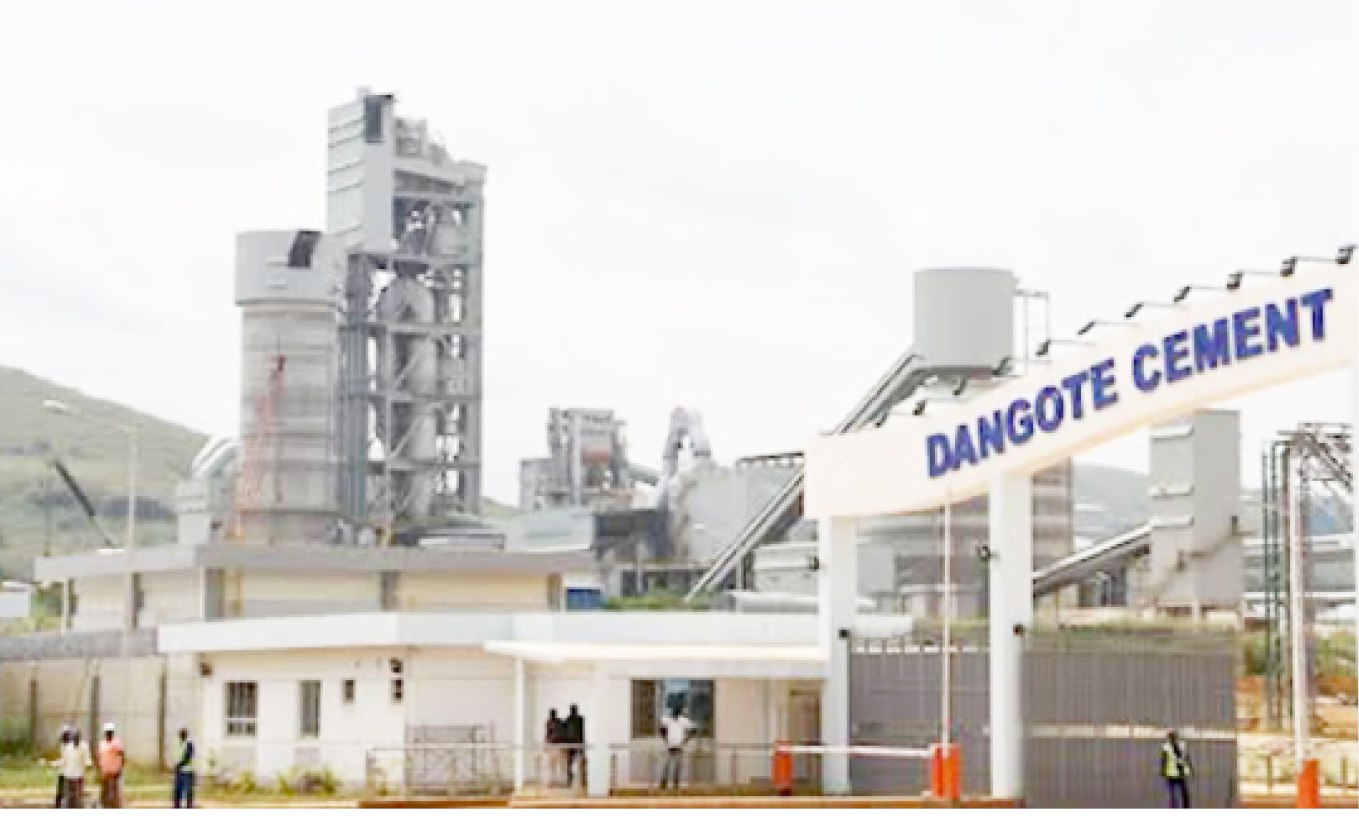
Dangote Cement, an industrial behemoth with operations in 11 African countries, sold 836,800 tons of cement in Cameroon during the first nine months of 2026, down 9.8 percent from 927,300 tons it sold a year earlier, according to figures released by the group at the weekend.
However, the figures released by the group indicate that the decline almost came to a halt in the third quarter, with only 0.25 percent drop, sales made between July and September totaling 240,000 tons against 240,600 tons in the same period in 2025, a drop of just 0.25%.
That was a marked improvement from the first half, when sales fell 13.1 percent to 596,800 tons, down from 686,700 tons the previous year. Of the 90,500 tons Dangote lost in sales over the nine-month period, 89,900 tons came from the first six months.
However, according to calculations based on the company’s published figures, the third quarter mounted another picture for just 600 tons. Also, the slowdown in the decline did not indicate that Cameroon’s cement market has returned to growth. Dangote’s figures covered only its own operations and did not offer any indication of how overall cement demand or competitors’ sales have changed.
With 55.0 million tonnes per annum (Mtpa) total production capacity across 11 countries, Dangote’s cement has been reporting continued operational problems in Cameroon. In its latest financial update last week, the company blamed its weaker Cameroon performance partly on production disruptions caused by logistical problems that limited deliveries to its distribution depots. But it did not disclose exactly what went wrong or how long the disruptions lasted.
Indeed, Cameroon sales have declined in sharp contrast to a 14 percent growth across Dangote’s other African operations.
The central African country’s performance posts a contrasting scenario to Dangote Cement’s broader African business outside Nigeria. In particular, cement sales rose 14 percent to 9.05 million tonnes between January and September 2026, up from 7.94 million tonnes last year across these markets, including Cameroon.
For instance, several countries recorded strong growth. In Senegal, sales went up 29.9 percent, while Ethiopia saw 18.8 percent, and Congo peaked at 11.9 percent. But Cameroon sales came down 9.8 percent, depicting one of the markets where sales volumes declined. Ghana recorded declined sales by 10.1 percent. South Africa plant recorded a 6.1 percent sales decrease.
In Cameroon, Dangote Cement group operates a clinker grinding plant in Douala, the country’s commercial capital, with annual cement production capacity of 1.5 million tonnes. The facility depends on imported clinker to produce cement, making reliable supplies of the raw material important to its operations, unlike an integrated cement plant.
According to the group’s latest figures released on October 28, between January and September 2026, it shipped 1 million tonnes of clinker from Nigeria to Cameroon, Ghana and Côte d’Ivoire combined, showing an increase of 35.4 percent from 2025. But the company did not say how much of that clinker volume went specifically to its Douala plant.
Meanwhile, Dangote group has announced a decision to double the annual production capacity of its Douala plant from 1.5 to 3 million tonnes by 2028. Details were not made available of the project’s cost and financing.