Nigeria’s capital market has discovered that generating billions of naira in investment demand is considerably easier than bringing millions of ordinary citizens into the ownership of a major business. The distinction has become the defining lesson of the Dangote Petroleum Refinery’s highly anticipated initial public offering (IPO), which attracted overwhelming financial demand but fell short of its ambitious promise to become an investment opportunity for 10 million Nigerians.
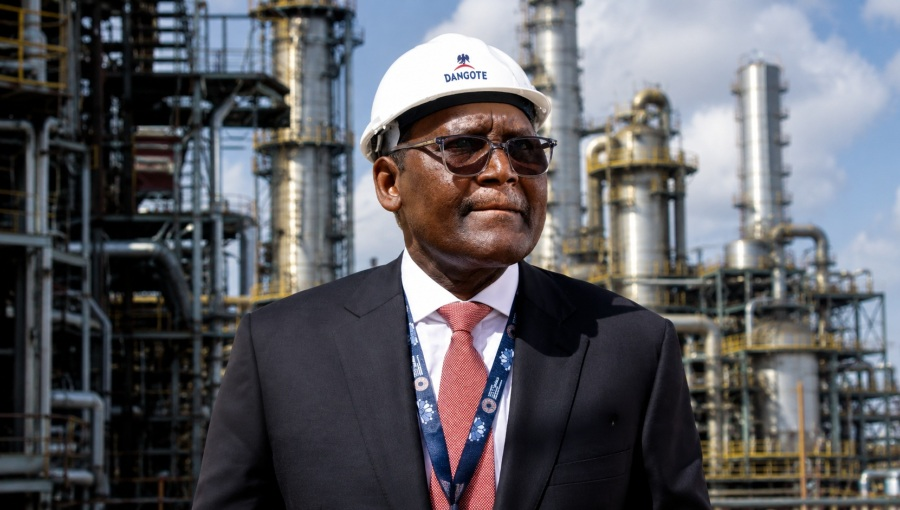
Aliko Dangote, Africa’s richest man and chairman of Dangote Industries Limited, has now publicly acknowledged that the refinery’s much-publicised “IPO for the people” failed to achieve its headline target, attributing the shortfall to limited time and difficulties prospective investors encountered in accessing the offer.
Dangote’s remarks at the 25th WIMBIZ conference in Lagos have reopened the debate over domestic capital mobilisation, particularly the challenge of ensuring that the growing appetite for corporate investments translates into wider public ownership of strategic businesses.
The refinery’s offer attracted approximately N6.4 trillion in orders against a target of about N2.15 trillion, according to figures reported during the subscription exercise. The financial demand was therefore roughly three times the shares available.
Yet the scale of the money attracted did not translate into the millions of individual shareholders envisioned by the promoters.
Subscription data indicated 1.55 million unique online retail subscribers, who placed about 2.2 million transactions worth more than N860 billion, according to people familiar with the matter.
The contrast between the financial demand and the investor numbers reveals a potentially important weakness in Nigeria’s capital market development. The country can attract substantial investment from existing investors and institutions, but converting millions of financially excluded or inexperienced citizens into shareholders remains a different challenge.
A financial success with an inclusion deficit
The Dangote Refinery IPO was designed to achieve more than raise money.
The offer represented an opportunity to widen ownership of one of Africa’s most strategically important industrial assets, potentially giving ordinary Nigerians a direct financial stake in a business that has become central to the country’s energy and economic outlook.
The refinery offered 4.1 billion shares at N525 each, with a minimum subscription of 10 shares costing N5,250.
The relatively low entry threshold was intended to make participation accessible beyond institutional investors and wealthy individuals.
However, the actual participation figures indicate that the minimum subscription price was not the only barrier.
The average online subscriber invested approximately N555,000, according to calculations based on the subscription figures provided. That amount is more than 100 times the minimum investment required to participate.
The discrepancy suggests that the online retail subscription book was substantially influenced by investors with considerable disposable capital or existing investment experience.
It also raises the possibility that the offer attracted people already active in the Nigerian capital market rather than millions of first-time investors.
10m ambition and limits of Nigeria’s investor base
The 10 million retail investor target was central to the marketing of the IPO.
David Bird, chief executive of the refinery, said in early October that the company wanted to “smash” Saudi Aramco’s 2019 retail subscription record of 4.5 million investors.
At the time, Bird indicated that the refinery was well on its way to achieving the ambitious objective.
However, Nigeria’s existing securities market infrastructure suggested that the target would require an extraordinary expansion of participation.
The country has approximately six million Central Securities Clearing System (CSCS) accounts, with only about 10 per cent trading regularly.
The target of 10 million retail investors was therefore substantially larger than the existing registered securities account base.
Although a single person may hold multiple accounts and some Nigerians may have investment accounts that are not regularly active, the underlying challenge shows that achieving the target would require bringing a large number of previously inactive or unregistered investors into the market.
This would involve more than advertising the offer.
The process of subscribing to the IPO involved several stages, including investment assessment, brokerage account access, identity verification, funding and application submission through digital channels. While these are standard requirements in securities transactions, they can become significant barriers when participation is expected on a mass scale.
The offer consequently tested the capacity of Nigeria’s financial infrastructure to support a rapid expansion in retail investment. Its outcome suggests that, although the potential investor base is expanding, existing systems may lack the reach, capacity and efficiency needed to accommodate participation on the scale envisaged.
Digital access emerges as a major constraint
Dangote attributed the failure to reach 10 million investors partly to the limited time available and partly to Nigerians who did not know how to access the offer.
The access problem appears to have been more significant than the explanation initially suggests.
Digital investment platforms reportedly experienced overwhelming demand within minutes of the IPO launch, with some applications becoming unavailable.
The experience exposed the limitations of relying heavily on digital distribution channels for a transaction intended to attract millions of retail investors.
Digital platforms have increasingly become central to Nigeria’s capital market expansion because they reduce the cost of opening accounts and submitting investment applications.
However, the effectiveness of digital distribution depends on the reliability of the platforms, the quality of their onboarding processes and the ability of users to complete transactions without assistance.
An investment offer that is technically open to millions of Nigerians may not be practically accessible to millions of Nigerians.
The difference between those two concepts is crucial.
If prospective investors cannot successfully register, verify their identities or submit applications, the existence of a low minimum subscription price does little to improve inclusion.
The experience also highlights the need for financial institutions and investment platforms to invest in infrastructure capable of handling exceptional demand.
For an offer promoted as a historic opportunity for mass participation, platform failures could have prevented interested investors from completing applications during the most critical stages of the subscription period.
The implication extends beyond the Dangote Refinery.
Nigeria’s financial institutions will need to reconsider how they prepare for large-scale retail transactions if future public offerings are expected to reach millions of investors.
Purchasing power remains elephant in the room
Digital access was not the only obstacle.
The company and its distribution partners reportedly identified purchasing power as another constraint during the subscription exercise.
Nigeria’s economic environment has made it increasingly difficult for households to allocate money to financial investments.
High inflation, rising food prices, transport costs and pressure on disposable incomes have reduced the capacity of many households to save.
For a large proportion of Nigerians, investment decisions are shaped by the availability of money after essential expenses have been paid.
Although N5,250 may appear relatively affordable compared with the cost of acquiring substantial holdings in a major company, the minimum subscription does not capture the full financial burden of participating.
Prospective investors must also consider whether they can afford to lock money away, particularly when household finances are under pressure.
The average online subscription of approximately N555,000 showcases the disparity between the minimum entry requirement and the investment amounts actually submitted by online participants.
It suggests that the IPO’s financial success was supported by investors capable of committing substantially more money than the minimum required.
That does not necessarily mean smaller investors were excluded from the offer. However, it does indicate that the transaction’s impressive financial performance should not automatically be interpreted as evidence of broad-based retail inclusion.
44-day window raises questions about preparation
Dangote’s explanation that time constraints prevented the IPO from reaching its target has attracted attention because the offer was not particularly brief.
The IPO opened on September 14 and closed on October 27, following a two-week extension approved by the Securities and Exchange Commission (SEC).
The 44-day subscription window was intended to widen participation across Africa and provide additional time for account opening and identity verification.
The extension demonstrated that the organisers recognised the importance of allowing prospective investors more time to participate.
However, the experience raises questions about whether the initial distribution strategy adequately accounted for the scale of the intended investor base.
A target of 10 million retail investors would have required an extensive nationwide and potentially continent-wide mobilisation effort.
Such a programme would involve investor education, distribution partnerships, digital infrastructure, account-opening support and communication strategies capable of reaching people outside established investment networks.
The difficulty encountered by prospective investors suggests that the challenge was not merely the number of days available.
Rather, the offer exposed a gap between the scale of the ambition and the readiness of the systems expected to deliver it.
According to analysts, the lesson for future public offerings is that mass retail participation requires substantial preparation before the subscription window opens.
A new model for domestic capital mobilisation?
Dangote’s experience could have significant implications for Nigeria’s future capital market development.
The refinery’s IPO demonstrated that Nigerian investors possess considerable appetite for opportunities involving large, recognisable businesses.
The approximately N6.4 trillion in orders represents a substantial pool of potential domestic investment capital.
The transaction also shows that investors may be willing to participate in businesses they understand and believe have long-term economic significance.
Dangote said the experience had changed his view of Africa’s capacity to mobilise capital internally.
“I think yes, it has actually changed. It has changed things dramatically. Things are really changing very fast,” he said.
His comments reflect the possibility that African businesses could increasingly rely on domestic investors rather than depending exclusively on foreign capital or international financial institutions.
However, mobilising domestic capital requires more than attracting large subscription orders.
It requires building an investment ecosystem that can accommodate people with different income levels, financial backgrounds and levels of market experience.
The Dangote IPO showed that Nigeria has substantial investment demand.
The next challenge is ensuring that this demand is distributed across a broader population.
Financial literacy and investor confidence
Dangote also suggested that some Nigerians did not know how to access the IPO.
That observation points to the importance of financial literacy in expanding retail participation.
Many Nigerians may understand the concept of investing but lack familiarity with the practical requirements of purchasing shares.
Opening a securities account, understanding brokerage arrangements, completing identity verification and navigating subscription platforms can be intimidating for first-time investors.
The problem becomes more pronounced when an offer attracts intense publicity and prospective investors must act within a limited period.
Analysts assert that investment education therefore needs to become a continuous process rather than a campaign conducted only when a major IPO is launched.
Capital market operators, financial institutions, regulators and companies seeking public investment are also advised to collaborate to improve awareness and simplify participation.
Missing the 10 million investor target does not erase the Dangote Refinery IPO’s fundraising achievement. With reported demand of N6.4 trillion against an offer of approximately N2.15 trillion, the transaction showcased the appetite and financial capacity of domestic investors to back major industrial ventures.
But a heavily oversubscribed offer is not necessarily an inclusive one.
The IPO raised expectations that ordinary Nigerians would gain a stake in a major industrial enterprise, extending ownership beyond wealthy individuals and established market participants. Its failure to reach the retail target, however, exposed the difficulty of translating that ambition into widespread participation.
Limited digital capacity, low financial literacy, affordability constraints and account-opening difficulties continue to restrict access to the capital market.
This means that the success of future public offers must be assessed on more than funds raised and subscription volumes. The number of new investors attracted, the size of their investments and their ability to remain active in the market are equally important measures.
Dangote has shown that Nigeria can mobilise substantial domestic capital. The unresolved question is whether the country can make that opportunity accessible to millions more people.