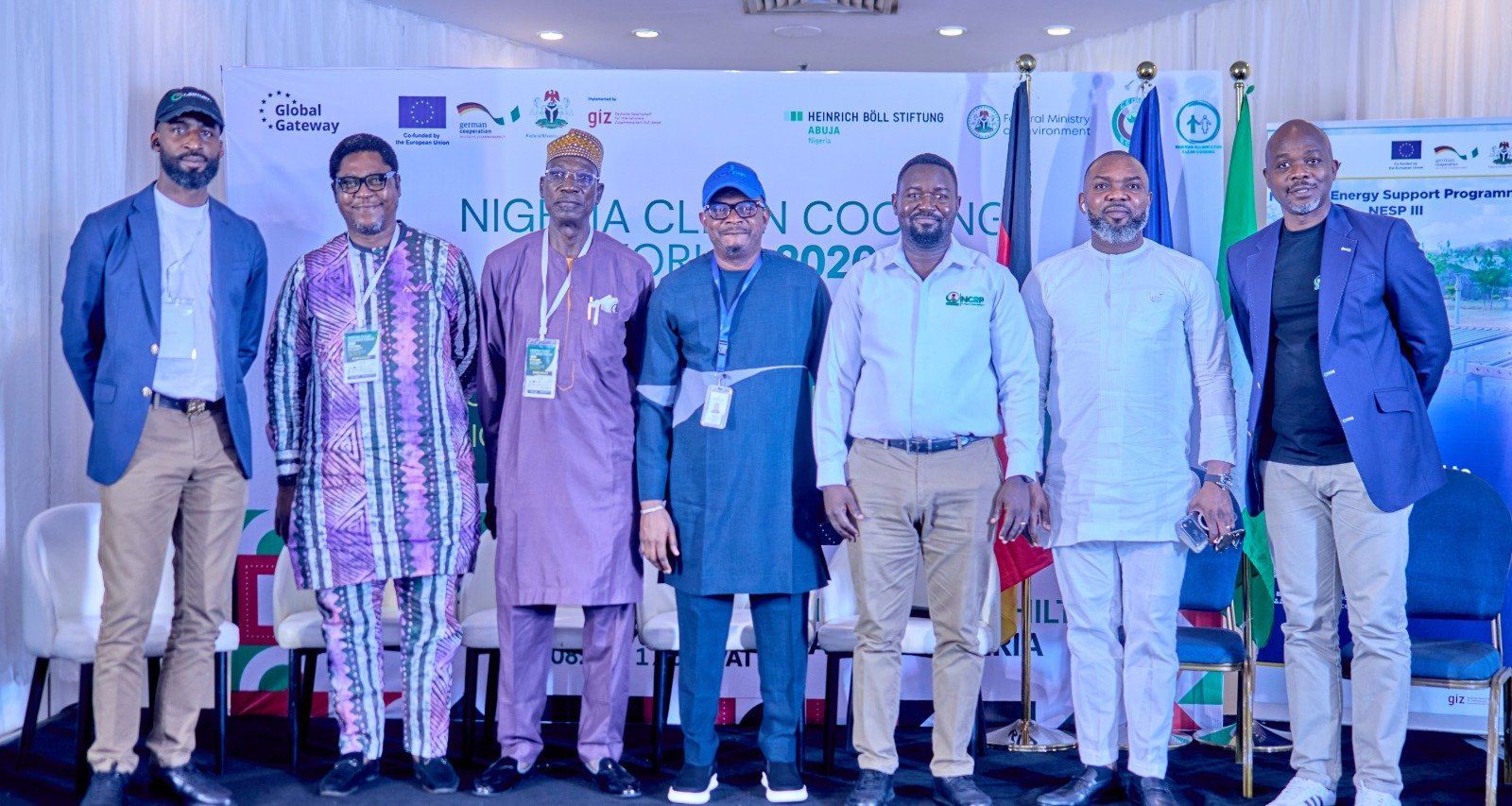
The Standards Organisation of Nigeria (SON) has launched a national cylinder recirculation programme targeting the registration, inspection and certification of at least 43 million liquefied petroleum gas (LPG) cylinders across the country to improve safety in the domestic cooking gas market.
The National Cylinder Recirculation Programme (NCRP), unveiled at the Nigerian Alliance for Clean Cooking (NACC) Conference 2026 in Abuja, establishes a digital system for identifying and tracking LPG cylinders from manufacturing and distribution to inspection and requalification.
The initiative is designed to address the continued circulation of expired, damaged and substandard gas cylinders, which pose safety risks to households and other LPG users.
Under the programme, each cylinder will be registered on a digital National Cylinder Registry and assigned a unique identification linked to a QR code, allowing regulators and industry operators to monitor its movement, condition and compliance with safety standards.
Cylinders returned through approved retail channels will undergo inspection at Authorised Requalification Facilities (ARFs). Those that meet the required standards will be returned to circulation, while cylinders that fail inspection will be withheld for corrective action or disposed of in accordance with applicable regulations.
The programme is expected to extend across Nigeria’s six geopolitical zones, bringing regulators, manufacturers, requalification facilities, retailers and other stakeholders under a unified framework for managing LPG cylinders.
Speaking at the launch, Jumoke Oduwole, minister of Industry, Trade and Investment, represented by Salim Mohammed, director of the Weights and Measures Department in the ministry, described the initiative as a major investment in industrial development, public safety and job creation.
She said the programme represents a ₦2.27 trillion national investment, with plans to deploy at least 43 million certified cylinders and establish 42 requalification centres nationwide.
“The National Cylinder Recirculation Program is more than a regulatory initiative; it is a transformative ₦2.27 trillion national investment in safety, industrialization, and human development,” she said.
According to her, the initiative is expected to create thousands of skilled jobs while providing a foundation for long-term planning and development of Nigeria’s LPG industry.
Discussions at the conference also focused on the investment, regulatory, distribution and technological requirements for expanding access to LPG and strengthening Nigeria’s clean cooking ecosystem.
Femi Oye, chief technologist at FuelTree, who represented Bekeme Olowola, the company’s managing director, identified reliable data as a critical requirement for attracting investment into the clean cooking sector.
He called for broader financing options, including grants, technical assistance, commercial equity and specialised financial products, to support businesses serving consumers in underserved communities.
“Data transparency is the cornerstone of capital mobilisation. Investors, capital providers, and allocators are consistently asking for empirical data,” Oye said, adding that verified information was necessary to develop bankable investment opportunities across the clean cooking value chain.
On regulation, Sabo Ahmed Barau, who represented the executive director of Health, Safety and Community Relations at the Nigerian Midstream and Downstream Petroleum Regulatory Authority (NMDPRA), stressed the need for continuous monitoring of activities across the LPG supply chain.
He said regulatory oversight must cover production, storage, handling and last-mile delivery to protect consumers and ensure that safety requirements are maintained at every stage.
Meanwhile, Princess Odiaka, chief executive officer of Cook-Blue and Chiffinity Intelligence Consult, highlighted the potential of composite cylinders and community-based distribution models to address affordability challenges, particularly among rural households.
She cited the company’s ‘Trash-to-Cook’ initiative, which allows rural women to exchange recyclable household waste for clean cooking gas refills.
According to her, the model combines waste management with access to cleaner cooking by enabling households to use recyclable materials as payment for gas refills delivered to their communities.
Joseph Aigbedion, founder of Falcon Corporation and Century One, also called for greater investment in decentralised LPG distribution infrastructure, arguing that large storage facilities alone would not guarantee access for households in underserved locations.
He said the development of 15,000-metric-tonne terminal depots must be complemented by distribution networks and community-level facilities capable of delivering LPG safely to end users.
Beyond cylinder safety, the NCRP is expected to create opportunities in local manufacturing, technical services, logistics, retail distribution and clean cooking infrastructure.
Its digital tracking system could also provide data for measuring emissions reductions and supporting access to climate finance, subject to relevant verification procedures, methodologies and regulatory approvals.
SON is implementing the programme in collaboration with relevant government agencies and industry organisations, including the NMDPRA, the National Council on Climate Change and the Federal Ministry of Women Affairs.
Following its launch in Abuja, Nigeria is expected to present the programme internationally at the 31st United Nations Climate Change Conference (COP31) in Antalya, Türkiye, on November 12, 2026, where the country will showcase its approach to LPG safety, digital traceability and clean cooking.