
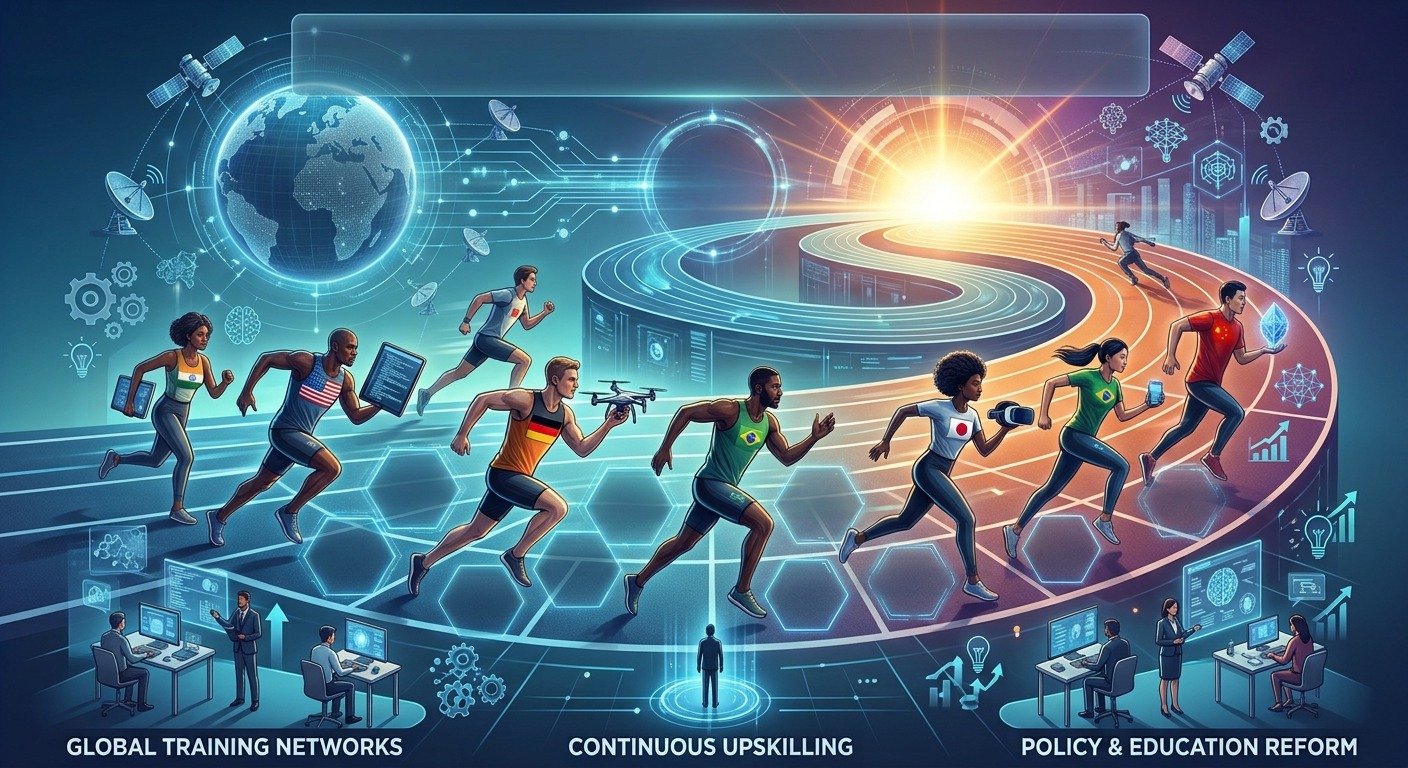
The growing use of artificial intelligence across businesses and industries is changing the skills workers need to remain competitive, placing countries under increasing pressure to prepare their labour forces for an economy in which AI is becoming part of everyday work.
While access to AI tools is expanding, the ability of a workforce to use the technology effectively depends on more than adoption alone. Workers need relevant training, employers must integrate AI into business operations, and countries need a strong pool of technical talent capable of developing and supporting AI-driven systems.
Singapore has emerged as the leading country in global AI workforce readiness, followed by South Korea and the Netherlands, according to a new study by Lemon.io,a software talent marketplace, which assessed 10 countries based on indicators covering AI adoption, workplace usage, professional training, software development capacity and interest in AI learning.
The study, conducted in October 2026, places Singapore at the top of the ranking, with the country recording 64.3 percent of adults using AI tools and 79 percent of workers applying the technology in their jobs. It also recorded 45 percent participation in AI training and about 479 GitHub developer accounts per 1,000 working-age people, the highest concentration among the countries examined.
South Korea ranked second, supported by the fastest growth in adult AI adoption among the countries studied. The share of adults using AI in the country increased by 15 percentage points to 40.6 percent, while 70 percent of workers reported using AI in their jobs.
The country also recorded the highest interest in AI learning, with a score of 90.5, suggesting strong demand among its population to acquire skills linked to the technology. About 36 percent of adults had received AI training.
The Netherlands occupied the third position, with 43.5 percent of adults using AI and 53 percent of workers applying the technology at work. Its software development capacity also contributed to its ranking, with 188.2 GitHub developer accounts recorded per 1,000 working-age people.
Israel ranked fourth, with the study highlighting its concentration of professionals with AI engineering skills or employment in AI-related roles. About 2.3 percent of professionals in the country were identified within this category, while 42 percent of adults had received AI training and 63 percent of workers used AI in their jobs.
Ireland came fifth, recording adult AI adoption of 49.9 percent, an eight-percentage-point increase over the period covered by the study. Workplace usage stood at 64 percent, while 32 percent of adults had received AI training.
The United Arab Emirates ranked sixth, despite recording the highest levels of AI use among adults and workers in the entire group. About 73.3 percent of adults in the country used AI, while workplace adoption reached 92 percent. The country also recorded the highest AI training participation, at 67 percent.
Switzerland placed seventh, with 39.1 percent of adults using AI and 77 percent of workers applying the technology in their jobs. Its AI training participation stood at 45 percent, matching Singapore’s figure.
Canada ranked eighth, with adult AI adoption at 38.5 percent and workplace usage at 61 percent. About 24 percent of adults had received AI training, while the country recorded 148 GitHub developer accounts per 1,000 working-age people.
The United States occupied the ninth position, with 33 percent of adults using AI and 67 percent of workers applying the technology at work. AI training participation stood at 28 percent, while its GitHub developer account concentration was 147 per 1,000 working-age people.
The United Kingdom completed the top 10, recording adult AI adoption of 43.7 percent and workplace usage of 65 percent. About 27 percent of adults had received AI training, while the country recorded 126.3 GitHub developer accounts per 1,000 working-age people.
Commenting on the implications of the findings, a senior talent sourcer at Lemon.io pointed to the growing pressure on workers to update their skills as AI changes the nature of employment.
The company referenced World Economic Forum projections that 39 percent of workers’ existing skills could be transformed or become outdated by 2030, while 59 out of every 100 workers would require training. It also cited the estimate that only 29 out of every 100 workers could realistically be upskilled within their current roles.







Nigeria’s budget is becoming a rolling promise