Across Nigeria today, households and businesses face an excruciating double jeopardy: a punishing El Niño heatwave colliding with a precipitous collapse in national grid power supply. As temperatures soar and darkness persist, the grid electricity value chain has descended into its familiar ritual of institutional blame game.
Distribution companies (DisCos) blame reduced grid allocations; the minister of power cites plant maintenance and transmission constraints; gas suppliers point to unpaid debts and distorted pricing; Power Generation Companies (GENCOs) cite gas shortages, but the NNPC confirms gas and pipeline network availability. Everybody has an alibi; nobody takes responsibility, leaving citizens stranded in sweltering heat, pitch darkness and bleeding scarce capital on diesel and petrol just to survive.
For decades, state capitals hid behind a constitutional shield: “Abuja controls the grid, there is nothing much we can do.” That excuse is dead. With the constitutional amendment and the Electricity Act 2023 breaking the federal monopoly, over 16 states have assumed regulatory oversight from NERC and inaugurated State Electricity Regulatory Commissions (SERCs). Yet, as citizens sweat through blackouts, a blunt question confronts state capitals: Are state governments actually improving electricity supply, or are they merely decentralising darkness?
A state electricity law does not generate a single megawatt. If state governments replicate Abuja’s bureaucracy, political interference, and tariff populism, sub-national power reform will fail. Escaping decentralised darkness requires passing the following commercial tests, and submitting to transparent public appraisal.
- Stop inviting investors blindfolded – Too many states confuse glitzy annual investment summits with market preparation. Inviting investors to “come and power our state, we have all it takes and we are ready ” without baseline load studies and Integrated Resource Planning (IRP) is futile. Before inviting capital, states must structure needs into manageable, pre-de-risked investible lots with clear counter-party risk matrices — and appoint seasoned subject-matter experts rather than rent-seeking political aides to manage transactions.
- Market credibility over political populism – Capital flows into predictable cash flows, not statutes. If SERCs mirror NERC’s historical missteps — suppressing cost-reflective tariffs for political applause or tolerating unmetered collections — states will simply preside over local insolvency. SERCs must enforce tariff independence for premium corridors paired with 100 percent feeder metrology.
- Ring-fenced bilateral contracts tailored to local resources — States cannot build industrial growth on the fragile national grid. Markets must be anchored on ring-fenced, bilateral Power Purchase Agreements (PPAs) between embedded IPPs and aggregated off-takers — industrial clusters, commercial districts, and residential estates. Generation must match regional endowments: thermal-dependent states must solve fuel logistics via virtual gas pipelines (CNG/LNG) and interconnects, while northern states must leverage vast land banks and high solar irradiation for utility-scale solar PV and battery storage hybrids.
- Feeder sub-franchising: Democratising capital and ending stranded equipment- Crippled by debt and high ATC&C losses, DisCos cannot recapitalise statewide grids. Governors should champion feeder-level sub-franchising — licensing private operators and special purpose vehicles (SPVs) to lease, upgrade, and manage specific 33kV or 11kV feeders without inheriting DisCos liabilities. This will gain the following advantages: feeder-sized franchises lower CapEx to naira ticket sizes Nigerian commercial banks can readily underwrite. Residents and businesses can pool funds — redirecting billions wasted on diesel — to co-own local feeder infrastructure. Regulated feeder SPVs channel diaspora remittances out of consumption into hometown infrastructure. When citizens co-own their neighbourhood feeder, energy theft plummets. Moreover, pre-financed, shovel-ready feeder SPVs eliminate the embarrassing situation of hundreds of containers of power equipment being stranded and rotting at our ports for decades. Unlike uncoordinated public bulk contracts, investor-driven procurement ensures every transformer and meter has clearing funds and an installation crew waiting.
- State risk guarantees and de-risking — To unlock project finance, states must deploy ring-fenced payment escrows guaranteeing monthly IPP capacity charges, partner with institutions like InfraCredit or AfDB on Partial Risk Guarantees (PRGs), and use Land Use Act authority to cut land and Right-of-Way (RoW) approvals to under 30 days.
Defenders of state governments would argue that less than two to three years since the Electricity Act 2023 is too short to build power plants and overhaul grids. That timeline reality is fair, physical megawatts take time. However, market preparation and radical transparency do not. State governments should appraise themselves, and be judged by citizens, against simple immediate benchmarks:
- A real-time Public Electricity Dashboard: Deploying an open web portal takes months, not years. State regulators should publish live data showing daily energy received from the grid and embedded plants, substation and feeder allocations, community supply hours, energy delivered versus billed, ATC&C losses, and metered versus unmetered customer counts. Radical transparency ends institutional alibis and proves genuine intent.
- Published IRP & Investible Lot Bank: Completed baseline load studies, structured investible lots, and Subject Matter Expert led transaction teams.
- Regulatory & tariff independence: Cost-reflective corridor tariffs enforced without political interference, backed by 100 percent feeder boundary metering.
- Active feeder franchises & financial closes: Number of 33kV/11kV feeder franchises and embedded IPPs reaching financial close with local banks, communities, and diaspora SPVs.
- Operational guarantees & RoW speed: Active escrow/PRG backstops and sub-30-day land and RoW clearances.
History will judge state governments not by how many electricity laws they sign, but by whether homes and factories have power during the next heatwave.
Governors who embrace transparency, replace political jamborees with rigorous technical preparation, empower seasoned professionals over political aides, de-risk private capital, and sub-franchise distribution feeders —turning citizens, local banks, and the diaspora into co-owners of the grid— will deliver real power. Those who do not will merely succeed in decentralising darkness.
- business a.m. commits to publishing a diversity of views, opinions and comments. It, therefore, welcomes your reaction to this and any of our articles via email: comment@businessamlive.com
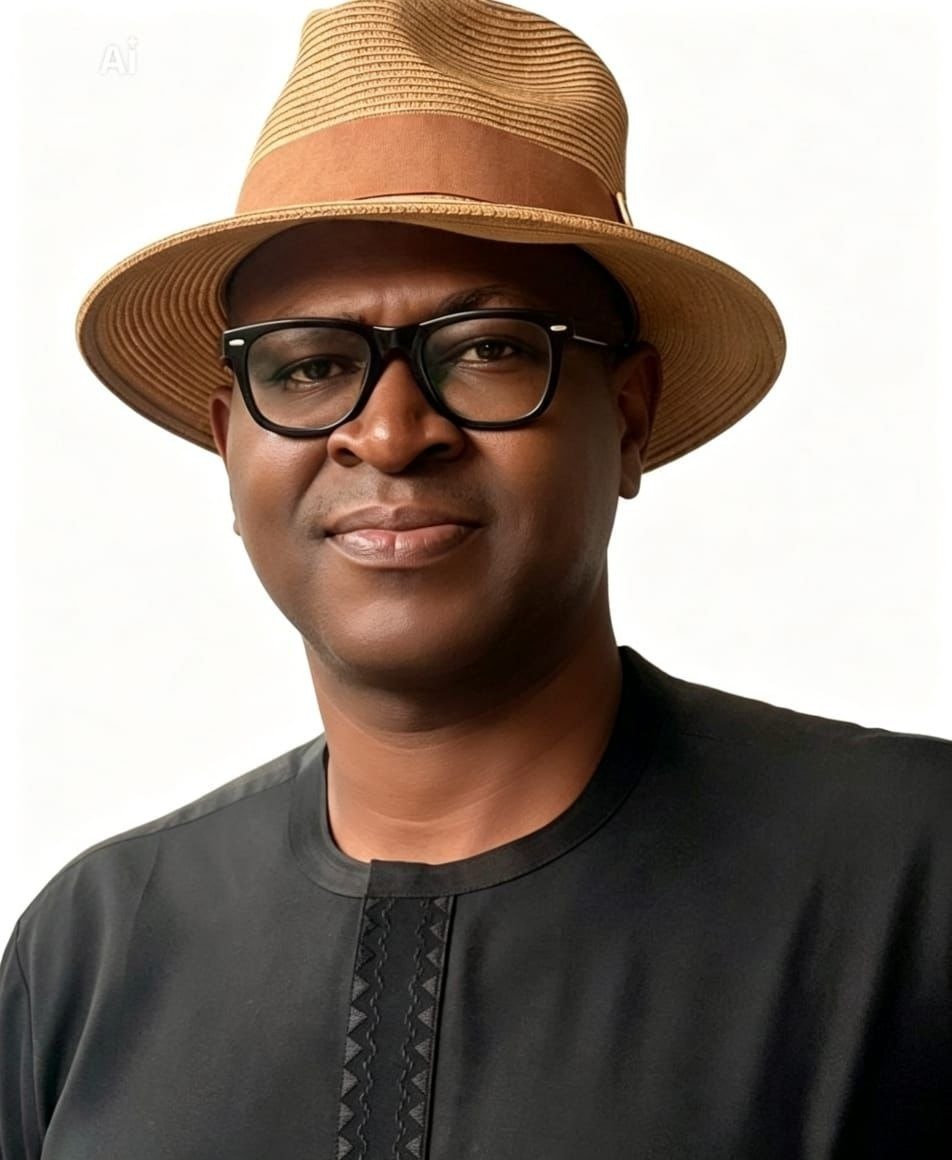
Masah Emmanuel Ikus is a Power and Energy Infrastructure Strategist and the Principal Consulting Partner at EMI Resources Limited. A University of Lagos-trained Electrical Engineer with an EMBA from Lagos Business School, he possesses over 27 years of experience managing complex infrastructure projects across the ICT, Oil & Gas, and Power sectors, specialising in the design of decentralised power systems and solar integration. He currently advises investors, project sponsors, and public institutions on leveraging Nigeria’s energy deficit into bankable commercial opportunities. He can be contacted via masahikus@gmail.com