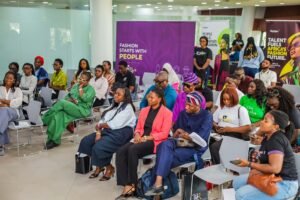
Obsidian Advisory Africa’s fifth Fashion Career Fair (FCF) has brought more than 40 fashion businesses and over 250 trained professionals together in Lagos, in a move aimed at bridging the employment gap in Nigeria’s fashion industry and strengthening the connection between skills development and workforce demand.
The two-day event, held recently at the J.K. Randle Centre, Lagos, combined a virtual Talent Summit with an in-person industry engagement programme, providing a platform for businesses to meet prospective employees, conduct interviews and discuss the workforce challenges confronting the creative sector.
The initiative comes amid growing recognition that the sustainability of Nigeria’s fashion industry depends not only on creative talent but also on the availability of skilled personnel, effective recruitment systems and business structures capable of supporting long-term employment.
At the Talent Summit, discussions centred on the qualities employers seek beyond technical expertise, with industry speakers identifying reliability, teamwork, trust, problem-solving and effective communication as critical attributes for professionals seeking to build sustainable careers.
Participants were also encouraged to embrace continuous learning and adaptability, while developing the ability to communicate their professional value in an increasingly competitive employment environment.
The physical programme featured a Town Hall discussion involving fashion businesses and industry professionals, with conversations focusing on operational weaknesses that affect the growth and management of creative enterprises.
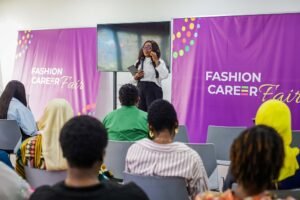
Key issues included the need for transparent recruitment processes, structured employee onboarding, clearly defined roles and responsibilities, effective management practices and proper financial record-keeping.
Stakeholders also highlighted fair compensation and workplace trust as important considerations in improving employer-employee relationships and retaining skilled personnel.
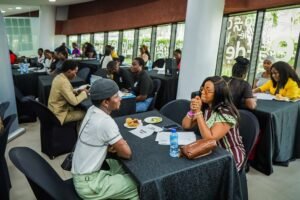
Beyond the industry discussions, the Fair provided a direct recruitment platform, enabling participating businesses to engage trained candidates, assess their competencies and identify potential employees whose skills aligned with their operational requirements.
With more than 250 talents and over 40 businesses participating, the initiative sought to translate workforce training into tangible employment opportunities, addressing a persistent disconnect between talent development and access to jobs within the fashion value chain.
A major highlight of the 2026 edition was the introduction of Warise, a digital talent-matching platform designed to connect fashion and creative professionals with businesses seeking skilled workers.
The platform allows creatives to showcase their portfolios and professional capabilities, while providing businesses with an avenue to discover, assess and recruit talent.
Launching initially in Nigeria, Warise is designed for expansion across Africa, with the broader ambition of improving talent discovery and access to employment opportunities across the continent’s creative economy.
Businesses and creative professionals can register on the platform through wariseapp.com.
Speaking on the rationale behind the initiative, Damilola Ademilokun, chief executive officer of Obsidian Advisory Africa, said the organisation was focused on building stronger connections between skills development and the businesses that require trained professionals.
“Our focus is to build a stronger connection between the people developing skills and the businesses that need them. Training is important, but it cannot be the end of the process. We have to create pathways through which talent can meet real opportunities, while helping businesses understand how to attract, engage and retain the right people. That is the kind of workforce infrastructure we are committed to building for the fashion industry,” she said.
Through the Fashion Career Fair, Sprint Recruitment Programme and Warise, Obsidian Advisory Africa is positioning its interventions around a broader workforce-development agenda aimed at addressing recruitment inefficiencies and improving access to skilled labour in Nigeria’s fashion industry.