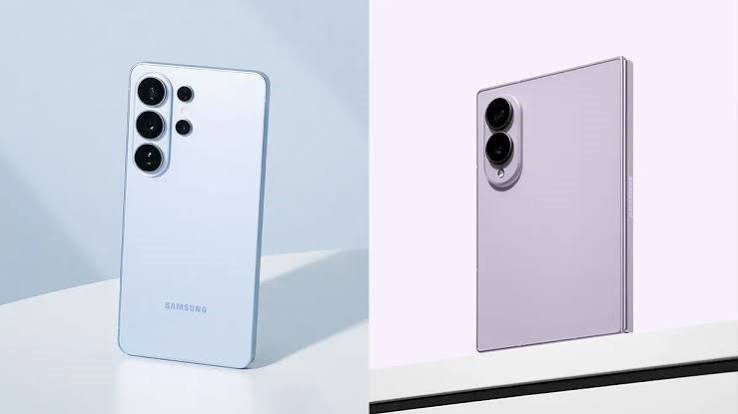
Global shipments of OLED smartphone display panels are projected to fall to 829 million units in 2026 from 894 million units in 2025, as memory supply constraints and rising production costs weigh on smartphone demand and manufacturing, according to Counterpoint Research.
The projected 7.3 percent decline comes as the display industry faces mounting pressure from higher component costs and supply disruptions, with manufacturers also contending with weaker demand across key smartphone segments.
In its Advanced Smartphone Display Shipment and Technology Report for the third quarter of 2026, the research firm said overall OLED panel shipments would remain below their 2025 level over the next three years, reaching an estimated 858 million units by 2028.
This represents a compound annual growth rate decline of approximately 1.4 percent between 2025 and 2028, suggesting that the market could struggle to regain its previous shipment levels despite a gradual recovery from 2026.
The downturn is expected to affect OLED technologies differently, with rigid panels bearing the greatest pressure. Shipments of rigid OLED smartphone panels are forecast to decline by 24 percent year-on-year in 2026, while flexible OLED panels are expected to record a smaller 3 percent contraction.
Foldable and rollable OLED panels, however, are projected to grow by more than 23 percent during the year as smartphone manufacturers expand their premium device portfolios and introduce new display designs.
Nikhil Kishor, senior analyst at Counterpoint Research, said foldable OLED technology would remain an important growth driver even as the wider smartphone display market enters a more mature phase.
The weakness in shipments is also expected to affect industry revenues. Counterpoint forecasts that global OLED smartphone panel revenue will decline by more than 5 percent in 2026, reflecting lower shipments and pricing pressure across major market segments.
However, the firm expects revenue to recover gradually as demand normalises and manufacturers increase their adoption of advanced display technologies. Foldable and rollable panels are expected to record the fastest revenue growth, supported by their premium positioning and increasing participation from smartphone brands.
On the supply side, Samsung Display is expected to retain its leadership in the OLED smartphone panel market in 2026, while LG Display and China’s BOE are projected to strengthen their positions through increased business with Apple and other smartphone manufacturers.
Competition among Chinese panel manufacturers is also expected to remain intense as suppliers seek to secure a larger share of a market experiencing slower growth.
Meanwhile, manufacturers are increasingly turning to improvements in display technology to differentiate their products and reduce power consumption.
Counterpoint expects low-temperature polycrystalline oxide (LTPO) technology to account for more than 50 percent of flexible OLED smartphone panel shipments in 2026, reflecting its expanding adoption in premium flagship and gaming devices.
At SID 2026, China’s Tianma demonstrated its polariser-less GCL OLED panel and Multi-Frequency Drive AMOLED technology, which offer approximately 15 to 20 percent lower power consumption.
BOE also showcased an AMOLED panel with more than 20 percent lower power consumption through improvements in optical transmittance and voltage optimisation, while Samsung Display presented its LEAD 2.0 technology, which combines a polariser-free OLED architecture with integrated privacy functionality.
Kishor said the new technologies could enable panel manufacturers to distinguish their products through improved energy efficiency and performance, creating opportunities for premium pricing.
He added that wider adoption of these innovations could help restore pricing discipline in the OLED panel market.