A new alliance of global Climate Week organisers is seeking to strengthen the connection between climate commitments and investment opportunities, as governments, businesses and investors face growing pressure to turn international climate pledges into tangible economic outcomes.
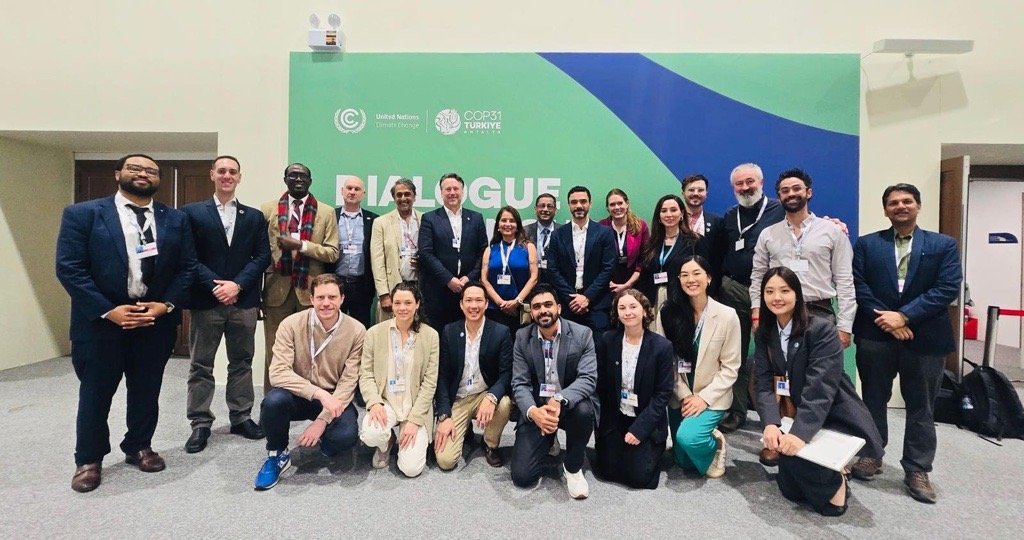
The collaboration, announced during COP31, brings together eight initial signatories, including London Climate Action Week (LCAW), Baku, Bangkok, Rio de Janeiro, Sydney, New York, Mumbai Climate Week, São Paulo Climate Week and UNFCCC Climate Week.
At its core, the initiative seeks to make Climate Weeks more effective platforms for mobilising capital, sharing implementation strategies and connecting public policy with private-sector action across energy, transport, agriculture, infrastructure and other climate-sensitive sectors.
The development comes at a critical point in the global climate agenda, with governments expected to move beyond negotiating emissions targets towards demonstrating measurable implementation of the Paris Agreement ahead of COP32 and the second Global Stocktake.
Five of the eight initial signatories are part of the Climate Action Week family inspired by and developed in partnership with London. Their participation highlights the growing international influence of a model that brings together government institutions, corporations, financial players and communities to advance climate solutions beyond the annual United Nations climate negotiations.
The organisers said closer cooperation would enable participating platforms to share best practices, communicate progress more effectively and promote implementation through the Marrakech Partnership and Climate Action Agenda initiatives.
The agreement builds on COP30 outcomes, where governments agreed to prioritise implementation of the Paris Agreement and adopted six thematic axes for the Global Climate Action Agenda. These priorities are expected to provide a common framework for coordinating activities across participating Climate Weeks.
The six areas cover energy, industry and transport transitions; forests, oceans and biodiversity; agriculture and food systems; resilient cities, infrastructure and water systems; human and social development; and enabling resources, particularly finance, technology and capacity-building.
The organisers are also seeking to expand participation from the Global South and communities most exposed to the effects of climate change, potentially giving businesses and investors in emerging markets greater opportunities to participate in international climate action discussions.
London model gains international traction
The alliance also represents an expansion of the approach pioneered by London Climate Action Week since its establishment in 2019.
Unlike conventional climate conferences, which are often concentrated around government negotiations and high-level policy discussions, the London model adopts a whole-of-society approach, bringing together institutions and communities across different sectors of the economy.
Its activities range from grassroots community gatherings and borough sustainability festivals to major international conferences, ministerial roundtables and public art exhibitions.
The model also engages national parliaments, local councils, small and medium-sized enterprises, schools, faith groups, arts and cultural organisations and sports communities, broadening the scope of climate action beyond traditional environmental stakeholders.
Nick Mabey, co-founder of London Climate Action Week and chief executive of E3G, alongside Malini Mehra, LCAW co-founder and ambassador, said the joint statement represented a significant milestone in the evolution of the global Climate Weeks ecosystem.
“When London Climate Action Week started in 2019, we sought to anchor the UNFCCC’s global climate goals in local realities, show what works, build consensus for action, and create platforms for collaboration and delivery,” they said.
Businesses face a stronger implementation agenda
The growing coordination among Climate Week organisers could also change how businesses approach climate commitments, particularly as stakeholders increasingly look for evidence of implementation rather than announcements of long-term ambitions.
The six thematic priorities offer potential entry points for private investment in renewable energy, industrial decarbonisation, sustainable transport, biodiversity protection, agricultural technology, water management and climate-resilient infrastructure.
Financial institutions, technology providers, manufacturers, agribusinesses and infrastructure developers are among the sectors that could benefit from stronger connections between regional climate platforms and international implementation frameworks.
However, the extent to which the alliance delivers these opportunities will depend on its ability to translate cooperation into practical projects, stronger financing arrangements and measurable outcomes.
The organisers have committed to improving the communication of progress and outcomes, sharing lessons and encouraging wider participation, while retaining the flexibility for each Climate Week to reflect its own regional priorities.