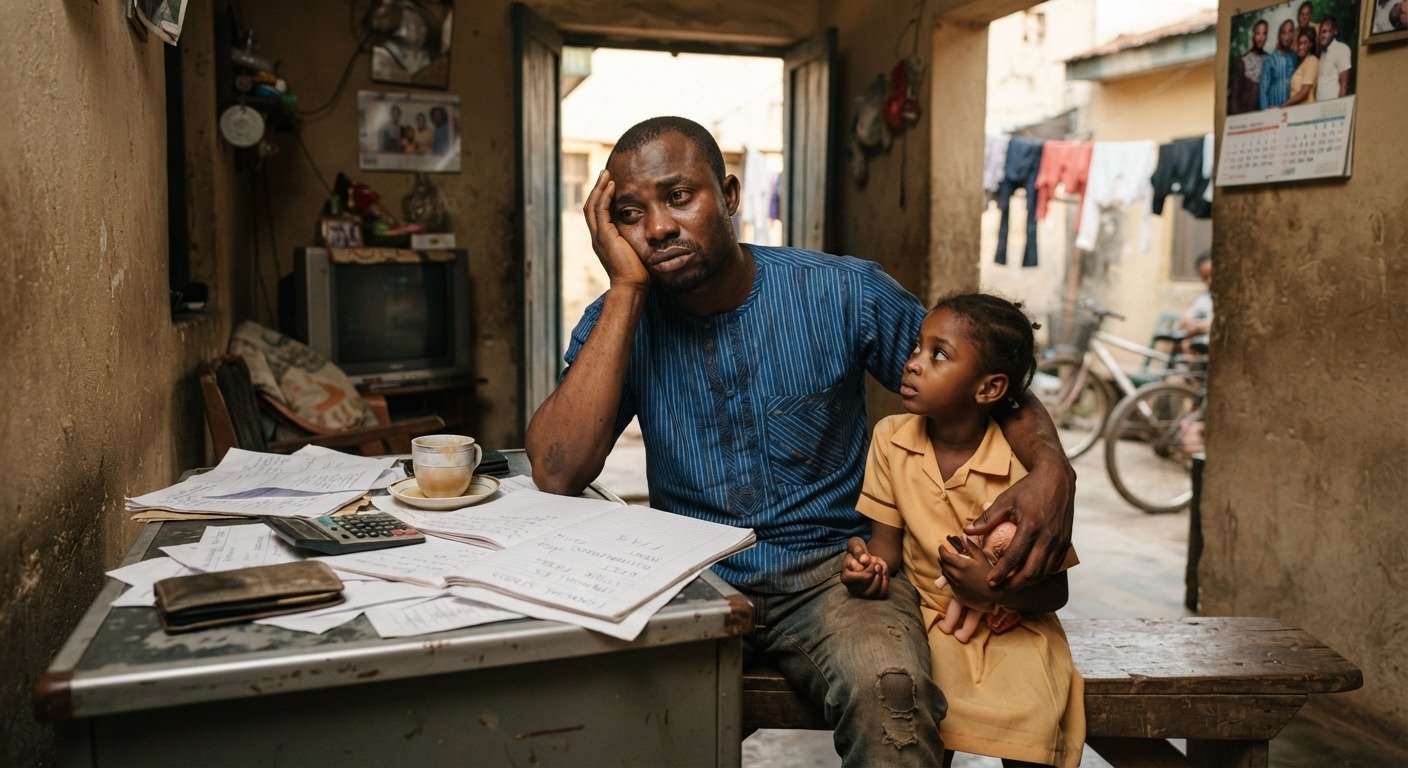
Nigeria’s traditional breadwinner expectations are putting pressure on men’s ability to participate more actively in raising their children, as economic difficulties and workplace conditions make it harder for fathers to balance financial responsibilities with caregiving, a new study by Gatefield has found.
The study, titled The New Breadwinner: Masculinity, Caregiving and Economic Prosperity in Nigeria, found that the men interviewed placed greater emphasis on emotional presence and active involvement in their children’s lives, alongside their traditional financial responsibilities.
Emotional presence attracted 156 mentions among respondents, almost twice the 84 mentions recorded for financial provision, suggesting that the traditional understanding of a father’s responsibilities is evolving.
However, the findings indicate that this changing perception is taking place within an economic environment where men continue to face strong expectations to provide financially for their families, leaving some struggling to reconcile their desire to be more involved at home with the pressure to meet household expenses.
The report described this pressure as “provider shame”, noting that men who desire greater involvement in caregiving continue to face economic difficulties and structural barriers that penalise their participation.
One male business leader interviewed for the research described the emotional consequences of failing to meet these expectations, saying his inability to provide financially often made him withdraw from social interactions.
“Anytime I’m not able to do that [provide], I’m uncomfortable; I don’t even want to be around anybody,” he said.
A religious leader interviewed for the study also recounted how he had previously measured his masculinity by his ability to provide for his family, an expectation he later had to reconsider.
“I was judging myself by that, judging my manhood or masculinity by my ability to provide. And I had to let go of that… I had a saviour complex,” he said.
According to Gatefield, the pressure to maintain the traditional breadwinner identity can affect men’s emotional wellbeing and their participation in family life, particularly when economic instability makes it harder to fulfil financial obligations.
Beyond the pressure of household expenses, the study identified employment conditions as another constraint on men’s ability to share childcare responsibilities.
According to the study, public sector employees are entitled to 14 days of paid paternity leave, while workers in the informal economy, which accounts for about 80 percent of Nigeria’s workforce, often lose income when they take time away from work to care for their children.
The research also found that income differences influence how households distribute caregiving and domestic responsibilities.
While some dual-income, middle-class families can afford to employ domestic workers to handle household chores, lower-income families often lack the financial capacity to outsource such responsibilities, leaving parents with fewer support options.
One working father interviewed for the study explained how his household manages domestic responsibilities by relying on paid assistance.
“We try to outsource whatever needs to be outsourced. We don’t need to be the ones doing it outright… we’ve outsourced pretty much all our domestic chores, so we don’t do house chores,” he said.
The findings highlight how the ability to participate in childcare is shaped not only by individual willingness but also by income levels, employment arrangements and access to domestic support.
Changing perceptions of fatherhood
Despite these constraints, Gatefield’s research suggests that men are increasingly receptive to a model of fatherhood that combines financial responsibility with emotional involvement and shared caregiving.
However, how these expectations are communicated also matters.
The study’s message-testing exercise found that confrontational or ideology-driven language, including expressions such as “unpaid care work” and “dismantling the motherhood penalty”, generated greater defensiveness among male audiences.
By contrast, messages presenting shared caregiving as beneficial to household stability, family prosperity and children’s development received stronger support.
Family-centred messaging generated seven supportive responses for every instance of resistance, while framing shared caregiving around household peace and prosperity increased message resonance by more than 70 percent.
A religious leader interviewed for the study said men were more likely to embrace shared caregiving when they understood how it could improve their families’ wellbeing.
“The way men function is you have to sell a vision to them. If they see that this is about making your family thrive and flourish, I think they will buy into it more,” he said.
The report also identified religious and traditional leaders as influential figures who could help reshape expectations around fatherhood and household responsibilities.
Anuoluwa Bukola, a public health and equal opportunity analyst, said encouraging greater male participation would require redefining family leadership around partnership, mutual responsibility and emotional presence rather than dominant authority.
Calls for workplace and community support
To address the barriers identified in the research, Gatefield recommended extending paid paternity leave beyond the existing 14-day public sector benchmark to include private sector workers.
It also called for community-based childcare facilities and informal crèche networks to support working-class families and informal sector employees who cannot afford domestic assistance.
The organisation further recommended engaging religious and traditional institutions to promote shared caregiving, financial transparency and greater participation by men in family responsibilities.
It urged advocacy organisations to focus on the benefits of active fatherhood for children’s development, household stability and family prosperity, rather than relying on messaging that could alienate men.