Business A.M
No Result
View All Result
Wednesday, February 18, 2026
  • Login
  • Home
  • Technology
  • Finance
  • Comments
  • Companies
  • Commodities
  • About Us
  • Contact Us
Subscribe
Business A.M
  • Home
  • Technology
  • Finance
  • Comments
  • Companies
  • Commodities
  • About Us
  • Contact Us
No Result
View All Result
Business A.M
No Result
View All Result
Home Nigeria Frontier Markets

Nigeria’s depleting fish stocks may pose a threat to regional security

by Admin
December 17, 2018
in Nigeria Frontier Markets

Ifesinachi Okafor-Yarwood
Graduate Teaching Assistant, King’s College London, King’s College London Sometime in the next year or two, Nigeria will become the seventh country to reach a population of 200m or more. It is still growing considerably faster than all other nations towards the top of the list and, by 2050, the UN expects Nigeria to have the world’s third-largest population.

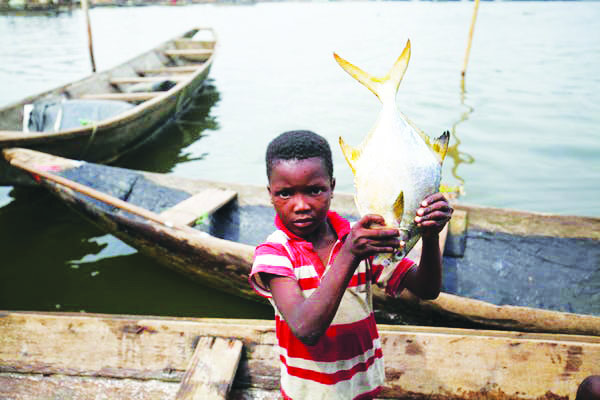
Keeping all those mouths fed will be a huge challenge, not least because millions of Nigerians depend on fish from the Atlantic coastline, mostly caught by small-scale artisanal fishermen. And those livelihoods are now threatened by climate change, pollution and illegal fishing.

Firstly, climate change: as oceans warm, habitats will be degraded and biodiversity will be lost. Many fish will migrate towards the poles to follow the cooler seas, making fishing at high latitudes more productive while tropical fisheries suffer. Nigeria, just above the equator, will be hit particularly hard. According to the World Bank, under a high CO₂ emissions scenario there will be a 53% reduction in the country’s fish resources by 2050.

Nigeria did adopt a climate change strategy as part of the UN policy process which culminated in the Paris Agreement, but it does not seem to have been widely implemented. Neither is there any evidence of an adaptation policy that would enable vulnerable coastal communities to become more resilient in the face of climate change.

Second, pollution by oil companies also threatens the livelihood of more than 6.5m people in the Niger Delta area. The 2011 Bonga oilfield spillage, a facility owned by Shell Nigeria, is just one recent example of the inadequacies of existing environmental regulations. The spill discharged an estimated 40,000 barrels of crude oil that then spread along the Atlantic coast for 185 km. Nearly 30,000 fishermen were forced to abandon their trade.

According to the Niger Delta Artisanal Fisher Association, not only have communities not been compensated, they have also been hit by reduced populations of bonga fish, a common species in the area.

As a relatively poor country with relatively rich seas, Nigeria is also vulnerable to illegal fishing by foreign vessels, predominantly from China. No wonder: the government’s fisheries department does not have any patrol boats to monitor licensed vessels and, when I interviewed a representative from the department, they claimed there has been no budgetary allocation for “monitoring, control and surveillance” in more than 15 years. In March 2018, the Nigerian navy noted that the country loses an estimated US$70 million each year due to illegal fishing.

These three threats add up to looming disaster: according to an ODI report, half of the fish species in waters off West Africa are already overexploited.

Potential for unrest

With fewer fish to catch, people who depend on the oceans for their livelihoods are seeking more creative ways to make ends meet. This has included fishing across borders, which has the potential to provoke conflict between Nigeria and its neighbours – in one 2017 incident, Cameroonian forces are alleged to have killed 97 Nigerians who they claimed had not paid a fishing levy.

With no clear climate change mitigation and adaptation strategy, weak fisheries and environmental management policies, there is growing potential for unrest. Coastal communities are attempting to build their resilience without institutional support, yet may undermine the stability of Nigeria and neighbouring countries.

To see that depleting fisheries have the potential to undermine the limited stability currently enjoyed in the country, one only has to look as far as north-central Nigeria. There, a conflict between nomadic pastoralists and resident farmers due to lack of land for grazing has resulted in more than 1,000 deaths, and the displacement of millions of people.

To avoid a similar resource conflict along its coasts, Nigeria needs a national plan of action for how to help people who are left vulnerable by its depleting fisheries. This would first require robust monitoring and control mechanisms to cut out illegal fishing and ensure the country’s remaining resources are exploited sustainably. Environmental agencies also need to be better equipped to enforce existing regulations, including ensuring that oil companies clean up their spillages to the level that is seen in developed countries.

Finally, having a nicely written climate change mitigation policy is great, but its time for Nigeria to walk the walk. It must invest in climate adaptation strategies that would empower coastal communities and better prepare them to cope with the impact of depleting fisheries.


Admin
Admin
Previous Post

Africa: from analysis to action (2)

Next Post

Inequitable institutions ruin lives, block roads out of poverty, undercut development

Next Post

Inequitable institutions ruin lives, block roads out of poverty, undercut development

  • Trending
  • Comments
  • Latest
Igbobi alumni raise over N1bn in one week as private capital fills education gap

Igbobi alumni raise over N1bn in one week as private capital fills education gap

February 11, 2026
NGX taps tech advancements to drive N4.63tr capital growth in H1

Insurance-fuelled rally pushes NGX to record high

August 8, 2025

Reps summon Ameachi, others over railway contracts, $500m China loan

July 29, 2025

CBN to issue N1.5bn loan for youth led agric expansion in Plateau

July 29, 2025

6 MLB teams that could use upgrades at the trade deadline

Top NFL Draft picks react to their Madden NFL 16 ratings

Paul Pierce said there was ‘no way’ he could play for Lakers

Arian Foster agrees to buy books for a fan after he asked on Twitter

BUA Group leads Gulf–West Africa drive for integrated food and logistics corridor

BUA Group leads Gulf–West Africa drive for integrated food and logistics corridor

February 18, 2026
FairMoney expands SME credit access to boost financial capacity

FairMoney expands SME credit access to boost financial capacity

February 18, 2026
Logistics coordination is a structural efficiency reform, not luxury —Scott Dubin, Logistics Marketplace

Logistics coordination is a structural efficiency reform, not luxury —Scott Dubin, Logistics Marketplace

February 18, 2026
Ladi, rising on global tech space

Ladi, rising on global tech space

February 18, 2026

Popular News

  • Igbobi alumni raise over N1bn in one week as private capital fills education gap

    Igbobi alumni raise over N1bn in one week as private capital fills education gap

    0 shares
    Share 0 Tweet 0
  • Insurance-fuelled rally pushes NGX to record high

    0 shares
    Share 0 Tweet 0
  • Reps summon Ameachi, others over railway contracts, $500m China loan

    0 shares
    Share 0 Tweet 0
  • CBN to issue N1.5bn loan for youth led agric expansion in Plateau

    0 shares
    Share 0 Tweet 0
  • How UNESCO got it wrong in Africa

    0 shares
    Share 0 Tweet 0
Currently Playing

CNN on Nigeria Aviation

CNN on Nigeria Aviation

Business AM TV

Edeme Kelikume Interview With Business AM TV

Business AM TV

Business A M 2021 Mutual Funds Outlook And Award Promo Video

Business AM TV

Recent News

BUA Group leads Gulf–West Africa drive for integrated food and logistics corridor

BUA Group leads Gulf–West Africa drive for integrated food and logistics corridor

February 18, 2026
FairMoney expands SME credit access to boost financial capacity

FairMoney expands SME credit access to boost financial capacity

February 18, 2026

Categories

  • Frontpage
  • Analyst Insight
  • Business AM TV
  • Comments
  • Commodities
  • Finance
  • Markets
  • Technology
  • The Business Traveller & Hospitality
  • World Business & Economy

Site Navigation

  • Home
  • About Us
  • Contact Us
  • Privacy & Policy
Business A.M

BusinessAMLive (businessamlive.com) is a leading online business news and information platform focused on providing timely, insightful and comprehensive coverage of economic, financial, and business developments in Nigeria, Africa and around the world.

© 2026 Business A.M

Welcome Back!

Login to your account below

Forgotten Password?

Retrieve your password

Please enter your username or email address to reset your password.

Log In
No Result
View All Result
  • Home
  • Technology
  • Finance
  • Comments
  • Companies
  • Commodities
  • About Us
  • Contact Us

© 2026 Business A.M