Shoppers who ventured into stores on Black Friday, November 29, may have noticed significantly less frenzy than in previous years, when the traditional start of the holiday retail season made headlines for stampeding crowds racing in for doorbusters and desperate parents fighting over the last Tickle Me Elmo toy.
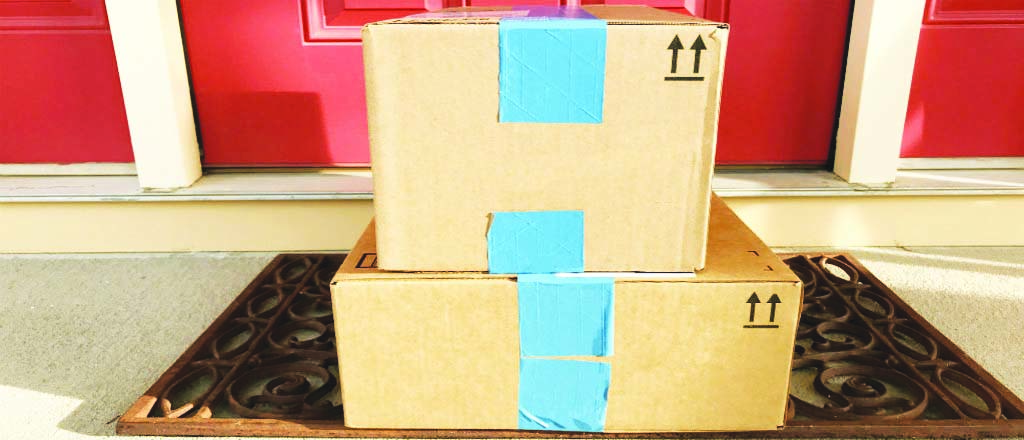
To be sure, Americans shopped in record numbers this year. The National Retail Federation (NRF) reported nearly 190 million consumers made purchases in the five days from Thanksgiving to Cyber Monday, an increase of 14% from last year. But more of them abandoned physical stores for the ease and limitless choices of online shopping. The biggest draw to digital was free shipping, according to NRF. Nearly half of shoppers surveyed said free shipping was the push they needed to make purchases they were otherwise hesitant about. A fifth of shoppers cited the option of buying online and picking up in store as another factor in favor of virtual retail.
“The growth in online retail sales is a tide that lifts everybody,” said Phil Rist, executive vice president of strategy for Prosper Insight & Analytics, which conducted the survey for NRF. “When consumers are buying from retailers online but picking up or making returns in-store, it is more and more difficult to distinguish between the sales retailers make in their stores and the ones they make on their websites.”
Even with in-store pickup, the surge in online shopping means millions of packages need shipping. And free shipping, which is increasingly becoming the norm, is a significant cost to retailers. Amazon, for example, has spent more money year over year on shipping. Global shipping cost the company a whopping $9.6 billion in the third quarter of 2019, and this year’s total is expected to surpass the 2018 total of $27.7 billion. Overall, U.S. firms spent a record $1.5 trillion on shipping, warehousing and logistics in 2017, according to the Council of Supply Chain Management Professionals.
“I think almost every retailer online offers free shipping,” said Wharton marketing professor Ron Berman in an interview with Wharton Business Daily on Sirius XM. “It costs more to the retailer, of course. But the other thing is it makes people feel much more comfortable in buying, but also much more comfortable in returning.”
Berman and Wharton marketing professor Barbara Kahn said there’s a certain psychology behind free shipping that makes it almost compulsory for retailers. Kahn calls it the “pain tax.”
“We know from psychology that people like to segregate gains — in other words, take pleasure individually in each positive benefit. But [they like] to integrate costs — in other words, they rather take pain in one lump sum than to experience the painful pricks each time,” she said. “If the shipping price is incorporated in the price of the good, and customers don’t have to think about that pain tax, they would definitely prefer it.”
According to Berman, shoppers simply don’t like to be charged extra for a service such as shipping when they’ve already paid for a product. Companies are forced into a trade-off between receipt transparency and consumer desire, so they mark up the product to absorb the shipping cost.
“One thing we know is people really, really do not like taxes. They do not like seeing taxes as itemized on their receipts. Shipping sounds like a tax,” he said. “When you have shipping kind of disappear from the receipt or the invoice, people are saying, “Oh, we love that. We don’t see that tax.”
Winning Customer Loyalty
A subscription service is one way to mitigate shipping costs, and Amazon Prime is the leading example of that. Prime members spend $119 a year in exchange for free shipping on more than 100 million items, according to the company. Many items are available with free one-day or two-day shipping. Although Prime doesn’t recoup all the shipping costs for Amazon, the company is willing to take losses in exchange for customer loyalty, which Kahn said is a winning strategy.
“Maximizing lifetime value of the customer can be highly related to overall profitability,” she said. “Amazon Prime customers are very loyal to Amazon, not only in retention rates (i.e., once a Prime member they tend to renew easily and stay Prime members for a long time), but also because Prime members stay on the Amazon website longer and purchase more. So, they are loyal over the long term and continue to be more profitable.”
Another approach is to offer in-store pickup and returns, which is feasible for retailers that have physical locations. It’s especially effective for smaller companies that can’t absorb shipping costs as easily as mega-retailers.
“This strategy gets the consumers to take on the costs of the ‘last mile delivery,’ which significantly reduces costs,” Kahn said. “Walmart is doing this very successfully, but smaller retailers have also started embracing this strategy as well, sometimes in very creative ways. For example, Urban Outfitters has allowed consumers to pick up purchases in Walgreen’s stores.”
Berman said retailers that can use their stores as “logistical centers” have an advantage over those that don’t, which is ironic because physical stores have become a financial liability for a lot of chains. Retailers are also experimenting with third-party shipping subscriptions and bundling items as ways to further mitigate costs.
While studies show that free shipping entices more customers to click the “order” button, it is also associated with a high volume of returns. The return rate can be as high as 40% or 50%, Berman said. It’s easy for shoppers to buy multiple sizes to try on at home knowing they can return what doesn’t fit, or take a chance on a product they aren’t completely committed to, knowing they can send it back for free or at a nominal cost.
Peer Pressure
One thing is clear: It’s hard for firms to shrink from the pressure to offer free shipping.
“I’m not sure they can do too much, right?” Berman said. “Once you have enough retailers offering free shipping, you have to compete, and you need to stay on top of it and offer roughly the same level of service.”
Aside from following the Amazon model and charging a subscription, retailers could bundle smaller shipments together so they are not, say, sending out a tube of toothpaste one day and then laundry detergent the next, Berman said. Some are also requiring minimum purchases for shoppers to get free shipping. Berman noted that on Black Friday, he saw minimums ranging from $30 to $50.
“If the amounts are going to be too low or the shipping is going to be too over-dispersed, they’re going to start maybe offering more customized things, saying, ‘Well, we can offer you free shipping, but it’s going to be slow or you need to pick it up at the store,’ or something like that in order to somehow get the cost back,” he said.
Kahn said the future of free shipping is unclear.
“I’m not sure what will happen,” she said. “The hyper-competitive nature of the retailing world, exacerbated by Amazon tactics, has definitely made this the norm. But operating margins are much lower nowadays for retailers than they used to be, and that is definitely a problem.”