Insecurity which is born and sustained through corruption has become Nigeria’s biggest headache. Apart from the tens of millions of Nigerian lives lost and its devastation of Nigeria’s pride in agriculture, it continues to unleash poverty across the country unrepentantly. It has also consigned Nigeria to the group of countries considered as the temples of evil and fear. We are now in the same league as Afghanistan, Somalia, Iraq, Syria, and Yemen. The club league comprises those countries that one only visits after broad consultation and deep thought. As of 2020, we were the third most terrorist country in the world. Afghanistan and Iraq took the first and second positions, respectively. Our well-deserved place stands on the volume of human blood wasted in vain daily. According to the Nigerian security tracker, Borno State alone has lost approximately 6000 lives to Boko Haram in the past twenty-seven months.
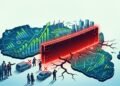
Both the so-called bandits and the rampaging killer herdsmen are also well spread out across the country, massacring thousands of people. While it is difficult to precisely estimate the actual costs of these cumuli of insecurity to the country, there are nine areas of tremendous negative impact on our well-being and prosperity that casts a shadow on how badly we are hurting ourselves. The first is the scary scale of human lives lost in these events of fear. Nothing is costlier than a life cut down for no justifiable reason. Other severely affected areas include the pollution of the country’s socio-economic atmosphere with mistrust, fear and anxiety, the colossal devastation of agricultural production across the country, the destruction of entrepreneurial activities and investment opportunities, and rising poverty and hunger. There are also issues of depressed consumer spending that negatively affect aggregate demand, the country’s isolation within the committee of nations, human displacements, and migrations, which results in brain drain and urban pressure. Of course, there is also declining confidence in the country’s political leadership that has consistently failed to contain this situation decisively.
The size of human lives wasted daily by various insecurity perpetrators successfully indicates that we are at some unconventional war with several enemies on different fronts. But what is a life worth in Nigeria? Unfortunately, by their several actions and unpardonable transgresses of omissions meshed with the vampiric lusting for blood by these vendors of insecurity, our leaders appear to demonstrate that human life in Nigeria may be worthless after all. Or at least life in Nigeria may not be priceless. Large-scale kidnapping for ransom carefully negotiated by the government eminently demonstrates the availability of a price or different human life prices. Despite the denials and occasional admittance, it is no longer a secret that our government bargains the worth of its citizens’ lives with bandits. That is a cowardly option instead of deploying appropriate military and other strategic means to defend citizens’ lives. Our governments know that these unwanted elements brutally murder many future great inventors, presidents, entrepreneurs, scientists, etc. Who knows how many dependents have lost their compasses to a great future with these horrific untimely deaths? Human lives are the only naturally inherited private property. Its cost depends upon the economic value each person attaches to it. Although the government across all ages has a historical duty to defend it, there are doubts about whether ours has the same obligation.
Again, as should be expected, insecurity is attended to by mistrust, fear, and anxiety. For instance, gathering a few Fulani boys in any of the villages in Southeast Nigeria is enough to trigger a frenzy of fear in the community’s length and breadth and other neighbouring communities. The mistrust and the accompanying racial profiling have consistently led to political leaders in different ethnic groups providing moral support and backing to criminals who present themselves as Messiah to their people. Many of the so-called activists and leaders of ethnic militia supposedly defending their region against warlords’ incursions from other areas all share the same criminal characteristics. They are all guilty of violations of other people’s rights. Both groups of criminals are always sheltered from the law’s arms by political leaders who benefit from these clouds of insecurity. The outcome of it all is the further confounding and complication of the web of uncertainty and fear. Consistently heightening air of anxiety, consequently, dominates the atmosphere. That is a considerable cost because trust is critical for harmonious coexistence regardless of religion, ethnic origin, and other differentiating demographics.
The devastating impact of insecurity on the agricultural sector, which provides jobs to 70% of Nigerians, can only be imagined. Subsistence farming capacity also dropped by over 60% in most states in Nigeria due to the frequent attacks of crop farmers by criminal herdsmen. AK-47 wielding pastoralists have gained an unholy reputation for murdering, kidnapping and raping crop farmers. Although they seem to have the upper hand in inflicting catastrophe, farmers have also not spared them in some other places. Most Nigerians who hitherto depended on crop farming income no longer go beyond their immediate vicinity to plant anything. Rampaging and ruthless herdsmen have made the forests unsafe for any meaningful economic activity. The effects of a shrinking supply of agricultural produce are pervasive, comprising depleting income-earning opportunities, drop in the volume of farming inputs supplies to industrial processors and manufacturing firms, migration of young men who hitherto engaged in farming activities to urban areas and consequent stretching of urban pressure. The inflationary effects also directly or indirectly permeate and hit every sector of the economy. Entrepreneurship and accompanying investments suffer as private property rights become more vulnerable.
The many kidnapping cases of businesspeople and some of their workforce discourages increased investment. No one wants to do business where even his safety is not guaranteed. While the near absence of protection is more intense in the northern region, the entire country nevertheless feels it in varying degrees. As it stands today, there can be no meaningful private investment in any peri-urban and rural areas of any state in northern Nigeria. In the same vein, many of the country’s road infrastructure facilitating the transportation and distribution of goods is equally unsafe. There are numerous kidnapping cases and the diversion of goods by hoodlums and bandits virtually everywhere. It is only inside the cities that the ferocity is less tense. The elevated levels of mistrust and anxiety among the ethnic nationalities and the prevailing air of uncertainty over the country’s continued oneness exacerbate these already dire situations. A high voltage atmosphere of ethnic mistrust and latent fear of conflicts looming over the country discourage long-term private investments, particularly those requiring substantial financial outlay.
The insecurity driven destabilization of agriculture and several other artisanal activities in many parts of the country also have devastating effects on consumer spending. For instance, many inelastic necessities and goods mostly consumed by the low income and the lower rungs of the middle-income classes confirm that demand size for their commodities in the northern parts of the country has consistently dropped in the past seven years. Since most people in these socio-economic categories work in agriculture and agriculture-related economic areas, a hit on the sector equally negatively impacts other industries that depend on the demand for their goods by those in the socio-economic classes. Jobs also vanish in those affected sectors. Combined with all of this is incredibly rising levels of poverty and hunger. Insecurity and the accompanying socio-economic displacements impoverish millions in their trail. The internally displaced person camps summarise the picture of the constant impoverishment of those in the bandits’ axis.
Additionally, our belonging to the league of terrorist countries makes us a pariah state, a country to be avoided. Many carriers of Nigeria’s green passports testify to the embarrassing treatments they receive on international journeys. The natural profiling of every Nigerian as a potential terrorist or criminal also shows the extent to which other countries increasingly want to avoid us. Together, with the low quality of our country’s governance, the worsening insecurity conditions also negatively affect our sovereign risk profile and concomitantly weakens our capacity to attract international capital that we desperately need. Nigeria, as a country, is easily identified everywhere in the world as a place to avoid. It also means that Nigeria is a place where large-scale foreign private investments should be discouraged.
In addition to the forced human socio-economic displacements that impoverish many is the voluntary but massive emigration of younger persons. Brain drains and the continuous loss of human potentialities necessary for our prosperity is indeed very costly. Innovators, medical professionals, industrialists, entrepreneurs, information technology experts, and so on are lost every day to other countries. Unconfirmed statistics show that more than 6000 medical professionals working in the United States are of Nigerian origin. There is no doubt that more than 70% of that number migrated from Nigeria because of pervasive social and economic instability. Those who have not left the country cluster in urban areas where there appear to be better policing and protection. Again, that worsens the demand and use pressure for limited urban infrastructure. And since most of these people are unemployed, a reasonable percentage of them adopt illegal and unacceptable means of economic survival.
Finally, what appears to be the highest cost in all this is the almost complete loss of confidence in the country’s political leadership. Most Nigerians believe that this country is a rudderless ship that is merely floating on water and waiting to hit a rock that may reduce it to pieces. Despite this popularly held position, the government’s security infrastructure has consistently failed to protect its citizens. The politicization of insecurity continuously worsens the citizens’ acute misery, the fear of the unknown. Over the years, our political leaders have played a game with both the financial resources meant for security and continue to promote the security manning architecture’s ethnicization.