
By Sola Oni
The minister of works and housing, Babatunde Fashola, a two-term Lagos State Governor has goofed. On the sideline of his recent inspection of the two bridges built by the federal government in Cross River State, the trained lawyer who suddenly became an engineer during the first term of the present administration, has also become a public finance ‘expert’ by his verbal assault on the government’s critics on incessant borrowing. Fashola lampooned the critics that, ‘It is Home Economics they know; they don’t know Public Finance’. He emphasized that the government borrowed to execute specific projects. Nigeria’s total debt has reached an all-time high of N33.107 trillion and is tending to a red flag as ratio to Gross Domestic Product (GDP). If the government continues at the current level of borrowing, it will plunge the country into bankruptcy.
The warped thinking of the government about borrowing to finance infrastructure has deprived the financial market of government participation. On the lips of securities dealers is the shock and disbelief that the government can exhibit such a level of apathy towards the market. Regardless of different perspectives of economists about the concept of financial markets, it is settled in corporate finance that the market exists to bring people together, so that money can flow from the surplus economic unit to deficit one. The financial market provides finance for companies so they can hire, invest and grow. The market also enables the government to raise funds to build infrastructure, including road networks among others. This saves the government the ordeal of incessant borrowing.
There is no argument on the imperative of infrastructure as the cornerstone of any economy and there is a nexus between the economy and its financial market. All economic sectors need infrastructure to operate optimally and this will enhance employment generation as well as upward trajectory in the growth of GDP. The United States is in dire need of $6 trillion to overhaul its infrastructure. Rather than opt for reckless borrowing, the country is considering Build America Bond (BAB) as a key financing option. Turkey has for a long period believed that the financial market is not a mere option but a must to raise funds for projects. Let us discount Barrister Fashola’s declaration and celebration of outright borrowing as his own public finance model.
The Nigerian capital market has largely remained untapped and everyone in the Government’s Economic Teams at various tiers knows the relevance of the financial market to economic growth and development. Many state governments and some local government councils in Nigeria had at different periods accessed the capital market to raise medium and long term funds for infrastructural development. The option is a no-brainer.
It is on record that many landmark projects, including privatization of public enterprises and recapitalization of banks had been executed through The Nigerian Stock Exchange (Now NGX). In 2019, the Federal Government floated N100 billion sovereign Sukuk Bond to construct 642.69 kilometers roads across Nigeria. The offer was oversubscribed because it is gilt- edged, backed up by full faith and credit of the government. The risk of default is minimal if not non-existent. Investors are always on the queue for such an asset class. It is a win-win affair for the government, the securities market and investors. For instance, money realized from toll gates shall be ultimately utilized to pay back the subscribers to the bond. What happened to the continuation of the bond issuance?
In the past, many developing countries financed infrastructure with government revenues. But over the years, the trend has changed because of the huge monetary involvement. Financing public projects is better achieved through issuance of bonds and collaboration with the private sector. However, deployment of the financial market for long-term fund requires a supportive institutional framework by way of pension funds, insurance companies and other institutional as well as individuals investors with legal ability to purchase such securities under a favourable macroeconomic outlook in terms of moderate inflation rate, exchange rate and currency value to moderate large risk-premium.
Although institutional investors sometimes contend with the issue of investing short term assets in long term projects, a case of mismatch, the risk and return trade off often spurs their interest. Annually, Nigerian Securities Dealers, through the Chartered Institute of Stockbrokers (CIS) organise National Workshop and Conference to articulate policies that will move the economy forward. Every event attracts top notch professionals from within Nigeria and abroad to dissect the economy and propose the way forward. But prophets are not respected by their people. None of the timeless communique issued at the end of each event has been implemented by the federal government. The gross neglect of the professionals’ voice has created a trust deficit in their dealing with the government.
It is ironic that Securities Dealers are not represented on the Monetary Policy Committee (MPC) where the CBN determines issues that have impacts on the financial market. This explains why the MPC seems to mainly serve the interest of the money market. The apex capital market regulator, SEC, which ought to demand for such a representation appears handicapped, until, perhaps, it becomes fully independent. Some of its roles have been hijacked by the CBN whereas SEC is no longer the ancient Capital Issue Commission, a former department in the apex bank.
As part of their contributions to Nigeria’s economy, on the 19th of this month, Securities Dealers shall converge at Transcorp Hilton, Abuja to renew their call on the government for Nigeria’s economic revival. But the question on their lips is the trust deficit that the government may not implement the prayers from the workshop? Themed “Leveraging the Financial Markets to achieve Double Digit Economic Growth for Nigeria”, a cursory look at the operating environment in Nigeria presents an atmosphere of many fault lines; rent seekers have taken over the entire economy, forex market, growth is abysmally sluggish and our external reserve is under threat, purchasing power is thinning out as disposable income shrinks daily, unemployment has become a nightmare, foreign investors’ apathy to Nigeria’s business environment, including insecurity real and private equity experts are reluctant to risk their investible funds. The embattled Naira value is expected to further weaken with the ban of Bureau de Change operators from sale of forex by the Central Bank of Nigeria. It is already taking tolls except the apex bank increases supply chain to the banks.
This write-up is not about the regulatory lax that led to the ban on Bureau De Change operators but Nigerians should be prepared for a higher level of economic crisis. It is disturbing that our forex market has been taken over by rent-seeking participants and the external reserve is bleeding. The uncomfortable operating environment is a major impediment to viability of the financial market.
The choice of Securities Dealers’ theme for the workshop is apt. They know that Nigeria’s financial market does not enjoy policy measures to enable it perform its role of efficient allocation of resources. The stock market no longer serves as a barometer for gauging the mood of Nigeria’s economy. Uncertainty drives the market. On the lips of the securities dealers is how to deploy the workshop to identify policy measures that will revive the financial market to play its primary roles in the growth and development of the Nigerian economy. Issues that will engage the facilitators include: “Strengthening the Financial Markets to Accelerate Domestic Products and Employment in Nigeria,” and “Harnessing Africa’s Vast Human and Economic Potentials: A case study of Nigeria.”
It is worthy of note that despite the unfriendly operating environment, market regulators and operators are innovating their businesses for global competitiveness. The NGX has demutualised and recently announced its readiness to commence derivative trading. The CIS recently globalized its certification processes and the institute is engaging other professional bodies to key into its plan to metamorphose into Chartered Institute of Securities Dealers. The Association of Securities Dealing Houses of Nigeria (ASHON) is rebranding as every member-house is fully digitalized.
The other securities markets: NASD Plc, FMDQ, Nigeria Commodities Exchange (NCX), Lagos Commodities and Futures Exchange (LCFE), and other commodities exchanges, have provided additional platforms for Securities Dealers to serve their numerous customers. But the extent to which everyone will be on top of the game is the existence of a strong economy. This is where the government should demonstrate its support for the development of the financial market. On the lips of Securities Dealers is the hypothesis of one pronouncement. By one pronouncement, the federal government controversially banned Twitter. The same government made one pronouncement to ban issuance of licences to Bureau de Change operators. One can therefore conjecture that one positive pronouncement can unlock the economy and change the face of the financial market for better. This is one of the major keys to the success of a plethora of government policies, formulated to take Nigerians out of poverty and promote ideals of shared prosperity. I believe this is the substance and essence of the Abuja Workshop.
____________________________________________________________________________
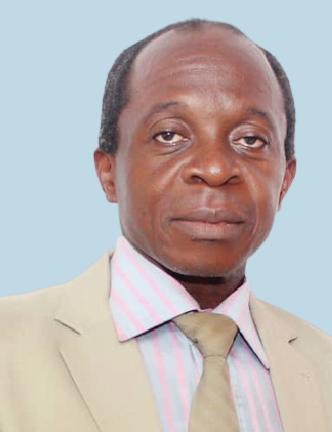
Sola Oni, a communications consultant, chartered stockbroker and commodities broker, is the chief executive officer, Sofunix Investment and Communications, and can be reached on onisola2000@yahoo.com






The coup in Niger and Africa’s vulnerability to foreign interest (2)