By Charles Abuede & Ben Eguzozie
Ameenah Gurib-Fakim, the former President of Mauritius and Laureate of the 2007 L’Oréal-UNESCO Prize for Women in Science, has said Africa must close its science and technology gap to take full advantage of the African Continental Free Trade Area (AfCFTA).
 Gurib-Fakim, who delivered a trenchant keynote address at the fifth annual Babacar Ndiaye Lecture on “the importance of science, technology and innovation in the transformation of African economies,” organised by the African Export-Import Bank (Afreximbank), laid bare a raft of statistics which showed that the continent is lagging behind the rest of the world in science, technology, and innovation (STI).
She revealed that Africa is responsible for only 2 percent of the world’s research output and 1 percent of research spending as only 0.1 percent of all patent applications are registered in Africa as against 65 percent reported in Asia and 25 percent in North America.
How can a continent with the largest share of arable land, a continent with the youngest population, a continent that has fueled all of the world’s industrial revolution, a continent that has helped drive the mobile phone industry, a continent that is at the cusp of supporting the world’s energy transition to greener technology with a large store of rare earth deposits accept such dismal statistics?” she asked.
“The deficit of investment in science and technology and absence of economic and scientific infrastructure has undermined the process of economic transformation both at the structural level and at the sectoral level. The consequences of that deficit have been significant and include continued reliance on the colonial model of resource extraction largely responsible for the debilitating poverty trap and aid dependence trap,” she said while blaming the “chronic neglect” and deficit of researchers and scientists has undoubtedly contributed to the poverty trap that the continent finds itself in.
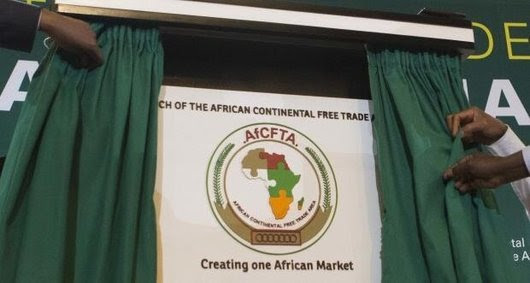
The former Mauritius number one citizen mentioned that Africa’s failure to advance in science and technology has been compounded by the fragmentation of its markets. She applauded the formation of AfCFTA for choking this hurdle and creating the largest single market in the world by membership. Though, the economic transformation anticipated by the free-trade market hinges on Africa “closing its scientific and technological gap with the rest of the world” and “sustainably producing the right set of skills to expand both extra and intra African trade,” she said.
Gurib-Fakim repeated to the audience at the virtual event that the increasing role of technology permeating all sectors and industries and driving growth was irreversible. She praised Africa’s successes in certain areas like mobile money, giving the example of M-Pesa which has been adopted in the rest of Africa after being created in Kenya. She equally praised Afreximbank’s Pan-African Payment and Settlement System (PAPSS) which is set to facilitate payments for cross-border trade in African currencies and assuage the liquidity constraints.
One of the major challenges, she said, is the continued brain drain of Africa’s brightest and best scientific minds as she encouraged the private and public sector to invest much more in education and research and development. “Every young African has the potential to be a great scientist, to innovate and become globally competitive,” she said.
Africa, with a population of over 1.3 billion and a combined gross domestic product (GDP) of $3 trillion has more than 245 million of its people suffering from hunger due to the dwindling economy. By 2050, the continent’s population will double to over 2.2 billion, with over 60 percent of the population under the age of 25. The continent accounts for 17 percent of the world population; has 9.6 percent of global oil output; 90 percent of world’s platinum supply; 90 percent of world’s cobalt supply, half the world’s gold supply; two-thirds of world’s uranium; 75 percent of the world’s coltan and has 54 votes at the UN General Assembly (UNGA).
Despite this apparent unending attraction, the continent is currently the worst-hit by the negative effects of the ongoing Covid-19 pandemic. The continent’s economy continent-wide contracted by 2.1 percent in 2020, which many tagged “year of pandemic”. The African Development Bank’s (AfDB) 2021 Africa economic outlook said an estimated 39 million Africans could possibly slip into extreme poverty this 2021, up from about 30 million that went into poverty last year. The continent’s average debt-to-GDP ratio was expected to climb by 10 to 15 percentage points in the short-to-medium-term, fuelled by a surge in government spending, and the contraction of fiscal revenues as a result of Covid–19. The average debt-to-GDP ratio stabilized around 60 percent. Recent debt restructuring experiences in the continent have been costly and lengthy.
Also speaking at the virtual event monitored by Business A.M., Benedict Oramah, president and chairman of the board of directors of Afreximbank, observed that Africa has failed to achieve economic emancipation despite gaining independence over six decades ago. The export and import bank chairman further stressed that the failure of Africa to secure Covid-19-related equipment such as face masks and ventilators shows that the continent must start manufacturing its own technological goods.
According to Oramah, “While the AfCFTA was a necessary condition for the transformation of African economies, it was not a sufficient one, especially in a world where trade has been largely driven by manufactured goods with increasing technological content. Among the set of constraints undermining the capacity of the AfCFTA to deliver on its full potential, none was as critical as closing the region’s scientific and technological gap.
“The most competitive countries in the world are also the ones leading in ICT, innovation, scientific research and development. Africa cannot be kept at the back of the queue,” he said, while also stressing the need to nurture the collaboration between research and industry to further enhance the growth and development impact of scientific discovery across the region.
Sarah Anyang Agbor, commissioner of human resources, science and technology at the African Union Commission (AUC), spoke about the commission’s strategies to improve science and technology in Africa. She also said the AUC has set in place its Science, Technology, and Innovation Strategy for Africa 2024 (STISA-2024) that aims to promote the building and upgrading of research institutions, amongst other things. She said the plan fits within the African Union’s (AU) Agenda 2063.
Meanwhile, Hippolyte Fofack, Afreximbank’s chief economist, who brought the the event to a close by reiterated Oramah’s statements that, “Africa was the epicentre of and the birthplace of astronomy and mathematics,” while referencing the Dogon community in Mali who, for centuries, has been fully aware of an invisible star, Sirius B, long before it was discovered by Western astronomers in 1970. “Africa’s current scientific and technological gap with the rest of the world was a historical anomaly,” he added.
Gurib-Fakim served as the chairperson at the international council for scientific union – regional office for Africa (ICSU), before becoming the first female president of Mauritius. She has been the recipient of various international awards including the L’Oréal-UNESCO award for women in science (in 2007), laureate for the national economic and social council (2007), and the African Union award for women in science, among others.