Cost-cutting advances in shale are weakening the cartel’s grasp of energy market dynamics.
If you apply the insights of the literature on disruptive innovation, last week’s fall in oil prices could well place members of the Organization of Petroleum Exporting Countries in a tough spot, and not just in the short term. Cost-cutting innovations in shale are weakening their grasp of energy market dynamics. Their prospects increasingly depend less on what they can do on the supply side and more on what they can hope for on the demand side.
In the last few years, OPEC has operated in three distinct production regimes. Until November 2014, the emphasis was on supporting prices through comprehensive production ceilings, with a willingness to undertake the role of swing producer for the market as a whole. That changed when, led by Saudi Arabia, the cartel abandoned output limits on concerns that it risked losing long-term market share to non-OPEC and shale producers — thereby also lessening its effectiveness in stabilizing prices.
With the resulting decline in prices and revenue proving cumbersome, OPEC shifted again in the fall of last year. It went back to its traditional approach, but with two important differences: The production ceilings allowed for greater differentiation within the group; and they were accompanied by non-OPEC commitments to lower production, particularly on the part of Russia.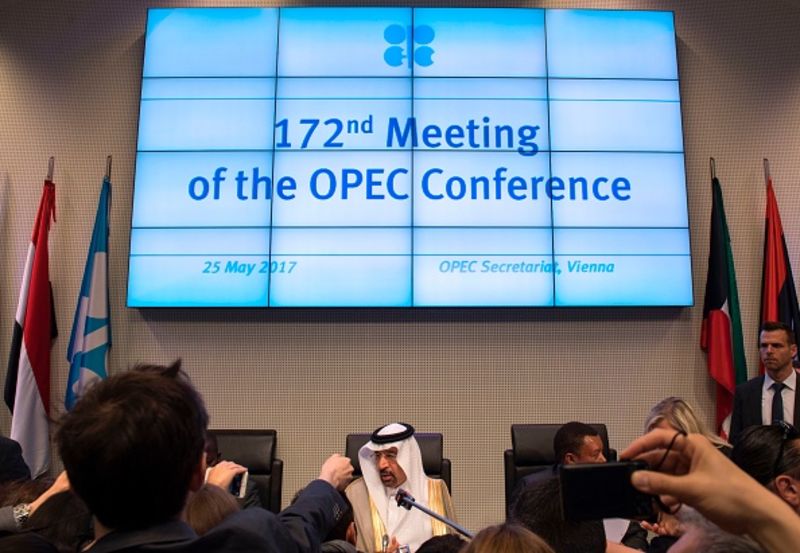
Until this quarter, the revised approach was largely successful in stabilizing prices in a range that both producers and consumers could live with. But, below the surface, its durability was slowly being eroded by three factors: signs that exempt OPEC producers may move the production needle more than initially expected; indications of non-adherence to the ceilings by non-OPEC producers; and, most importantly, by the increasing ability of non-traditional suppliers to operate at lower prices given both ample market financing and cost-cutting innovation.
This third factor puts OPEC in a particularly tricky situation, as illustrated by the literature on disruptive innovation. Pioneered by Harvard Business School’s Clayton Christensen, it shows how technological advances can empower new entrants to take market share from established providers, and to do so at declining prices. New value chains are created, either in a new parallel market or, as illustrated by what Southwest Airlines did to the major airlines in the U.S. a few decades ago, in an existing market.
In the case of shale, the disruptive innovations started out with high unit production costs. As such, the producers were initially just an irritant to established suppliers, including OPEC. But, with time, rapid evolution and adaptation allowed them to capture a growing market share, while also redefining the pricing dynamics for the industry as a whole. If this disruption process proceeds further, it will force established suppliers to seek more fundamental adaptations or risk a greater secular decline that is increasingly hard to reverse.
See related: Eyes-on-shale OPEC resists calls for deeper output cuts
At first, the non-traditional energy supplies were expensive, small and relatively localized. But their impact has been changing, especially when powered by cost-cutting innovations, allowing them to climb the value-added chain. Most recently, they have surprised many by being able to increase output at the new $45 to $55 per barrel price that OPEC helped establish and maintain.
Unlike companies facing such disruption (again think established firms versus new entrants), OPEC members have fewer cost-cutting strategies available to them. They can’t merge and consolidate as some disrupted companies have been forced to, and their existing cost structures are relatively entrenched. Their main strategic alternatives boil down to either going all out to undermine the disruptor — implying oil prices probably around $20 to $30 for a while — or they manage a gradual secular reduction in revenues due to eroding market share that proves very hard to regain.
In terms of the market, these dynamics suggest the establishment of a series of price ranges around a declining trend. Thus, what used to be $45 to $55 becomes $40 to $50 before being subjected to supply pressures, over time, within a series of other — established then challenged — price bands. OPEC can, and probably will, moderate this through renewed production agreements, establishing a longer shelf life for the potential succession of lower trading bands that eventually are challenged by further technological advances.
Also read: Nigeria maintains control of refineries, approves new national gas policy
In the absence of adverse geopolitical or technological shocks that raise serious doubt in markets about the reliability of supply, OPEC members are likely to face more challenging market realities that reinforce the need to look for ways to reduce expenditures and/or generating higher non-oil revenues at home. Their best salvation in the energy markets would come in the form of notably higher demand. But, compared to production levels, that is something they have a lot less control over, if any.
Courtesy Bloomberg