|
Just as Nigerians continue to bear the brunt of the current energy crisis in the petroleum sector amid rising inflation, the country’s erratic electricity output, spurred by poor power supply from the national grid and the recurring electricity system collapse, has inflicted yet another blow on the populace.
The agonsing trend of systematic failure in the electricity sector has forced households, as well as commercial and industrial sectors into becoming heavily reliant on alternative means of power generation albeit at exorbitant cost and a gruelling burden that has persistently constrained the economic growth of Africa’s largest economy.
According to industry data, Nigeria’s power sector has since 2013, when it became privatised, suffered over 123 (partial and total) system collapses between 2013 to 2021, while power generation stands at around 5,000 Megawatts (MW) despite the 13,000MW installed capacity, a figure far below the demand of a country where a large percentage of business establishments and micro, small and medium enterprises (MSMEs) are heavily dependent on electric power to run daily business activities.
The World Bank in a 2021 dissection of Nigeria’s power sector titled ‘World Bank Dialogue on Fostering Knowledge-Sharing and Dialogue on Power Sector Issues in Nigeria’, stated that Nigerian businesses suffer an annual loss of $29 billion as a result of the incessant power failure.
The international financial institution further disclosed that for every N10 worth of electricity received by electricity distribution companies (DisCos), about N2.6 is lost to poor distribution infrastructure.
Despite huge resources, investments and reforms channelled into the national grid by both the past and present government administrations, the hope for a more efficient electricity sector has been shattered by devastating outcomes.
On March 14, 2022, the country’s power sector took a serious hit as the Egbin 600 MW thermal power plant in Lagos, the largest power plant in the country, suffered a total system collapse.
Barely 24 hours after the collapse, power distribution companies confirmed yet another electricity grid collapse, a development that resulted in a nationwide power blackout, with power distributors noting that the collapse had disrupted power supply within their networks.
In a statement addressed to power users in its franchise area, Eko DisCo said: “Dear esteemed customers, we would like to inform you of another system collapse on the national grid which occurred at 5:10pm today (Tuesday).
“We are monitoring the situation and will continue to provide updates. Once again we apologise for the inconvenience.”
In another public announcement, the Ibadan Electricity Distribution Company (IBEDC) stated that the grid suffered a total collapse.
The statement read; “Dear esteemed customers, we regret to inform you of a total system collapse on the national grid at 17:09hours of today Tuesday, March 15, 2022 leading to outages across our network.
“We are closely monitoring the situation with our TCN (Transmission Company of Nigeria) partners and will keep you updated on the situation. We sincerely apologise for the inconvenience.”
Also confirming the report, Emeka Ezeh, head of corporate communications, Enugu Electricity Distribution Company (EEDC), said the second national grid system collapse occurred on Tuesday, March 15, barely 24 hours after the first grid collapse was announced in the early hours of Monday, March 14.
“As a result of this unfortunate development, all our outgoing feeders are out and supply to our customers in Abia, Anambra, Ebonyi, Enugu, and Imo States has been affected.
“We are currently on standby, awaiting further directive from the National Control Centre (NCC) for restoration of supply,” he explained.
Business organisations bemoan financial implication
Shyam Barakale, general manager of Pentagon Plastic Industries Ltd (PPIL), a plastic and rubber products manufacturing company, who decried the country’s poor power production, stated that manufacturing companies have been forced to increase production cost to provide alternative power and maintain operations.
He further noted that the situation has resulted in the closure of many companies across the country.
According to Barakale, if regular and consistent electrical power could be sourced from the national grid, manufacturing firms would easily concentrate on the core activity of production rather than investing in building and maintaining alternative power plants.
Also commenting on how the power challenge has affected Nigerian businesses, Bright Echefu, the managing director of TStv Africa, an indigenous direct to home Pay TV operator, stated that its operations were being hindered by unavailability of power and high cost of running on generators as an alternative to serve its customers.
Echefu said the inconsistency in power generation has resulted in the organisation spending “outrageous” sums monthly to run daily operations, adding that there were months that the organisation relied solely on generators to run its operations.
“From our finance records, TStv bought 769,300 litres of diesel and spent a total of N232 million from January 2021 to December 2021 for TStv headquarters and its affiliate offices.
“If this issue is not resolved by the government, it means TStv should be prepared to look for N489 million to power its generators for the next nine months,” he said.
Federal government wades in
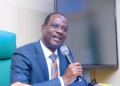
Addressing journalists on the instability of the country’s power system, Abubakar Aliyu, minister of power, blamed the repeated collapse of the national electricity grid and the resultant blackouts on maintenance problems and gas shortages.
Aliyu also noted that other issues, including scheduled maintenance of facilities, vandalisation of pipelines, as well as the disputes around availability of gas and payment for gas contracts between gas companies and power generating companies, had contributed to the current power crisis.
Aliyu, while confirming that the grid had been restored, added that the government is working towards getting more megawatts to push on the grid.
“We have set up small committees all geared towards getting more megawatts to put on the grid. Basically, the problem is around gas.
“You need to have a gas contract between generating companies and gas suppliers – some are from contracts, some are not. We are looking into this and have proffered some solutions in some few days to mature,” he added.
On how the government intends to prevent a recurrence of the electricity grid failure, the minister said the government is in collaboration with the relevant agencies, including the Nigerian National Petroleum Corporation (NNPC) and other gas suppliers to restore gas supply for optimum power supply.
He added that the government was doing everything possible through the relevant security agencies to stop the vandalism of pipelines.
Expert recommends long-term solution plan
Ifeoluwa Oyedele, executive director, Niger Delta Power Holding Company (NDPHC), posits that the Nigerian government rather than keep offering temporary solutions, need to prepare and implement a credible 30-year long-term master plan to proactively develop the country’s electricity output and address the challenges stalling the power sector.
According to Oyedele, 85 million Nigerians do not have access to power supply, while power generation in the country is constrained by insufficient gas supply for existing power stations due to lack of cash flow to pay gas suppliers, frequency misalignment on transmission grid, low evacuation capacity and system instability.
Commenting on the proliferation of government agencies in the power sector, he noted that Nigeria has about 21 different bodies/organisations dealing with power in the sector and all of them are working in silos.
Speaking on the way forward, the electricity expert said preparation of the 30-year electricity master plan must meet international best practices and in consultation with policy makers and stakeholders in the industry to avoid putting up a “jamboree and blame games.”
The master plan, he suggested, should be broken down into a rolling 5-year plan and not to be jeopardised by changes in administrative control.
He further stated that the government needs to emulate successful countries in the power sector like Singapore, India, and Rwanda, by presenting a coherent unified face with consistent policy.
The NDPHC executive director also spoke of the need to revisit the tariff issues, review the Multi-year tariff order (MYTO) to be user-friendly, and adopt a truly cost-reflective tariff that can guarantee a bankable investment climate.
|
|