By Isaac AIDOO, in Accra, Ghana
Players in Ghana’s agribusiness sector have renewed calls on the government to facilitate the expansion of fruit and vegetable production so they can boost exports and take full advantage of the United Kingdom (UK) vegetable market which is worth over $10 million.
Felix Mawuli Kamassah, vice-president, Federation of Association of Ghanaian Exporters (FAGE), renewed the call for increased support following the reported food supply challenges in the United Kingdom (UK) by London-based The Guardian newspaper.
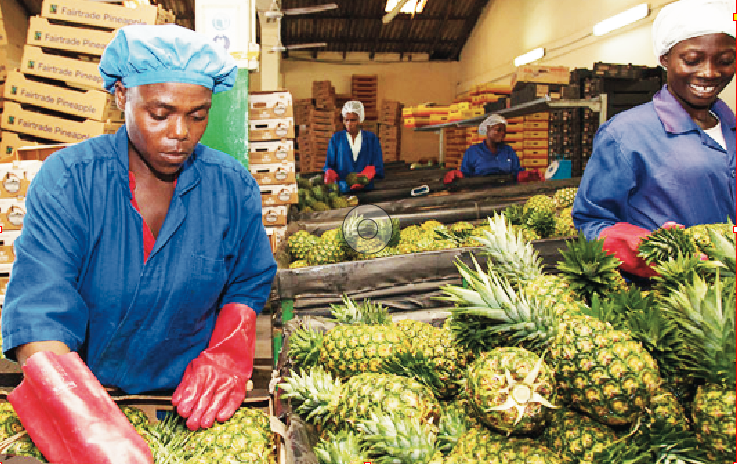
Ghanaian farmers, exporters can fill gap
Kamassah, who is also into large scale farming in Ghana’s Volta region, and is managing director of Maphlix Trust Ghana Limited, is confident Ghanaian farmers could deal with the shortages and indeed exceed demand if provided the needed support in terms of farm inputs, infrastructure and funding.
FAGE says it is aware that the Ghanaian government had in the past six years built several greenhouse facilities across the country. Kamassah said it is significant for the government to engage the Federation on how to maximise the facilities and put them to better use to benefit the Ghanaian economy.
75 greenhouses, 1000 to be built across all regions
The National Entrepreneurship and Innovation Programme (NEIP), a flagship policy initiative of the government installed some 75 greenhouse domes at the Dawhenya irrigation site in the Greater Accra region.
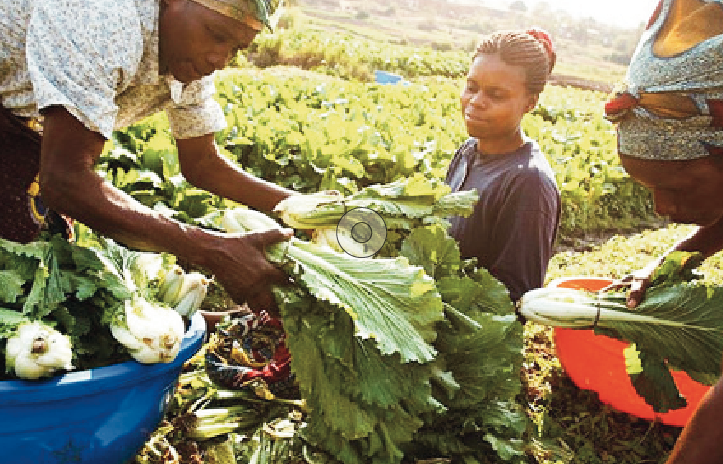
It is the plan of the NEIP to build 1,000 greenhouses across the 16 regions of Ghana providing 10,000 direct jobs annually through the greenhouse project.
Ghana-UK bilateral Trade agreement
Kamassah said the Federation had been wondering what the government was doing to take advantage of the shortages in the vegetable market in Europe since “Ghana has a bilateral agreement with the UK on exports.”
He said “production is key if we want to tap into the UK market,” noting that “normally, the government and most entities forget about production and only talk about the exports.”
Kamassah noted that the government has to look at the agricultural sector with good funding, adding that sometimes “we talk about exports without the production but if we don’t look at the production sector, we cannot talk about exports. “If we cannot produce, what are we exporting?” he asked.
Teething challenges
Players in Ghana’s agribusiness sector have constantly lived with the fear of going out of business as they face teething challenges in their bid to expand production and boost the export of their produce into international markets.
Farmers and exporters of fresh fruits and vegetables lament millions of cedis in losses as consignments of their perishables fail to leave Ghana’s shores for markets in Europe and the United Kingdom (UK) due to lack of flights.
The processing and marketing of agricultural products (agribusiness) represents a major sector of industry in Ghana and creates many jobs.
Micro, small and medium-sized enterprises (MSMEs) contribute up to 70 percent of Ghana’s economic output. However, only 20 percent of the agricultural and natural products produced are further processed in the country itself.
Many agribusiness companies need support to become more competitive and, for example, improve their supply chain management. Moreover, they often lack access to financial resources for long-term investments. Women entrepreneurs in particular need advice in order to prevail in a still male-dominated market.
Support for sector
The agribusiness sector has continued to benefit from support from government and government agencies such as the Ghana Exports Promotion Agency (GEPA) under the Ministry of Trade and Industry and the Ghana Export-Import Bank (GEXIM). Government in 2017 established some initiatives to help improve the sector, including the Planting for Food and Jobs (PFJ) to modernise agriculture, to improve food security, create employment opportunities and reduce poverty.
But industry experts and players in the industry have said that the support has been in silos and far from beneficial.
Edward Kareweh, general secretary, General Agricultural Workers Union (GAWU), said the PFJ had largely been to the disappointment of farmers across the country.
He lamented the never-ending fertiliser shortages and smuggling to neighbouring West African countries, depriving Ghanaian farmers of the essential input for farming.
So, support to the agribusiness sector appears not to have had the desired impact as just a few firms have been successful in accessing funds from the financial sector.
Some of the banks have argued that agribusiness operators lack the capacity to justify their need for funds. They are unable to come up with convincing project proposals that will get the banks to approve and support agribusinesses.
High fuel costs derailing farmers
High prices of petroleum products are fast eroding the profits of farmers and other workers in Ghana’s agribusiness sector. Many farmers have been compelled to downsize their operations due to what they describe as unbearable costs.
Farmers in Ghana told this paper astronomical hikes in diesel and petrol prices were increasing their costs of production and chipping away the already meagre gains.
Jonathan Addo who is into greenhouse as well as open field farming of sweet pepper and other vegetables told this reporter he now spends about GH¢4,000 a week on diesel for irrigation pumps, tractors and petrol to fuel his vehicle which he uses for farm visits.
He has 24 greenhouse setups where he has planted sweet pepper. The farm is located at Gomoa Buduatta. He has another farm, an open field one, in Winneba near the Winneba Senior High School and another 23-acre farm in Gomoa Amenfi, Bewadze all in the Central region
Addo has two machines used to irrigate his 7-acre sweet pepper farm – an 80hp machine and a 17hp pump machine. He uses fuel to power machines to drain water from the local man-made dam onto the farm.
According to Addo, back in 2019, diesel cost him GH¢200 everyday but he (in 2022) had to cough out GH¢450 a day to buy diesel for his machines before his farm could get water.
Additionally, he spends GH¢200 everyday on fuel for his personal vehicle for farm visits. This gives a total of GH¢16,000 every month in cost outlay.
Comparing his costs now with how he fared in 2017, Addo said, “I’m spending just too much on fuel and it’s affecting my output and income hugely.”
Vegetable farmer, exporter and now vice president of the Federation of Ghanaian Exporters (FAGE) Vegetable Exporters and Producers Association of Ghana (VEPEAG), Felix Mawuli Kamassah, said his budget on fuel had risen by over 150 percent between 2019 and 2022.
The company grows sweet potatoes, yam, cassava and vegetables for export markets.
COVID-19 exposed deep challenges of agribusinesses
The Ghana Statistical Service (GSS), funded by the German Ministry for Economic Cooperation and Development (BMZ) and implemented by Deutsche Gesellschaft für Internationale Zusammenarbeit (GIZ) GmbH, in partnership with the United Nations Development Programme (UNDP), carried out a survey titled COVID-19 Agribusiness Tracker to assess the impact of the COVID-19 pandemic on agribusinesses.
Data from the survey said it could take a little more time and support for businesses to recover from the impact of the pandemic.
According to the survey, about 67.6 percent of agribusiness firms reported a decrease in average monthly sales by 48.8 percent during the lockdown.
The data revealed an estimated 16,000 agribusiness firms remained closed, with over 78,000 estimated staff laid-off and more than 267,000 workers having their wages reduced between May 2020 and January 2021.
Awareness, leverage of AfCFTA by agribusiness firms
When firms were asked whether they were aware that the African Continental Free Trade Area (AfCFTA) started trading on January 1 2021, only 25.6 percent of agribusiness firms across all sectors were aware of the AfCFTA. Out of the six supports that firms expect from the AfCFTA, the top three supports needed by agribusinesses were an increase in information on business opportunities (24.7%), reduction in the cost of credit (20.6%), and removing policy or regulatory bottlenecks (16.3%).