As I engage a lot more with the private sector while still grounded in the development perspective that has shaped me for over two decades, I am realising and struck by the fact that many of the same challenges I spent years confronting in the humanitarian world are resurfacing here too. The same eurocentric assumptions. The same distant models. The same instinct to amplify Africa’s challenges while minimising its opportunities. And nowhere is this more visible than in the way global credit rating agencies assess African economies.
Moody’s, Fitch and S&P have long acted as the gatekeepers of global capital. Their ratings determine how much African countries pay to borrow, how investors perceive the continent, and how quickly development can proceed. Yet their methodologies consistently misprice Africa. They exaggerate and amplify political risk, discount reform momentum and overlook the structural strengths that define the continent’s economic landscape.
This is not a minor distortion. It is a structural barrier that costs Africa billions every year.
President Bola Tinubu’s call for an African credit rating agency is therefore not a symbolic gesture. It is a necessary disruption. It is a strategic imperative whose time is now!
The Nigeria president’s argument is straightforward: Africa cannot continue to rely on institutions that do not understand its realities, do not operate with sufficient local presence and do not reflect the continent’s economic fundamentals. An African rating agency would not replace the global giants. It would require them to recalibrate. It would provide a counterweight grounded in African data, African contexts and African expertise.
This push aligns with the broader shift championed by Dr. Akinwumi Adesina and the Global Africa Investment Summit (GAIS). GAIS is reframing Africa as a destination for investment, not just aid; a continent of assets, not deficits; a partner with agency, not a passive recipient. It is part of a growing movement to reclaim Africa’s economic narrative and reposition the continent as a central engine of global growth.
The stakes are high because when Africa is mispriced, the consequences are immediate: higher borrowing costs, stalled infrastructure, cautious investors and governments forced into defensive fiscal positions. UNDP estimates that Africa loses tens of billions annually due to rating distortions. That is capital that should be building industries, financing SMEs and powering the energy transition.
Africa is not asking for special treatment. It is asking for fair valuation. A credible African rating agency would be one piece of a larger architecture of economic sovereignty alongside stronger regulatory bodies, better investment promotion systems, deeper technical skills and institutions capable of structuring Africa’s sovereign assets into investable instruments.
The kernel of discussions now is no longer whether Africa has potential. It is whether Africa is ready to value itself correctly, do it with confidence and unapologetically.
And that is precisely what makes this moment uncomfortable for those who benefit from the status quo. Africa’s undervaluation is profitable for some. Its fragmentation is convenient for others. Its dependence is a predictable lifeline for ‘aidtreprenuers’.
A continent that negotiates from strength disrupts established patterns. But Africa’s rise is not a threat. It is a correction of history. It is a win-win for all. As Ghana’s President John Mahama recently in Addis Ababa puts it, “Africa’s prosperity is not a threat to anybody in this world. Africa’s prosperity will consolidate the world’s prosperity. It will be a positive for the world, not a threat.”
Tinubu’s call and Adesina’s GAIS agenda are signals of a continent refusing to be defined by external verdicts. They mark the beginning of a new chapter, one where Africa sets its own terms, tells its own story and prices its own assets.
The world is adjusting. Africa is ready. The march toward self‑reliance has begun. Some cynics might say we have heard this several times. But this time it feels different. The mechanics of changing prevailing systems and narratives that disadvantages Africa is well underway.
- business a.m. commits to publishing a diversity of views, opinions and comments. It, therefore, welcomes your reaction to this and any of our articles via email: comment@businessamlive.com

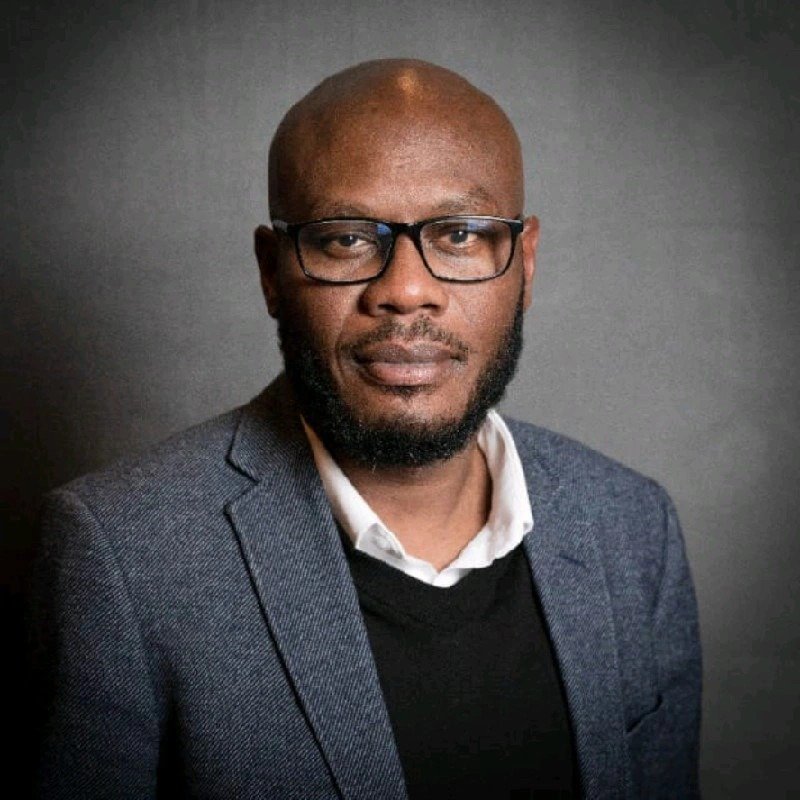
Dr. Wale Osofisan, PhD, is a seasoned governance strategist and policy analyst with over 23 years of experience advancing African-led, evidence-based solutions to political transitions, humanitarian crises and development challenges.