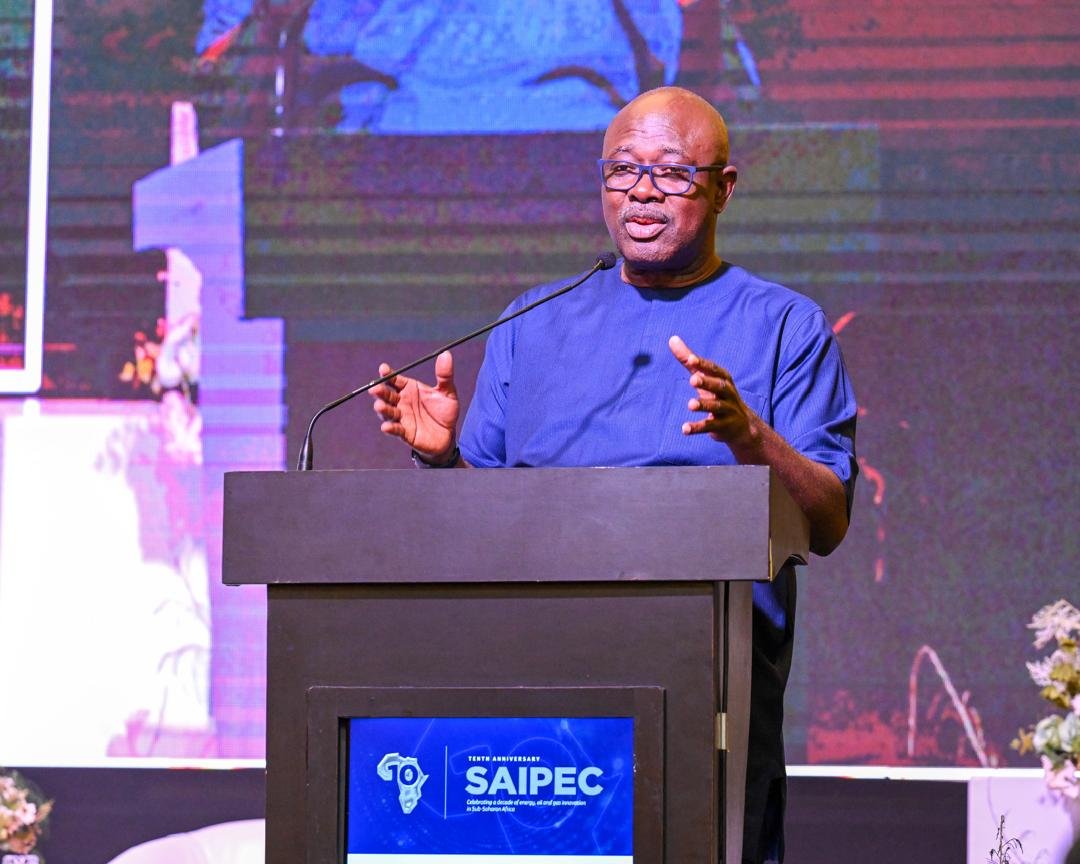
Africa must prioritise energy development strategies that balance hydrocarbons with emerging alternatives rather than prematurely shifting away from fossil fuels, Heineken Lokpobiri, Nigeria’s minister of state for petroleum resources (oil), said at the Sub-Saharan Africa International Petroleum Exhibition and Conference (SAIPEC) 2026, arguing that energy security remains the continent’s most urgent economic constraint.
Speaking at the conference’s 10th anniversary gathering, Lokpobiri described the event as a platform for advancing solutions to persistent energy poverty across Africa. “This is not just an event that dwells on industry narratives; it is one that drives conversations fundamental to solving Africa’s energy poverty problems,” he told delegates, noting participation from more than 30 countries across the continent and beyond.
Africa holds substantial hydrocarbon reserves yet continues to face chronic electricity deficits, constrained industrial output and uneven access to modern energy. Lokpobiri said the challenge is less about resource availability than execution capacity, investment mobilisation and coherent policy frameworks capable of translating natural resource wealth into economic development.
“The problem has never been resource richness; the question has always been how we provide the solutions needed to convert those resources into reliable energy access,” he said, highlighting the role of indigenous service companies and regional collaboration in building technical capacity.
Lokpobiri also reiterated Nigeria’s call for a shift in global energy discourse from a narrow “energy transition” narrative toward what he described as a more realistic “energy mix” approach. According to him, developing economies require flexibility to utilise hydrocarbons alongside renewables while building infrastructure and industrial capacity.
“I have consistently argued that Africa must move the conversation from energy transition to energy mix. The continent should be allowed to responsibly develop its resources in an environmentally sustainable way for the benefit of its people,” he said.
Citing projections from international energy bodies, Lokpobiri said oil and gas are likely to remain central to global energy supply for decades. “Outlooks from major industry organisations suggest oil and gas will still account for over 50 per cent of global energy demand for the foreseeable future,” he said, adding that Africa has “not even scratched the surface” in harnessing its energy potential.
The minister linked energy access directly to industrialisation, healthcare delivery and broader socio-economic development, arguing that insufficient energy infrastructure continues to limit Africa’s competitiveness in global manufacturing and value-added sectors.
Industry participants at SAIPEC emphasised that financing constraints, regulatory consistency and technology transfer will determine whether African producers can capitalise on renewed global interest in hydrocarbons while also advancing lower-carbon energy systems.
Lokpobiri said Nigeria intends to strengthen cooperation with indigenous service providers, investors and regional institutions to accelerate upstream investment while improving refining, midstream infrastructure and domestic energy utilisation.