
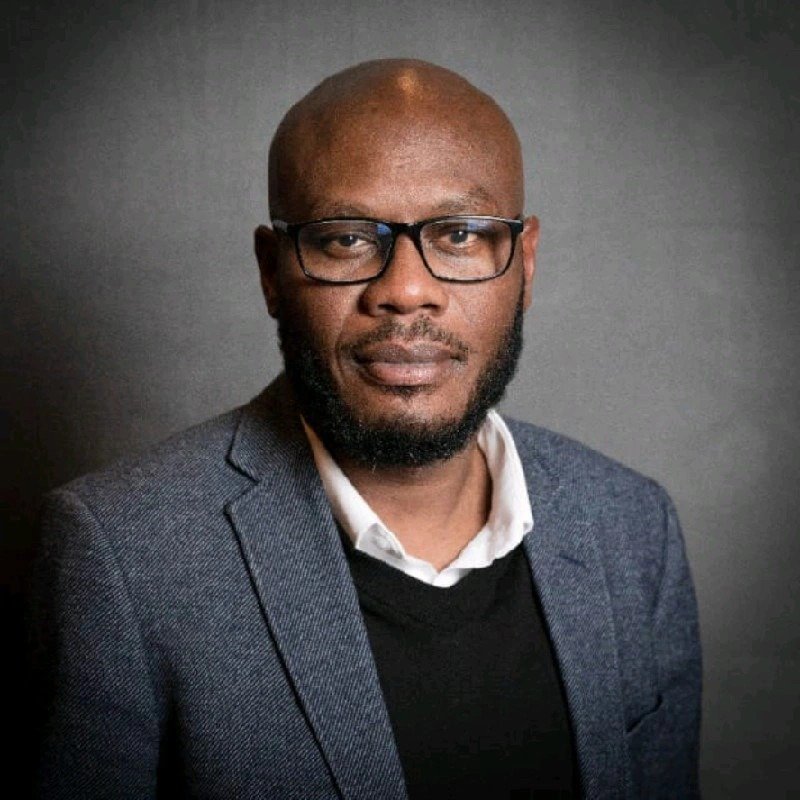
“Information is power. Narratives on Africa shape markets, capital, decisions and global value chains. Africa can build its own value chains, drive independence and lead smart investment.” Ahunna Eziakonwa, director, UNDP’s Regional Bureau for Africa.
Ahunna Eziakonwa’s intervention at The Fletcher School was more than a sharp analysis. It was an eye opener. Her clarity cut through the noise and crystallised a truth that had been forming in my mind for months. It was at that moment that the seed for this article was planted. She reminded the audience that Africa’s place in the global economy is not predetermined. It is shaped by the systems the continent builds and the stories it tells about itself. Her words forced a deeper reflection: Africa continues to feel the consequences of global shocks it did not originate which is a reminder of why building resilient, homegrown systems is now essential.
That moment sharpened a truth that has become impossible to ignore. Africa can strengthen its economic security by building systems that complement global markets rather than depend on them. UNCTAD’s 2024 assessment reinforces this reality. Africa sits at the intersection of multiple global crises, with vulnerabilities amplified by commodity dependence, weak logistics, and climate exposure. These are not temporary disruptions. They are structural signals.
3 recent shocks reshaping Africa’s exposure
- The pandemic shock
COVID‑19 exposed the fragility of a world economy built on long, thin supply chains. Global trade contracted sharply. Shipping costs from China to Africa surged. And because Africa imports most of its pharmaceuticals, machinery, fertilizers, and refined petroleum, the continent’s economies stalled the moment global logistics froze.
- The geopolitical shock
The US‑China rivalry, sanctions regimes, and Middle East tensions have turned supply chains into instruments of power. The Strait of Hormuz, through which a fifth of global oil supply passes, has become a pressure point that instantly affects African economies. A flare‑up thousands of kilometres away can raise pump prices in Lagos, disrupt manufacturing in Nairobi, and destabilise fiscal planning in Accra.
- The climate shock
Climate volatility is now a permanent feature of Africa’s economic landscape. In 2022 alone, climate disasters affected 110 million Africans and caused billions in damages. Meanwhile, the global transition to renewables is increasing demand for Africa’s minerals, yet the continent remains stuck at the bottom of the value chain.
Why Africa is hit hardest
Commodity dependence
Over half of African countries rely on oil, gas, minerals or unprocessed agricultural produce for most of their export earnings. This is not a development strategy. It is a structural trap. Commodity dependence means Africa earns foreign exchange from products whose prices it does not control and whose markets are volatile. Worse, Africa sits on 30 percent of the world’s minerals that will power the global green transition yet exports them raw. And the continent also houses 60 percent of the world’s uncultivated arable land.
Import dependence
Africa imports 90 percent of its pharmaceuticals, 80 percent of its processed foods, and 70 percent of its refined petroleum. The consequences are immediate and personal. Alex, a friend of mine, who recently secured a contract to import fertiliser into Kenya, has seen his margins evaporate almost overnight. The crisis around the Strait of Hormuz has pushed freight costs, insurance premiums, and delivery timelines through the roof. His business is now barely tenable, not because of miscalculation, but because Africa relies on supply chains it does not control. This is an example of the real term consequences facing African entrepreneurs.
Weak regional integration
Despite AfCFTA’s promise, intra-African trade remains below 18 percent. The barriers are not tariffs alone but systems: border delays, incompatible customs platforms, multiple product standards, and poor transport corridors. Fragmentation keeps Africa small.
Africa has resources. But it lacks architecture.
Africa is not short of resources. What we need now is a higher level of coordination and institutional alignment to turn these assets into continental advantage. The continent has abundant renewable energy, critical minerals, sovereign wealth funds, foreign reserves, and a market of 1.4 billion people. It also has the world’s youngest population, an emerging workforce that could power global industries for the next half‑century. But demographic advantage becomes a dividend only when matched with deliberate investments in skills, apprenticeships, and technical training that prepare young Africans for modern industrial and digital economies. What is missing is the system that binds these assets into a coherent engine of transformation.
And that architecture must include not only physical infrastructure but digital infrastructure: the data centres, payment rails, digital IDs, and logistics platforms that make modern economies efficient and competitive. This also requires strong governance frameworks to ensure interoperability, data protection, and regulatory certainty across borders, so that digital systems reinforce, not fragment, Africa’s economic integration.
A strategic pathway forward
Africa must shift from reacting to global shocks to designing systems that absorb and redirect them to its benefit. The continent cannot continue to rely on external markets, distant supply chains, and geopolitical goodwill for its economic security and survival. We must now build the architecture that protects our interests, anchors our industries, and positions the continent as a strategic actor in the global economy.
Here are six pathways that can move Africa from vulnerability to resilience, from fragmentation to scale, and from dependence to sovereignty.
- Build regional manufacturing hubs
In a previous 4-part series on “Africa’s Industrialisation Moment” Phanice Mogaka and I wrote about the urgency to double down on producing at scale what the continent consumes. It is the single most important economic transformation imperative of the next five decades. The continent cannot build resilience while importing the very goods that anchor its food systems, health systems, energy systems, and industrial base.
Regional specialisation is the starting point. West Africa can anchor energy, petrochemicals, fertilisers, and heavy manufacturing. North Africa already leads in automotive assembly, fertilisers, textiles, and renewables. East Africa can become the agro‑processing and digital manufacturing hub. Southern Africa is the natural home for minerals beneficiation, green metals, and battery production.
But hubs require infrastructure, harmonised standards, predictable regulation, and cross‑border payment systems. They require real demand, not theoretical projections. AfCFTA’s 1.4 billion‑person market is Africa’s greatest untapped asset, but only if borders move goods, not paperwork.
And no modern manufacturing ecosystem can function without digital rails that coordinate logistics, payments, standards, and supply‑chain visibility. Manufacturing is not optional. It is sovereignty.
- Establish a continental supply chain security framework
The Dangote Refinery, already the largest single‑train refinery in the world, plans to scale up to 1.4 million barrels per day. If fully realised, this capacity could reshape Africa’s energy landscape. But the real opportunity lies in connecting such assets through continental infrastructure.
A West–Central–East refined‑products pipeline would reduce reliance on maritime routes, stabilise supply for landlocked economies, and anchor new industrial zones. Imagine three or four Dangote‑scale refineries across the continent, linked by pipelines, rail, and energy grids. Africa would negotiate differently in global energy markets. This is what supply chain security looks like: large‑scale, strategically located industrial assets connected by continental systems. This may sound overly ambitious, but it is precisely the type of vision we need in the continent. Aliko Dangote’s refinery demonstrates what becomes possible when bold vision meets disciplined execution – a reminder that ambitious ideas can be realised on African soil.
- Map Africa’s assets and build intelligence
Africa cannot negotiate, plan, or industrialise without knowing what it has. The continent needs a unified, credible, continuously updated asset registry that maps minerals, gas reserves, industrial parks, ports, rail corridors, energy grids, and logistics hubs.
Dr Akinwumi Adesina’s Global Africa Investment Summit (GAIS) initiative is a critical starting point. When institutionalised, it would become the backbone of Africa’s investment intelligence, guiding regional specialisation and informing negotiation positions. Asset intelligence should be a strategic, African‑led capability, with development partners supporting a framework that strengthens continental ownership.
- Mobilise African and global DFIs
Africa’s transformation cannot be financed by governments alone. African DFIs such as AfDB, AFC, Afreximbank and TDB are the first movers in de-risking industrial corridors, pipelines, and energy grids. Global DFIs such as IFC, EIB and EBRD have an opportunity to amplify their impact by complementing national projects with regional systems that unlock scale and resilience. Some of this is already happening but more is needed.
Blended‑finance platforms could crowd in Africa’s own institutional capital, with over a trillion dollars in pension funds and insurance assets. DFIs should also support the asset‑mapping agenda with data, analytics, and project‑preparation capacity. The good news is that many institutions are already moving in this direction. The task now is to connect these efforts into a coherent continental architecture. And this is not a critique of our partners. It is an invitation to co‑create the systems that will define Africa’s next chapter.
- Strengthen institutions
Africa’s greatest opportunity lies in strengthening execution capacity which are the systems, incentives, and professional institutions that turn plans into outcomes. Industrialisation requires a professionalised civil service insulated from political turnover, modern customs systems that move goods in hours not days, transparent procurement regimes, predictable regulation, and national planning commissions with real authority.
Countries like Rwanda, Botswana, Morocco, Ethiopia, and Côte d’Ivoire show what becomes possible when institutions work. Without capable institutions, capital flees and projects stall. With them, Africa can execute at scale. None of this is about assigning blame. It is about aligning capabilities: governments, DFIs, private sector, and regional bodies around a shared continental ambition.
- Negotiate as a bloc
Fragmented negotiation limits Africa’s leverage, but when we negotiate as a bloc, we unlock the full weight of a 1.4‑billion‑person market. A bloc can insist on beneficiation, local content, technology transfer, and regional value‑chain development. A bloc can negotiate standards. A bloc can resist geopolitical pressure. A bloc can shape the green transition rather than be shaped by it.
Negotiating as a bloc is the backbone of Africa’s economic sovereignty. It is a strategic imperative and the three shocks — Covid-19, Geopolitics and Climate — should be a wake‑up call for African leaders to stop negotiating as 54 vulnerable markets and start acting as one continental power with leverage.
A closing reflection: A win‑win for Africa and the world
Africa’s rise is not a threat to anyone. It is a strategic asset to everyone. A more industrialised Africa stabilises global supply chains, strengthens global health security, accelerates the green transition, and expands markets for the world. A stable, industrialised Africa is a global public good. A fragmented, vulnerable Africa is a global risk. Africa must move deliberately, urgently, and without illusion, not only for its own future, but for the stability and prosperity of the world.
And in many ways, this brings us back to Ahunna Eziakonwa’s reminder at The Fletcher School: information is power, and the narratives we build shape the systems we create. Africa’s next chapter will depend not on how it absorbs global shocks, but on how deliberately it builds the systems that protect its interests.
- business a.m. commits to publishing a diversity of views, opinions and comments. It, therefore, welcomes your reaction to this and any of our articles via email: comment@businessamlive.com

Dr. Wale Osofisan, PhD, is a seasoned governance strategist and policy analyst with over 23 years of experience advancing African-led, evidence-based solutions to political transitions, humanitarian crises and development challenges.








Who’s afraid of the T+1 settlement cycle of CSCS?