
Africa’s fashion industry embraces tech for global expansion

Olori Ronke Ademiluyi-Ogunwusi advocates digital revolution

Onome Amuge
Africa’s textile and fashion sector is entering a decisive era where heritage meets technology, with the potential to unlock global markets and deliver sustainable growth, according to Olori Ronke Ademiluyi-Ogunwusi, founder of the Adire Oodua Textile Hub and Africa Fashion Week London/Nigeria.

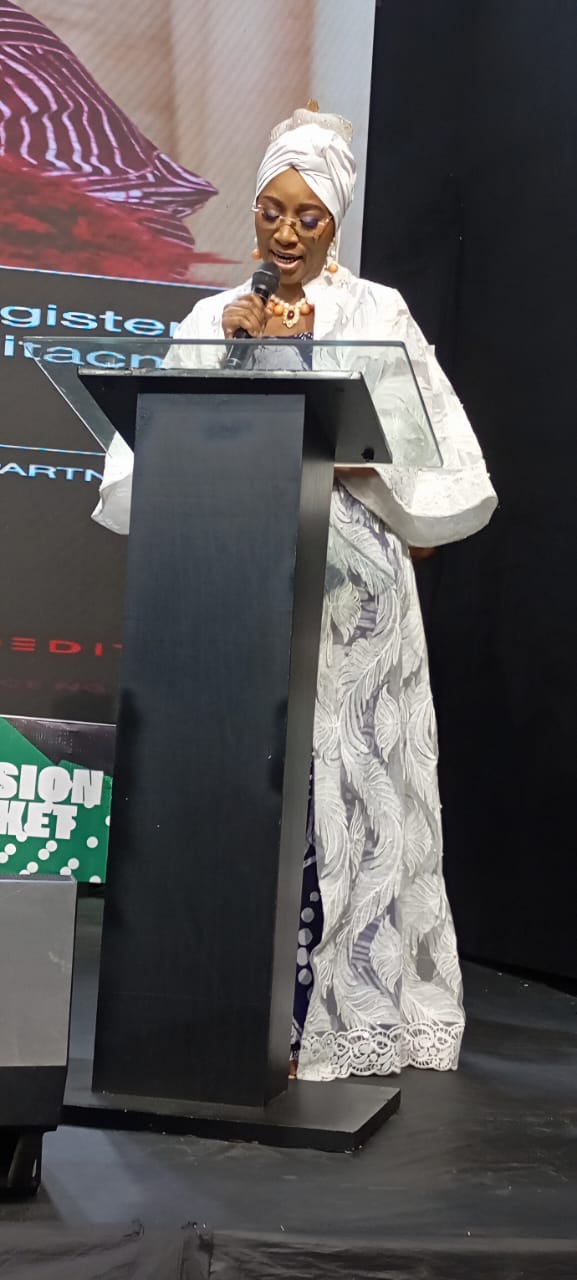
Ademiluyi-Ogunwusi, in her keynote address at the FashionEVO Summit & Show, one of the flagship events of the African Creative Market 2025 in Lagos, stressed that technology is no longer optional for the industry.

“Africa’s textile and fashion industry, long celebrated for its rich cultural heritage, stands at a very pivotal moment of change, as the digital revolution is reshaping the sustainability and the future of this sector. Making a profound transition from traditional textiles to tech-driven fashion supply chains that can bring this sector from concept to consumer is very important,” she said. 

The concept to consumer approach, she explained, requires integrating digital tools into every stage of the value chain, from sourcing raw materials such as fabrics, zips and buttons to manufacturing, distribution and retail.

Ademiluyi-Ogunwusi, who launched Africa Fashion Week London in 2011, reflected on the early uncertainty of whether African designers would be accepted on a global stage. “I remember standing backstage at our very first show surrounded by vibrant fabrics and beadwork, bursting with culture. But I also remember the uncertainty that came with it. Would the world accept African fashion? Fifteen years later, in 2025, I can proudly say the answer is yes.”

Since its launch, Africa Fashion Week London has showcased more than 3,000 African creatives, helping some designers grow from small workshops into international brands. According to Ademiluyi-Ogunwusi, access to e-commerce, digital marketing and social media has been critical to that evolution.

“This has shown us one powerful truth:when tradition meets technology, fashion is not just created, it is transformed,” she said.

Ademiluyi-Ogunwusi also identified grassroots initiatives that are linking heritage craftsmanship with modern tools.  She noted that at the Adire Oodua Textile Hub in south-west Nigeria, artisans  (many of them women) are trained in both traditional tie-and-dye methods and digital design skills. She added that partnerships with universities have further supported co-creation and experimentation with new dyeing techniques.

“It is proof that when heritage, technology and international collaboration come together, everyone grows,” Ademiluyi-Ogunwusi noted.

Despite these advances, industry analysts agree that challenges persist. Weak digital infrastructure, limited access to financing, and fragmented distribution networks continue to hold back Africa’s fashion ecosystem. However,  an optimistic Ademiluyi-Ogunwusi pointed to recent successes such as African designers fulfilling more than 2,800 bespoke prom dress orders for the US market this year, aided by Instagram and TikTok as evidence of untapped potential.

“The rise of e-commerce platforms, artisan hubs like ours and cross-border collaborations show our resilience. We need to make use of technology to enhance craftsmanship and keep our traditions alive, because the global landscape is rapidly evolving, and the integration of digital technology is no longer a matter of choice but a necessity for survival and growth,” she said. 

Ademiluyi-Ogunwusi concluded with a call for investment in digital infrastructure and skills. “Let us build collaborations that connect communities to global markets. When African fashion and technology unite, it doesn’t just thrive;it creates opportunities for our people to grow,” she said. 

Leave a Comment

Africa’s fashion industry embraces tech for global expansion

Onome Amuge
Africa’s textile and fashion sector is entering a decisive era where heritage meets technology, with the potential to unlock global markets and deliver sustainable growth, according to Olori Ronke Ademiluyi-Ogunwusi, founder of the Adire Oodua Textile Hub and Africa Fashion Week London/Nigeria.

Ademiluyi-Ogunwusi, in her keynote address at the FashionEVO Summit & Show, one of the flagship events of the African Creative Market 2025 in Lagos, stressed that technology is no longer optional for the industry.

“Africa’s textile and fashion industry, long celebrated for its rich cultural heritage, stands at a very pivotal moment of change, as the digital revolution is reshaping the sustainability and the future of this sector. Making a profound transition from traditional textiles to tech-driven fashion supply chains that can bring this sector from concept to consumer is very important,” she said. 

The concept to consumer approach, she explained, requires integrating digital tools into every stage of the value chain, from sourcing raw materials such as fabrics, zips and buttons to manufacturing, distribution and retail.

Ademiluyi-Ogunwusi, who launched Africa Fashion Week London in 2011, reflected on the early uncertainty of whether African designers would be accepted on a global stage. “I remember standing backstage at our very first show surrounded by vibrant fabrics and beadwork, bursting with culture. But I also remember the uncertainty that came with it. Would the world accept African fashion? Fifteen years later, in 2025, I can proudly say the answer is yes.”

Since its launch, Africa Fashion Week London has showcased more than 3,000 African creatives, helping some designers grow from small workshops into international brands. According to Ademiluyi-Ogunwusi, access to e-commerce, digital marketing and social media has been critical to that evolution.

“This has shown us one powerful truth:when tradition meets technology, fashion is not just created, it is transformed,” she said.

Ademiluyi-Ogunwusi also identified grassroots initiatives that are linking heritage craftsmanship with modern tools.  She noted that at the Adire Oodua Textile Hub in south-west Nigeria, artisans  (many of them women) are trained in both traditional tie-and-dye methods and digital design skills. She added that partnerships with universities have further supported co-creation and experimentation with new dyeing techniques.

“It is proof that when heritage, technology and international collaboration come together, everyone grows,” Ademiluyi-Ogunwusi noted.

Despite these advances, industry analysts agree that challenges persist. Weak digital infrastructure, limited access to financing, and fragmented distribution networks continue to hold back Africa’s fashion ecosystem. However,  an optimistic Ademiluyi-Ogunwusi pointed to recent successes such as African designers fulfilling more than 2,800 bespoke prom dress orders for the US market this year, aided by Instagram and TikTok as evidence of untapped potential.

“The rise of e-commerce platforms, artisan hubs like ours and cross-border collaborations show our resilience. We need to make use of technology to enhance craftsmanship and keep our traditions alive, because the global landscape is rapidly evolving, and the integration of digital technology is no longer a matter of choice but a necessity for survival and growth,” she said. 

Ademiluyi-Ogunwusi concluded with a call for investment in digital infrastructure and skills. “Let us build collaborations that connect communities to global markets. When African fashion and technology unite, it doesn’t just thrive;it creates opportunities for our people to grow,” she said. 

Leave a Comment




