
WEALTH ACCRUING TO African countries from natural resources has helped in developing the various countries at different times and on different scales. Prior to and decades after independence, most African countries have relied on these resources as they annually generate tremendous revenues for the states. With the benefit of hindsight, however, Africa could have earned far more from these resources under certain circumstances. It is rather instructive to note that a bulk of what is generated in many countries have ended up in propping up leaders that further kept such countries continually dependent on such resources. In the extractive industries turning these resources to export commodities, not much has generally been done to boost earnings from them significantly. The situation is the same for agricultural and non-agricultural exports. African countries still remain at the very lowest end of the global value chains. This is understandable as the game is such that the exporters are not the ones determining the terms and conditions of exports. To that extent, they play along with the importers who dictate and execute the rules. Accordingly, the exporters are mostly at the mercy of the importers. Revenues earned by some countries on exports of certain commodities are so infinitesimally low compared with those at the end of the value chains at the importing countries.
The unidirectional flow of export commodities is not well offset by the flow of imported finished products into Africa. The continent is at a disadvantage in a number of ways. Prices of imported finished goods are very high compared to raw materials exported. Conditions for export are stringent and more demanding than for imported finished goods, especially as importing countries insist on higher standards than the ones the exporters operate with. Desperation for export revenues keeps raw commodity exporting countries as weaker partners in negotiations and are unable to call the bluff of the importers of their commodities. Small sizes of exporting countries operating in isolation and historical weaknesses in bargaining arrangements keep them at a competitive disadvantage. In cocoa production and export, for instance, local politics and sub-regional diplomatic naivety have denied Nigeria, Ghana, Cameroon and Côte d’Ivoire the benefits of strength in unity. An attempt at forming a cocoa-producing countries bloc similar to the Organisation of Petroleum Exporting Countries (OPEC) nearly a decade ago failed to materialise. The essence was to create a cartel of exporters to form a stronger unit that will have a voice in determining the exportation and pricing of their cocoa beans at the international market.

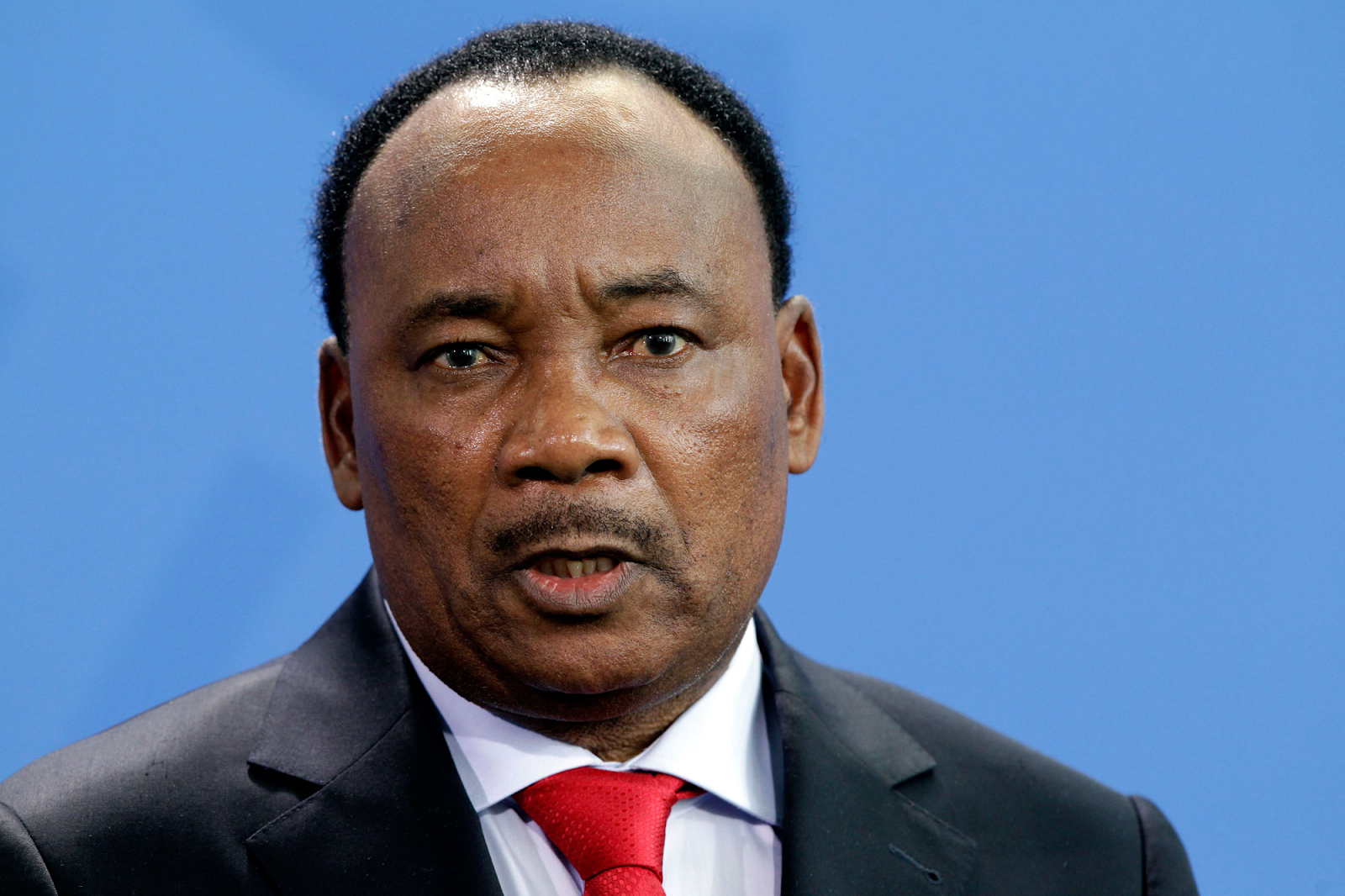
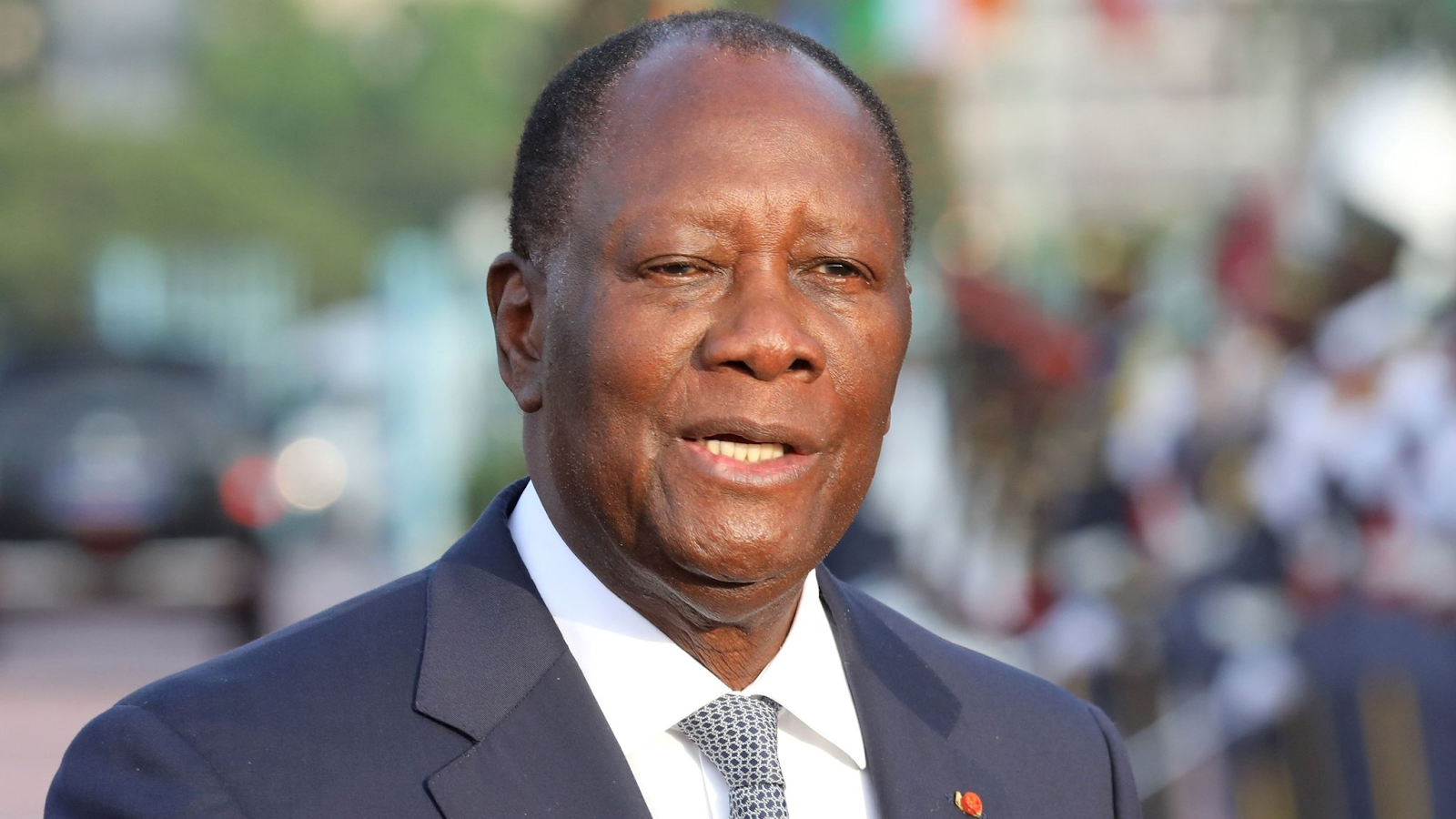
Cocoa beans exported from Côte d’Ivoire are estimated to account for 45 percent of world production, generating 40 percent of the country’s export earnings, and accounting for 15 percent of national GDP. The country produces an estimated two million tonnes per annum; in 2020, it exported $90.1 million in cocoa powder. Without any comparison whatsoever, the figure could appear huge. Chocolate is just one of the many products derived from cocoa. Juxtaposing with just the chocolate industry alone will reveal a huge income gap. The size of the chocolate market easily exceeds $100 billion a year globally, growing at a rate of almost five percent annually. The global chocolate market size was estimated at $113.16 billion in 2021. Few conglomerates therefore earn more than a country in revenue from the same commodity value chain.
Niger Republic has been rated as the third largest exporter of uranium and thorium ore in the world. According to the United Nations COMTRADE database, Niger exports of uranium or thorium ores and concentrates to France was $116.74 million during 2021. A bulk of uranium used in generating nuclear power for electricity in France comes from Niger. Areva, the French-owned energy giant, operates two mines in the north of Niger. In the recent past, France agreed to the legitimacy of Niger’s demand for more revenue from uranium mining on its soil.
Democratic Republic of Congo (DR Congo) is an extensive country, covering a land mass that is nearly equivalent to the size of Spain, Portugal, France, Germany, the UK and Ireland combined. In West Africa, it is nearly equivalent to the size of all the coastal countries from Senegal to Ghana. It is regarded, in climate activist circles, as the country serving as the “lungs of Africa,” because of the Congo Basin, which is the largest carbon sink in the world, absorbing more carbon than the Amazon. DR Congo alone owns about 60 percent of the Congo rainforest which is the second largest rainforest in the world. It has been surmised that one of the causes of the continued armed invasion and fighting in the eastern DR Congo is for the vast natural resources, including diamonds, gold, copper and timber. The history of armed struggles in the DR Congo and neighbouring Rwanda, Uganda and Burundi is fairly long. But the intensified fights in recent times provide a basis for concerns as to why the crises are not ending. The eastern DR Congo has continued to attract global attention for the deaths, displacements and atrocities committed by the fighters, particularly the M23 group.
It is clear that the fighting has not appreciably slowed down the exploitation of natural resources for export in the DR Congo. Extraction of minerals does not need a completely peaceful environment to take place as the history of mining under the watch of armed militia has been documented. In the other parts of the vast country, logging continues unabated. For instance, the volume of timber production in DRC is estimated between three and four million cubic metres per year. A major recipient of the export commodity is China. Historically, timber monthly export to China from the DR Congo averaged $61.178 million from January 2001 to December 2022. In October 2021, the government of DR Congo announced a plan to ban timber exports in a desperate attempt to save rain forest that is now under threat from deforestation. That decision is bound to affect China’s timber trade in the DR Congo, in which case it may have to focus on Gabon and Cameroon. The coming of China to Africa has been hailed by many commentators who sought to justify the need to end the diplomatic paradigm of the unipolar world. They miss the unregulated plundering of Africa’s natural resources and the potential future impacts on the people and the environment. Their arguments involve the need to allow China in, considering the main contributions in the areas of infrastructural development, desperately needed by African countries anyway. These projects are funded by loans from China, which could ultimately put the beneficiaries in a precarious situation when it comes to repayment.
China’s seeming benevolence and the expanding spheres of influence in Africa needs a review. The DR Congo is known to have an estimated 3.4 million metric tonnes of cobalt, nearly 70 percent of the world’s cobalt deposit. And China is making a kill of it, boosting the technologies for energy transition at home at the expense of the DR Congo. Recent reports reveal that, at the end of 2020, there were 4.9 million new energy vehicles in China, accounting for 1.75 percent of all vehicles on Chinese roads, of which, four million are all-electric. China wants to be a top climate compliant country in its aggressive drive to lower greenhouse gas emissions, especially from automobiles. This comes as an externality and at an expense to the DR Congo in some peculiar ways. For instance, with its contemplated expansion, the giant mining China Molybdenum Company (CMOC) recently announced a $2.51 billion plan to double copper and cobalt production, expecting to produce 34,000 tonnes of cobalt in Congo alone in 2023. China is the world’s largest producer of lithium-ion batteries. Huayou Cobalt, the biggest Chinese cobalt processing firm, has made a huge investment in Congo. Yet, hardly is there any electric vehicle in the entire DR Congo and the record of access of the population to electricity is dismal.
DR Congo depends largely on hydroelectric power for its electricity. Yet, despite its huge Inga I and Inga II dams located in Kongo Central province, responsible for 96 percent of domestic power generation in the country, less than one-fifth of the 96.87 million people has access to electricity. Life in the rural DR Congo is simply dark. For instance, on a national scale, based on a 2016 report, only 17.1 percent of the total population had access to electricity. Disaggregating into rural and urban, it was found out that 47.2 percent of urban population had access to electricity, up from 42 percent in 2014. The rural population has been largely out of the equation as a 2014 record showed access of 0.4 percent and no record for 2016. The access of the population to products using cobalt is therefore predictable. According to the GSMA Intelligence, mobile connections in the DR Congo in January 2022 were equivalent to 46.9 percent of the total population. The task of cobalt extraction has thrown up many questions among keen observers. It is estimated that 15 to 30 percent of the Congolese cobalt is produced through artisanal and small-scale mining (ASM). The downside of this category is that it is fraught with human rights abuse, including child labour. Other infractions observed include violent ethnic conflicts, corruption and fatal accidents. Industrial scale miners, particularly the Chinese, are not spared. It has been reported that China exploits children in the DR Congo, forcing them to work under perilous conditions to mine the cobalt.
To understand the right perspectives of the China’s Belt and Road Initiative, a study of China’s involvement in the DR Congo might be helpful. The idea of infrastructural development China has embarked upon in many African countries could be better understood in the context of the DR Congo. Since May 2021, President Felix Tshisekedi has indicated that some mining contracts could be reviewed because of worries that they are not sufficiently benefiting the people of DR Congo. He hinted at the review of the landmark $6.2 billion “infrastructure-for-minerals” deal entered into by his predecessor in 2008 with Chinese investors to trade roads and buildings for the mining of two main metals, most of which end up in China. It was part of a wider investigation into existing mining contracts, similar to a decision taken earlier by the late Tanzanian President John Magufuli on miners in his country. Tshiseedi then named a commission to investigate allegations that China Molybdenum might have defrauded the Congolese government out of royalty payments from the mine. Last January, President Felix Tshisekedi, doubled down on his criticism of the $6.2 billion contract with China, saying the world’s largest producer of a key battery metal hasn’t benefited from the deal. Tshisekedi’s actions may well rattle many who have been plundering Africa in the name of business or under the guise of bilateral relationships. A country that ranks among the poorest, with GDP per capita of $577 in 2021 compared with Kenya’s $ 2,235.994 same year, needs to breathe free. The kind of boldness displayed by Tshisekedi towards China needs to be shown by leaders of other African countries towards all benevolent plunderers, particularly China. African leaders must stand tall with what they have. They should not continue to act like they are only beneficiaries in their bilateral economic relations. They should recognise their areas of strength and give it all the deserved emphasis.
business a.m. commits to publishing a diversity of views, opinions and comments. It, therefore, welcomes your reaction to this and any of our articles via email: comment@businessamlive.com








The art of doing nothing: Nigeria & The World