

Onome Amuge
For decades, Nigeria, Africa’s fourth largest economy has struggled to convert scale into reliable power. Households and enterprises have learned to operate around outages, fuelling a parallel economy built on diesel and petrol generators. What is changing, according to a new impact evaluation by All On, an impact investment company focused on clean energy access, is not simply the technology used to generate electricity but the financial architecture underpinning who gets connected, how quickly, and at what cost.
All On’s Impact Evaluation Report 2025, which reviews activity between 2018 and 2024, provides a detailed account of how risk-tolerant capital and ecosystem support can unlock energy access in markets long considered too complex for conventional investors. Rather than pursuing large-scale grid infrastructure, the firm has concentrated on decentralised solutions including solar home systems, mini-grids and productive-use technologies, aimed at communities and small businesses typically left behind by Nigeria’s power sector.
Over the six-year period, All On backed more than 50 clean energy companies and extended grants or technical assistance to over 80 enterprises operating across solar home systems, mini-grids, productive-use appliances and clean cooking. Collectively, those firms connected more than 230,000 homes, small businesses and public institutions to power. While that figure represents only a fraction of Nigeria’s overall energy deficit, the firm estimates that more than one million people have already experienced tangible improvements in living standards as a result.
The significance lies not only in the numbers, but in the knock-on effects. According to the evaluation, around half of supported households reported better indoor air quality, reduced noise and improved safety; benefits that carry implications for public health and household productivity. In communities accustomed to diesel fumes and the whirr of generators, cleaner energy has translated into quieter nights and lower fuel expenses, freeing income for other needs.
This approach contrasts with Nigeria’s historical reliance on centralised power reforms, which have struggled amid regulatory uncertainty, underinvestment and currency volatility. When All On began operations in 2016, nearly half of Nigerians lacked access to electricity, and the energy access segment faced an estimated annual funding gap of more than 90 per cent. Commercial lenders largely stayed away, deterred by long payback periods and perceived execution risk.
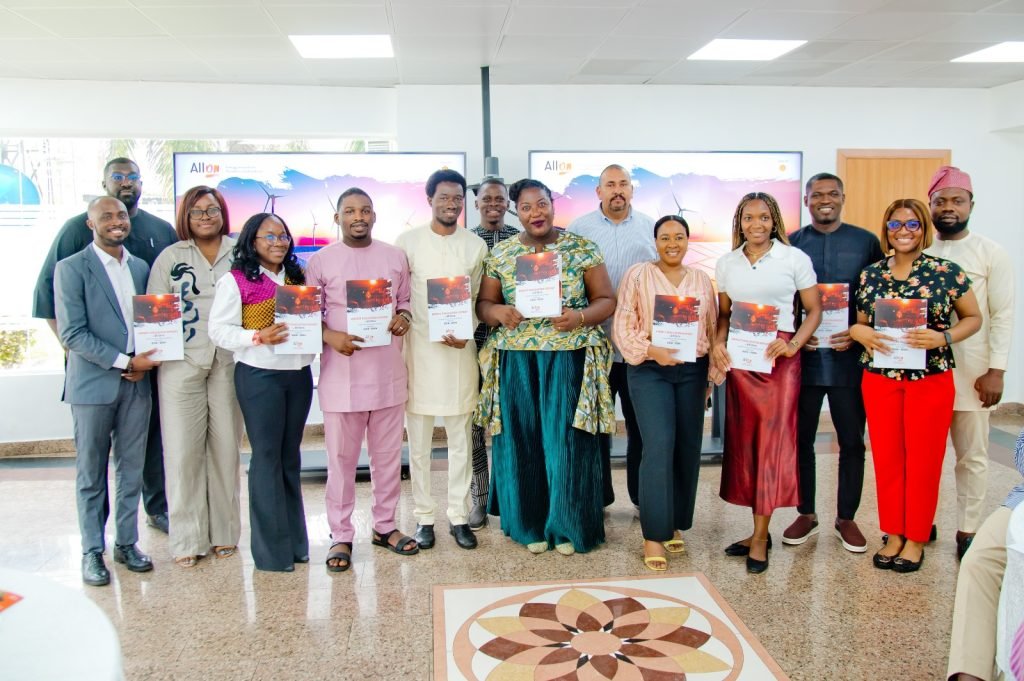
The firm noted that it deployed catalytic capital financing structured to absorb early losses, support experimentation and crowd in private investors once models proved viable. It coupled this with intensive due diligence, hands-on operational support and ecosystem-building efforts designed to lower costs and improve confidence across the sector.
One emblematic initiative is the Demand Aggregation for Renewable Technology (DART) programme, which pools procurement for supported companies. By negotiating at scale, DART has cut equipment costs by as much as 50 per cent, allowing developers to expand faster while passing savings on to consumers. In a price-sensitive market such as Nigeria, those efficiencies can determine whether a project succeeds or stalls.
The market effects are now becoming visible. Since 2018, the number of active clean energy players in Nigeria has doubled, while total sector investment has almost tripled, rising from about $90 million to more than $250 million. Portfolio companies report that All On’s involvement has enhanced their credibility with lenders and development finance institutions, helping unlock follow-on funding and partnerships.
Caroline Eboumbou, All On’s chief executive, remarked that this combination of finance and market infrastructure is essential if Nigeria is to close its energy gap. “By combining patient capital, technical assistance and ecosystem support, we are enabling scalable and sustainable energy solutions for unserved and underserved communities,” she said in response to the report’s findings, while acknowledging that progress remains uneven and far from complete.
Looking ahead, the firm plans to concentrate on scaling models that have showcased resilience, while expanding deeper into underserved regions such as the Niger Delta, where energy poverty coexists with oil wealth.









What will you leave when you’re gone?