Onome Amuge
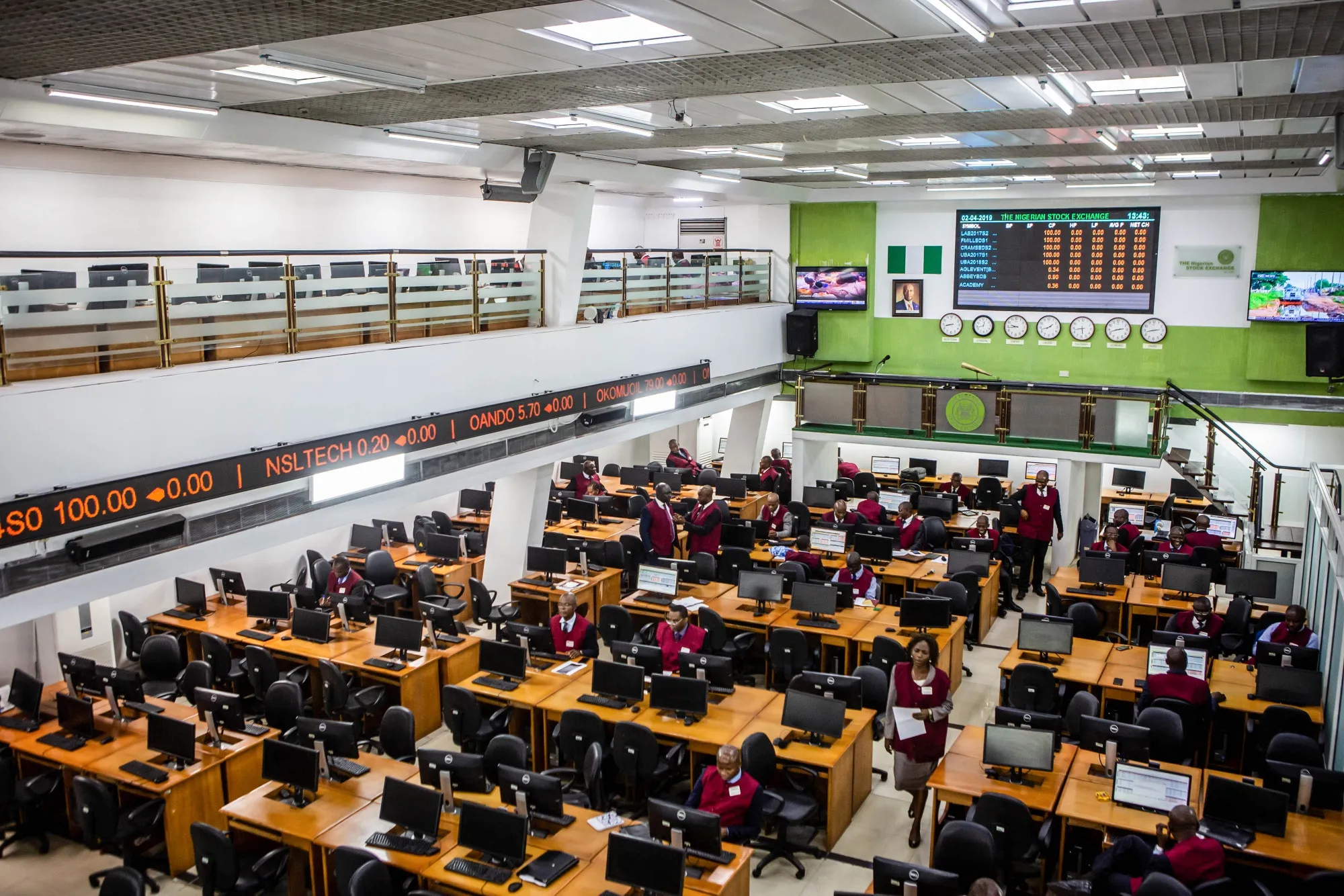
Nigeria’s equity market opened the week on a strong footing as investors poured into insurance and oil stocks, propelling the benchmark index to a new record high. The Nigerian Exchange (NGX) All-Share Index climbed 0.86 per cent on Monday to 144,822.61 points, extending year-to-date gains to 40.71 per cent. Market capitalisation was up from N786.24 billion to N91.92 trillion.
Market breadth was decisively positive, with 48 gainers outpacing 23 decliners, while 74 stocks remained unchanged. All six major sectors closed in the green — Oil & Gas (+3.35%), Insurance (+3.13%), Commodities (+1.72%), Banking (+0.64%), Consumer Goods (+0.12%), and Industrial Goods (+0.01%) — signalling broad-based bullish sentiment.
AXA Mansard Insurance, Seplat Energy, and Skye Shelter Fund Plc (SFSREIT) emerged as the session’s top performers, leading a wave of gains that analysts say reflects renewed interest in defensive and energy-linked plays. AXA Mansard rose by 10 per cent to N15.84 per share, up from N14.40, following sustained demand from institutional investors seeking exposure to Nigeria’s resilient insurance sector. The stock’s rally also reflects optimism around insurers’ improving balance sheets and expectations of higher underwriting profits in a high-interest-rate environment.
Energy heavyweight Seplat Energy jumped 10 per cent to N5,917.20 per share, buoyed by strong oil price fundamentals and investor expectations of improved upstream output. The company’s performance, analysts noted, was key to lifting the Oil & Gas sector index. Seplat’s rebound follows weeks of muted trading as investors recalibrated portfolios ahead of potential fiscal policy clarity around Nigeria’s energy transition strategy.
SFSREIT advanced 9.97 per cent to N381.10 per share, as renewed demand for real estate-linked equities reflected investor rotation into alternative assets amid inflationary pressures. Analysts said the performance was driven by expectations that property-linked instruments would benefit from rising asset values and inflation-hedging potential in the medium term.
Other notable gainers included Ellah Lakes Plc and Chams Plc, which rallied on high trade volumes. Ellah Lakes led the volume chart with 80 million shares exchanged across 931 deals, while Chams recorded 30 million shares traded in 466 transactions. Sterling Financial Holdings also featured prominently, trading 24 million shares in over 2,000 deals.
On the value index, Guaranty Trust Holding Company (GTCO) topped with transactions worth N1.9 billion in 1,430 deals, followed by Seplat’s N1.6 billion turnover in 107 trades. Aradel Holdings rounded out the top three with N1.2 billion worth of equities changing hands across 843 deals.
Despite the upbeat tone, overall trading activity was mixed. Total volume fell by 4.56 per cent to 519.92 million units, while the value of transactions dropped by 25.89 per cent to N14.55 billion. However, the number of deals rose 31.13 per cent to 35,490, indicating more frequent, smaller trades, a pattern market analysts interpret as growing retail participation amid short-term profit-taking.
On the downside, International Energy Insurance, McNichols Plc, Thomas Wyatt Nigeria Plc, Berger Paints, and ABC Transport ranked among the day’s laggards. International Energy Insurance fell 8.42 per cent to N2.72, McNichols dropped 8.31 per cent to N3.20, while Thomas Wyatt declined 7.72 per cent to N2.99 per share. Analysts attributed the losses to profit-taking following previous rallies and weaker-than-expected quarterly results in some of the small-cap counters.
The NGX’s performance on Monday builds on a series of bullish sessions that have seen the exchange emerge as one of Africa’s top-performing markets in 2025. The rally, driven by a combination of corporate earnings resilience, banking sector reforms, and renewed foreign portfolio inflows, has boosted market capitalisation by more than N26 trillion since January.
Investors’ appetite for insurance and energy equities also reflects a shifting perception of risk and return dynamics in the Nigerian market. “Investors are rebalancing toward sectors that can provide protection against inflation and currency depreciation,” said David Adonri, a capital markets analyst.