C1WT launches Global Trade Accelerator to support one million women-run enterprises

…Set to unlock $900bn in cross-continental trade

Onome Amue

A new private-sector movement spanning Africa, the Caribbean and the Americas is set to build what backers describe as the first neutral digital clearinghouse for women-led trade, an initiative that could test whether fragmented emerging-market business ecosystems can be knitted into a single technology-driven marketplace.

The initiative, known as Connecting One Million Women to Trade (C1WT), last month began rolling out a proprietary digital platform  named the Global Trade Accelerator (GTA), intended to support one million women-led enterprises through 10,000 business associations across 102 countries. 

Advocates project that the model could unlock as much as $900bn in new B2B trade flows over the next decade by bringing previously disconnected networks of women entrepreneurs into formal global supply chains.

But the initiative also represents something larger: a private-sector attempt to build a new digital trade architecture at a time when public multilateral institutions have struggled to modernise trade facilitation frameworks at comparable speed.

“From Bridgetown to Accra, we are moving from symbolism to structure. C1WT exists to build an architecture where the grassroots connects with the grasstops, and where women-led enterprises finally have a unified global system that allows them to scale beyond borders,” said Ky Dele, founder of the C1WT movement and president of Blueprint Global Group. 

The Global Trade Accelerator, unveiled in November 2025, is structured around eight core pillars that combine capacity-building with digital workflow tools including trade intelligence, policy advocacy, financing pathways, marketplace access, training modules, and a multilingual onboarding system for business associations.

What differentiates the platform from unilateral government or donor programmes, its architects say, is its network-of-networks design. The GTA acts as a clearinghouse through which associations and service providers plug in, verify their members, share tools, and exchange cross-border opportunities.

In Barbados, where the initiative made its international debut, policymakers consider the platform as a potential model for the Caribbean’s efforts to diversify export bases beyond traditional sectors such as tourism and agriculture.

“This engagement forms a key component of the emerging strategic partnership between C1WT and the Barbados private-sector ecosystem to accelerate women’s participation in global trade,” said Misha Lobban Clarke, head of the Barbados Chamber of Commerce & Industry.
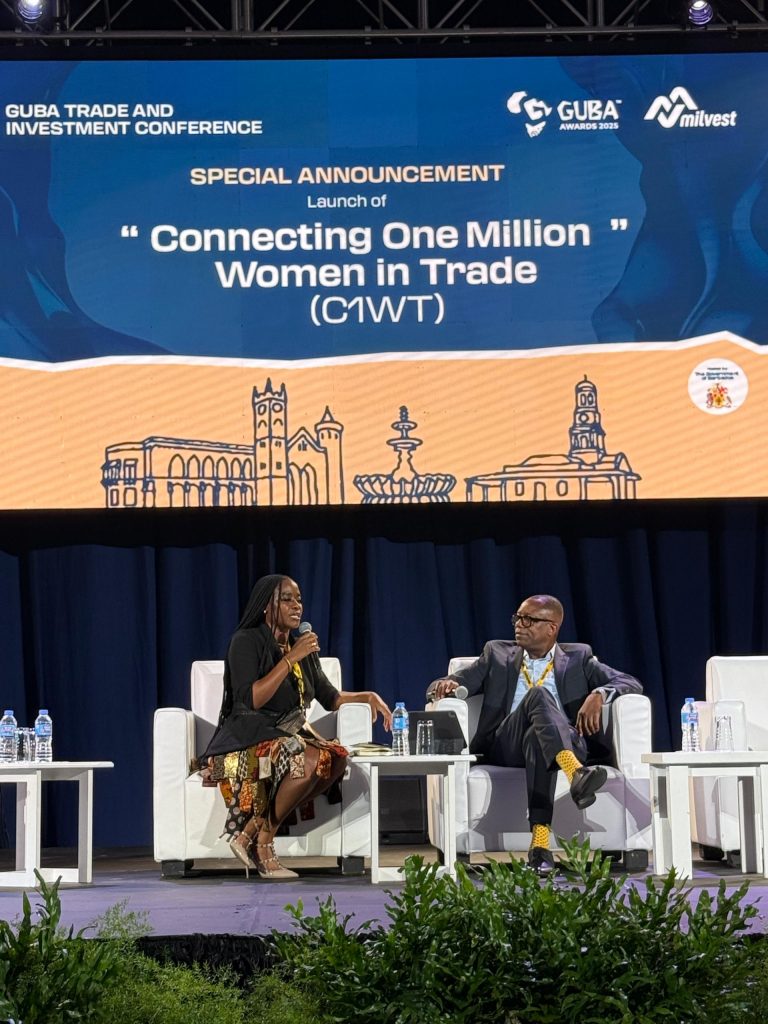
L-R: Ky Dele, president of Blueprint Global Group and executive producer of Connecting Women in Trade (C1WT) Initiative, and Kola Aina, senior vice president for M&A, business growth & strategic partnerships for the Americas at Mastercard, at the GUBA Trade & Investment Conference in Barbados, recently.

Mia Amor Mottley, the prime minister of Barbados, presided over the event, which drew leaders from across the political spectrum, including the presidents of Barbados and Grenada, as well as senior executives from chambers of commerce and Mastercard.

Former Costa Rican vice president Epsy Campbell Barr, who has long championed women’s economic empowerment across Latin America, said the GTA provides a collaborative framework to accelerate women-led trade across the Atlantic corridors.

What sets the C1WT initiative apart from conventional development programmes is its geopolitical ambition and institutional design. Instead of operating within a single regional bloc or under the umbrella of a multilateral agency, the privately led, association-driven movement is deliberately constructing a tri-continental trade corridor spanning Africa, the Caribbean and the Americas. Together, these regions represent rapidly expanding consumer markets, sizeable diaspora economies with rising purchasing power, and a dense network of SMEs that remain largely shut out of global value chains.

Ghana, the second launch site for the GTA, offered a significant illustration of the initiative’s cross-regional ambitions. The Accra gathering, hosted by the Ghana National Chamber of Commerce & Industry (GNCCI), drew senior representatives from six countries, including the US, Nigeria, Liberia and Jamaica

“This initiative positions Ghana as a critical bridge in global commerce. By supporting the rollout of the GTA, we are putting in place structures that enable women to participate competitively and confidently in international markets,” said Stéphane Abass Miezan, GNCCI president.

The National Black Chamber of Commerce (NBCC) in the United States, which represents tens of thousands of Black-owned businesses, used the Accra meeting to commit tools from its 360i Innovation & Entrepreneurial Hub. These include systems to help small firms achieve contractor readiness and secure investment.

“This collaboration opens unprecedented financial pathways for African and diaspora women entrepreneurs,” said NBCC president Charles DeBow, arguing that the GTA provides an entry point into investor networks that have historically been out of reach to most women-owned SMEs.

A live technical demonstration in Accra revealed how the platform attempts to solve some of the most persistent obstacles in women-led trade including the lack of verifiable business data, limited access to compliant documentation, and difficulty navigating global standards.

The GTA’s digital workflow comprises multilingual association onboarding for member verification, digital KYC/AML checks to align SMEs with global compliance norms, partner dashboards that monitor training and market-access progress, marketplace tools for product uploads and buyer engagement, and cross-border coordination functions designed for chambers and business associations.

By embedding these functions within one ecosystem, the platform aims to reduce fragmentation, a problem prevalent in regions where thousands of small associations operate with limited coordination, outdated systems, and inconsistent data collection practices.

Leave a Comment

C1WT launches Global Trade Accelerator to support one million women-run enterprises

…Set to unlock $900bn in cross-continental trade

Onome Amue

A new private-sector movement spanning Africa, the Caribbean and the Americas is set to build what backers describe as the first neutral digital clearinghouse for women-led trade, an initiative that could test whether fragmented emerging-market business ecosystems can be knitted into a single technology-driven marketplace.

The initiative, known as Connecting One Million Women to Trade (C1WT), last month began rolling out a proprietary digital platform  named the Global Trade Accelerator (GTA), intended to support one million women-led enterprises through 10,000 business associations across 102 countries. 

Advocates project that the model could unlock as much as $900bn in new B2B trade flows over the next decade by bringing previously disconnected networks of women entrepreneurs into formal global supply chains.

But the initiative also represents something larger: a private-sector attempt to build a new digital trade architecture at a time when public multilateral institutions have struggled to modernise trade facilitation frameworks at comparable speed.

“From Bridgetown to Accra, we are moving from symbolism to structure. C1WT exists to build an architecture where the grassroots connects with the grasstops, and where women-led enterprises finally have a unified global system that allows them to scale beyond borders,” said Ky Dele, founder of the C1WT movement and president of Blueprint Global Group. 

The Global Trade Accelerator, unveiled in November 2025, is structured around eight core pillars that combine capacity-building with digital workflow tools including trade intelligence, policy advocacy, financing pathways, marketplace access, training modules, and a multilingual onboarding system for business associations.

What differentiates the platform from unilateral government or donor programmes, its architects say, is its network-of-networks design. The GTA acts as a clearinghouse through which associations and service providers plug in, verify their members, share tools, and exchange cross-border opportunities.

In Barbados, where the initiative made its international debut, policymakers consider the platform as a potential model for the Caribbean’s efforts to diversify export bases beyond traditional sectors such as tourism and agriculture.

“This engagement forms a key component of the emerging strategic partnership between C1WT and the Barbados private-sector ecosystem to accelerate women’s participation in global trade,” said Misha Lobban Clarke, head of the Barbados Chamber of Commerce & Industry.

L-R: Ky Dele, president of Blueprint Global Group and executive producer of Connecting Women in Trade (C1WT) Initiative, and Kola Aina, senior vice president for M&A, business growth & strategic partnerships for the Americas at Mastercard, at the GUBA Trade & Investment Conference in Barbados, recently.

Mia Amor Mottley, the prime minister of Barbados, presided over the event, which drew leaders from across the political spectrum, including the presidents of Barbados and Grenada, as well as senior executives from chambers of commerce and Mastercard.

Former Costa Rican vice president Epsy Campbell Barr, who has long championed women’s economic empowerment across Latin America, said the GTA provides a collaborative framework to accelerate women-led trade across the Atlantic corridors.

What sets the C1WT initiative apart from conventional development programmes is its geopolitical ambition and institutional design. Instead of operating within a single regional bloc or under the umbrella of a multilateral agency, the privately led, association-driven movement is deliberately constructing a tri-continental trade corridor spanning Africa, the Caribbean and the Americas. Together, these regions represent rapidly expanding consumer markets, sizeable diaspora economies with rising purchasing power, and a dense network of SMEs that remain largely shut out of global value chains.

Ghana, the second launch site for the GTA, offered a significant illustration of the initiative’s cross-regional ambitions. The Accra gathering, hosted by the Ghana National Chamber of Commerce & Industry (GNCCI), drew senior representatives from six countries, including the US, Nigeria, Liberia and Jamaica

“This initiative positions Ghana as a critical bridge in global commerce. By supporting the rollout of the GTA, we are putting in place structures that enable women to participate competitively and confidently in international markets,” said Stéphane Abass Miezan, GNCCI president.

The National Black Chamber of Commerce (NBCC) in the United States, which represents tens of thousands of Black-owned businesses, used the Accra meeting to commit tools from its 360i Innovation & Entrepreneurial Hub. These include systems to help small firms achieve contractor readiness and secure investment.

“This collaboration opens unprecedented financial pathways for African and diaspora women entrepreneurs,” said NBCC president Charles DeBow, arguing that the GTA provides an entry point into investor networks that have historically been out of reach to most women-owned SMEs.

A live technical demonstration in Accra revealed how the platform attempts to solve some of the most persistent obstacles in women-led trade including the lack of verifiable business data, limited access to compliant documentation, and difficulty navigating global standards.

The GTA’s digital workflow comprises multilingual association onboarding for member verification, digital KYC/AML checks to align SMEs with global compliance norms, partner dashboards that monitor training and market-access progress, marketplace tools for product uploads and buyer engagement, and cross-border coordination functions designed for chambers and business associations.

By embedding these functions within one ecosystem, the platform aims to reduce fragmentation, a problem prevalent in regions where thousands of small associations operate with limited coordination, outdated systems, and inconsistent data collection practices.

Leave a Comment