The decision of the Monetary Policy Committee (MPC) of the Central Bank of Nigeria (CBN) after its meeting on Tuesday, November 25, 2025, to retain the benchmark interest rate—Monetary Policy Rate (MPR), at 27 percent was a shocker to practically all stakeholders of Nigeria’s financial system. The apex bank justified its decision as a continuation of its tight monetary policy stance aimed at fighting high inflation and maintaining macroeconomic stability.
Prior to the MPC meeting, the last in 2025, both capital and money markets’ players and operators as well as policy analysts were almost certain that the apex bank was going to adjust the MPR downwards, just like it did in September. In the September meeting, the MPC had only adjusted the benchmark interest rate (MPR) by 50 basis points – from 27.5 to 27 – the only reduction since 2022.
Olayemi Cardoso, the CBN governor, on November 28, 2025, in his keynote address at the Chartered Institute of Bankers of Nigeria (CIBN) dinner dwelt copiously on the gains already made through the sustained tight monetary policy regime. He said foreign capital inflows had reached $20.98 billion in the first ten months of 2025.
This figure, he said, represented a 70 percent increase over total inflows for 2024 and a “428 percent surge compared to the $3.9 billion recorded in 2023.” However, a decomposition of the make-up of the huge capital ($20.98 billion) imported into Nigeria would show the enormous direct and indirect costs of the inflow.
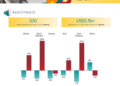
Specifically, out of the $5.64 billion imported in the first quarter 2025, portfolio investment accounted for a lion’s share – $5.20 billion – or 92.25 per cent; with a minuscule $126.29 million coming from foreign direct investment (FDI). This shows that investors are only interested in short-term liquid assets. This same pattern of diminishing FDI is replicated in the second and third quarters of 2025: granular but very important details that are missing in the Cardoso presentation at the CIBN dinner.
The attraction of humongous foreign exchange (FX) inflow through foreign portfolio investment (FPI) is a direct result of hiked MPR; a situation that has sustained a high interest rate environment in Nigeria for over two years. This environment has translated into very limited access to funds (loans and advances) for economic agents – particularly micro, small and medium-scale enterprises (MSMEs).
With the MPR raised from about 18 percent mid-2023 to 27.5 percent since last quarter 2024, effective lending interest rates by deposit money banks (DMBs) have been hovering between 30 to 35 percent. In line with this trend, the CBN itself has been reaping enormously from the high yields it offers to the patrons of its financial instruments (Treasury Bills, Bonds, etc.); hence, the upsurge in imported capital.
However, with the high interest rate environment, and the public sector activity in the debt market, private sector operators have been practically crowded out. The government at the centre has been on a borrowing spree, from local and foreign financial centres. This accounts for why Nigeria’s public debt has been ballooning, and now standing at over N152 trillion.
Somehow, following the 50 basis points reduction in the MPR in September 2025, DMBs’ credit to the private sector experienced a jump. Specifically, credit to the private sector rose sharply in October of 2025, climbing to N74.41 trillion from N72.53 trillion in September, as shown by the CBN’s data. This increase of about N1.88 trillion represents a month-on-month growth of 2.60 percent, the highest level of such movement so far in 2025.
Notably, however, the jump came immediately after the MPC cut the MPR by 50 basis points to 27 percent, the only policy rate reduction since 2020. So, if the very marginal cut of only 50 basis points in MPR could trigger a huge leap in private sector lending by the DMBs, it follows that the continued holding of the MPR at 27 percent amounts to a deliberate scorching of private sector businesses.
The Manufacturers Association of Nigeria (MAN) is acutely aware of this, and has vehemently excoriated the apex bank for keeping the MPR at 27 percent. MAN called on the CBN to seriously consider a downward review of the interest rate (MPR) to reduce the high borrowing costs and incentivise long-term investments in the manufacturing sector.
MAN noted that despite the CBN’s efforts to stabilise the economy and ease inflationary pressures, the high lending rates of 30-37 percent remain a significant challenge to manufacturers. The association emphasised that persistent high lending rates will limit access to affordable credit for manufacturers, especially the MSMEs.
MAN also called on the government to strengthen fiscal discipline, invest in infrastructure, and implement complementary fiscal measures to support industrial development and promote structural reforms.
The Lagos Chamber of Commerce and Industry (LCCI) has on its part, sharply criticized the apex bank for the tight monetary stance reflected in high MPR. The Chamber has expressed deep concern over the “depressing burden” that the prolonged high interest rate places on businesses, especially the SMEs.
Chinyere Almona, the director-general of the LCCI, said: “While we appreciate that the current reforms may have started to have some impact on stabilizing the exchange rates, easing headline inflation, and increasing government revenues, the interest rate at 27 percent remains a depressing burden on businesses.” Almona urged the MPC to “strike a careful balance between preserving macroeconomic stability and supporting economic recovery.”
It becomes obvious from all these that the booming FPIs inflow reflecting in accretion to external reserves, poses danger to the overall growth and development of the Nigerian economy. While the CBN leadership is beating its chest in self-adulation, the critical real sectors of the economy are being asphyxiated, virtually, by lack of access to affordable funds.
The mortality rate of MSMEs in Nigeria (owing to lack of funds, among other challenges) in recent times truly ranks among the highest, just as the rate of exit of companies from the country in the past two years remains shockingly high. Unfortunately, it is the same reforms that people like Mr. Cardoso are celebrating that resulted in the mass exodus of companies from Nigeria in the past two years. Today, not a few are still gasping for breath!

Marcel Okeke, a practising economist and consultant in Business Strategy & Sustainability based in Lagos, is a former Chief Economist at Zenith Bank Plc. He can be reached at: obioraokeke2000@yahoo.com; +2348033075697
(text only)