Business A.M
No Result
View All Result
Wednesday, February 11, 2026
  • Login
  • Home
  • Technology
  • Finance
  • Comments
  • Companies
  • Commodities
  • About Us
  • Contact Us
Subscribe
Business A.M
  • Home
  • Technology
  • Finance
  • Comments
  • Companies
  • Commodities
  • About Us
  • Contact Us
No Result
View All Result
Business A.M
No Result
View All Result
Home Comments

China’s control problem

by Chris
May 23, 2017
in Comments

A mundane bank scam reveals a systemic risk.


When it emerged last week that China Minsheng Banking Corp. had sold $436 million in suspect wealth-management products, fears rose of a collapse in the loosely regulated market for such products. It now looks like a more mundane case of forgery involving a branch manager. But that’s not exactly reassuring: In fact, it suggests a different kind of systemic risk.

Internal controls — such as auditing, document verification and risk management — are part of the dull machinery of financial markets, which most people never notice. Yet such tedious tasks are vitally important. What can start as corner-cutting at one business unit can quickly spiral into a threat to the whole company and beyond.

In much of corporate China, weak internal controls are the norm. Banks are reluctant to spend money on database or compliance software. Forged corporate seals have been used to conduct billions of dollars in seemingly legitimate trading. Nearly 60 percent of Chinese executives say that unethical behavior is acceptable to keep a company going or to meet revenue targets. In short, investors and regulators have reason to worry.
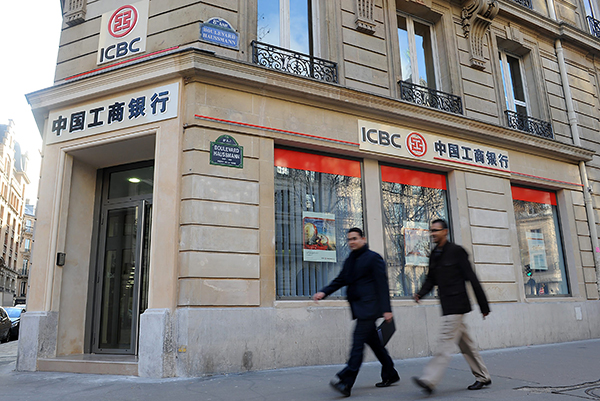
Image result for Chinese banks
Large thefts or losses from Chinese banks — ranging up to $560 million…

And these worries aren’t merely theoretical. Large thefts or losses from Chinese banks — ranging up to $560 million, in one case — happen with frightening regularity. What makes these cases so egregious isn’t the sophistication and planning that goes into them but the relative ease with which employees walk out the door with stolen yuan in a briefcase. The thefts look less like mastermind plots from a heist movie than like a cartoon.

Many major firms impose few controls beyond what the person in charge says. I know of companies that accept hard-copy reports from regional managers with no auditing to verify information. The data is then entered by hand into basic spreadsheets used to oversee the whole operation. Although foreign investment banks typically store all employee communications conducted on company-issued phones and computers — and often use artificial intelligence to verify compliance — in China it remains strikingly common for people to list private e-mail addresses on their business cards.

Without precautions, this kind of thing could become a systemic problem. A bank executive sitting in an office without a strong IT system, risk-management software or internal auditing department relies solely on reports from provincial managers. When those managers have wide latitude in how they classify loans, and an incentive to downplay their non-performing loan ratios, it’s quite likely that risks will be underestimated by the executives — not to mention by regulators in faraway Beijing.

Worse, firms copy each other. If one bank gains a competitive advantage by creatively cutting corners — and seems to get away with it — others will catch on in rapid succession. The variety of financial companies suffering significant losses because of poor internal controls in recent years suggests that these aren’t isolated incidents.

The good news is that internal controls matter to markets. Investors seem to be pricing Chinese bank stocks on the low side, expecting additional unpleasant surprises or remaining skeptical of the official story on non-performing loans. And smaller banks, less able to hide losses with lower loan-to-deposit ratios, are showing higher levels of stress than large ones.

Even so, China’s regulators need to do more. For starters, they should require improved financial reporting and auditing. Every Chinese bank that sells shares in Hong Kong readily concedes that regulatory standards — from loan classifications to accounting guidelines — are different on the mainland. The problem at Minsheng was reportedly only detected when the head office got a phone tip, not through internal mechanisms designed to prevent mismanagement. If that’s a problem at Minsheng, which is known for good management and technology, it’s a safe bet that other banks are doing worse.

When Beijing instituted regulations on government travel not long ago, as part of an anti-corruption campaign, it quickly got things under control: Spending has risen by only 0.3 percent since 2011, and is budgeted to fall in 2017, thanks to improved internal controls. The same could happen in the private sector with better accounting and auditing standards. That would bring more transparency to China’s markets. And transparency will set you free.


Courtesy Bloomberg

Previous Post

Microsoft unveils new surface Pro device to reverse sales drop

Next Post

Nigeria MPC maintains analysts call, keeps rates on hold

Next Post

Nigeria MPC maintains analysts call, keeps rates on hold

  • Trending
  • Comments
  • Latest
SIFAX subsidiary bets on operational discipline, cargo diversification to drive recovery at Lagos terminal

SIFAX subsidiary bets on operational discipline, cargo diversification to drive recovery at Lagos terminal

February 10, 2026
Igbobi alumni raise over N1bn in one week as private capital fills education gap

Igbobi alumni raise over N1bn in one week as private capital fills education gap

February 11, 2026
Egbin Power targets youth employability with tech skills initiative

Egbin Power targets youth employability with tech skills initiative

February 10, 2026
inDrive turns to advertising revenues as ride-hailing economics push platforms toward diversification

inDrive turns to advertising revenues as ride-hailing economics push platforms toward diversification

February 10, 2026

6 MLB teams that could use upgrades at the trade deadline

Top NFL Draft picks react to their Madden NFL 16 ratings

Paul Pierce said there was ‘no way’ he could play for Lakers

Arian Foster agrees to buy books for a fan after he asked on Twitter

inDrive doubles Nigerian courier workforce as app-based delivery gains traction

inDrive doubles Nigerian courier workforce as app-based delivery gains traction

February 11, 2026
Affordability becomes key economic variable ahead of 2026 FIFA world cup

Affordability becomes key economic variable ahead of 2026 FIFA world cup

February 11, 2026
Access Holdings charts new course for pan-African expansion in value optimisation drive

Access Holdings faces regulatory speed bump in Bidvest acquisition

February 11, 2026
Releaf Earth’s credits put Africa’s carbon finance ambitions in spotlight

Releaf Earth’s credits put Africa’s carbon finance ambitions in spotlight

February 11, 2026

Popular News

  • SIFAX subsidiary bets on operational discipline, cargo diversification to drive recovery at Lagos terminal

    SIFAX subsidiary bets on operational discipline, cargo diversification to drive recovery at Lagos terminal

    0 shares
    Share 0 Tweet 0
  • Igbobi alumni raise over N1bn in one week as private capital fills education gap

    0 shares
    Share 0 Tweet 0
  • Egbin Power targets youth employability with tech skills initiative

    0 shares
    Share 0 Tweet 0
  • inDrive turns to advertising revenues as ride-hailing economics push platforms toward diversification

    0 shares
    Share 0 Tweet 0
  • Reps summon Ameachi, others over railway contracts, $500m China loan

    0 shares
    Share 0 Tweet 0
Currently Playing

CNN on Nigeria Aviation

CNN on Nigeria Aviation

Business AM TV

Edeme Kelikume Interview With Business AM TV

Business AM TV

Business A M 2021 Mutual Funds Outlook And Award Promo Video

Business AM TV

Recent News

inDrive doubles Nigerian courier workforce as app-based delivery gains traction

inDrive doubles Nigerian courier workforce as app-based delivery gains traction

February 11, 2026
Affordability becomes key economic variable ahead of 2026 FIFA world cup

Affordability becomes key economic variable ahead of 2026 FIFA world cup

February 11, 2026

Categories

  • Frontpage
  • Analyst Insight
  • Business AM TV
  • Comments
  • Commodities
  • Finance
  • Markets
  • Technology
  • The Business Traveller & Hospitality
  • World Business & Economy

Site Navigation

  • Home
  • About Us
  • Contact Us
  • Privacy & Policy
Business A.M

BusinessAMLive (businessamlive.com) is a leading online business news and information platform focused on providing timely, insightful and comprehensive coverage of economic, financial, and business developments in Nigeria, Africa and around the world.

© 2026 Business A.M

Welcome Back!

Login to your account below

Forgotten Password?

Retrieve your password

Please enter your username or email address to reset your password.

Log In
No Result
View All Result
  • Home
  • Technology
  • Finance
  • Comments
  • Companies
  • Commodities
  • About Us
  • Contact Us

© 2026 Business A.M